

Energy Cooperation and Renewable Energy Communities: a concrete example of solidarity towards the energy transition
Leonardo Scuto | 24 September 2025 | Issue Strumenti e sedi di raccordo nella governance multilivello (2025)
This paper aims to analyze the phenomenon of Renewable Energy Communities (REC), intended as an innovative model of energy cooperation based on active citizen participation, energy sharing, and environmental sustainability. Starting from the relevant European and national regulatory framework, the analysis will focus on the effectiveness of RECs as a tool to fight energy poverty, exploring their essential characteristics. Subsequently, the benefits and main critical issues that have arisen in the practical application of this model in the fight against energy poverty will be examined. Although RECs can be one of the fundamental pillars of a ‘just energy transition’, there is a clear need for their effective and uniform implementation throughout the country.
Read More
Energy communities for smart cities: a challenge for EU administrative law in light of the Italian perspective
Alessia Monica, Leonardo Scuto | 31 March 2025 | Issue Charting the Course Towards a New Legal Framework for Smart Cities (2025)
The paper assumes a commitment to smart cities as a “paradigm” in EU environmental and energy policies, having the Green Deal in the background. Energy Communities in smart cities are supposed to be a driver for the green energy transition, as a way to deal with the climate emergency. Renewable Energy Communities (REC) as developed in Italy demonstrate the role of the “citizen” as part of a smart community – which can be promoted and implemented by both EU and Member States. The principle of sincere cooperation is a flexible principle that can assure the interests of future generations, while not neglecting sustainability goals in order to address cross-border administrative issues present in REC.
Read More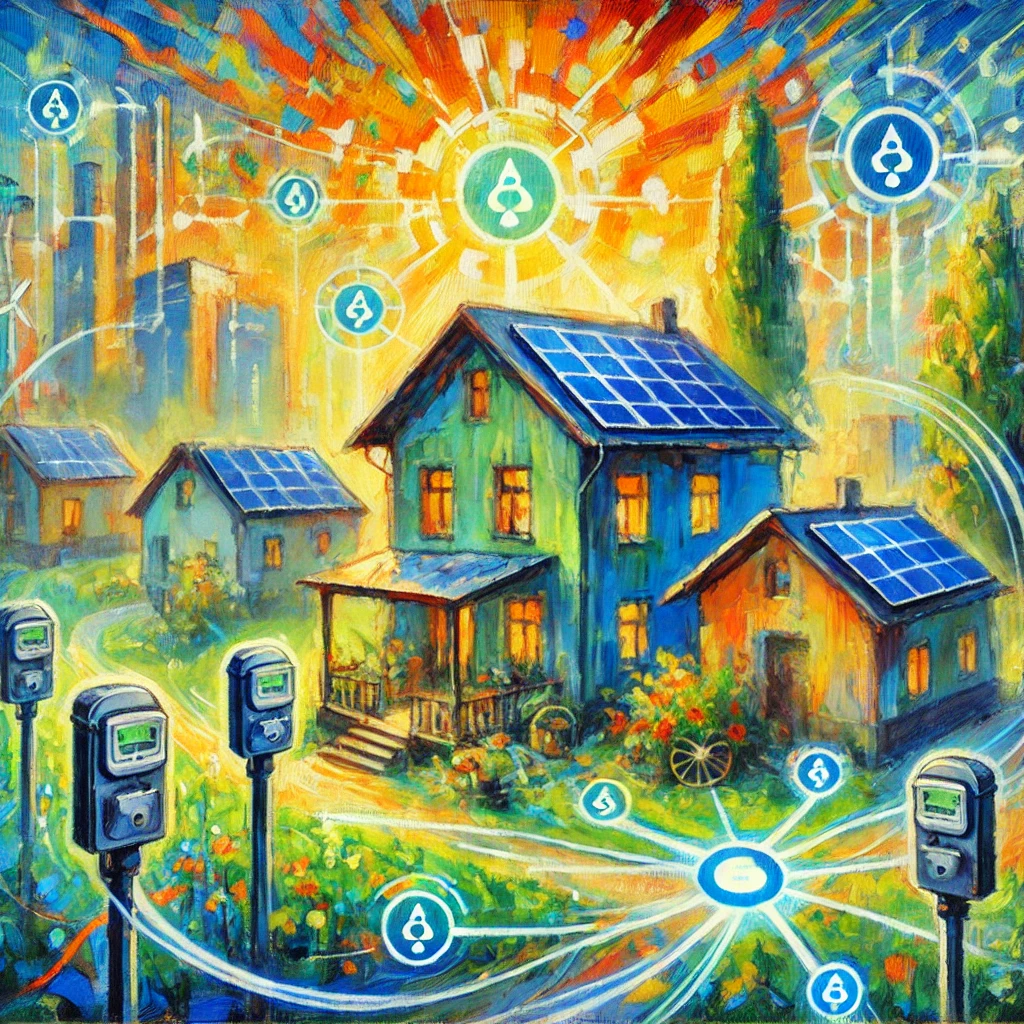
Energy Communities and technological innovation: the role of digitalisation
Leonardo Scuto | 28 November 2024 | Issue Le Comunità Energetiche, le FER e un nuovo modello di Sviluppo Sostenibile (2024)
This article aims to investigate the role of digitalisation in the creation and management of Renewable Energy Communities (RECs), focusing on three main aspects: collaboration between public and private entities, the decentralizing impact of RECs on the national energy system, and the integration of RECs with digital technologies. RECs represent an effective model that can promote economic, social, and environmental benefits, reducing energy costs, supporting economically disadvantaged citizens, and encouraging the use of renewable energy sources. Decentralization fundamentally transforms the traditional energy production model, thanks to distributed generation and smart grid systems. Smart grids and smart meters enable bidirectional energy exchange and facilitate peer-to-peer transactions. Digital technologies such as Distributed Ledger Technology (DLT) and digital tokens facilitate these transactions within a local energy market, allowing “prosumers” to sell their surplus energy. RECs, supported by digital technologies, encourage active citizen participation, promoting a sustainable and decentralized energy system. Therefore, this paper also highlights the importance of integrating energy transition strategies with digitalisation, aiming for an electricity market where citizens play a central role in the energy system.
Read MoreCassazione Civile, Sezioni Unite, 1 febbraio 2023, n. 3077
Leonardo Scuto | 13 April 2023 | Issue 2/2023
With regard to environmental damage, the “polluter pays” EU law principle does not imply any obligation on the part of the owner who is not responsible for the polluting event to adopt emergency safety measures; the criteria for attributing liability cannot disregard the need to ascertain a causal link between the activity carried out by the subject and the polluting event.
Read More
The development of a new model of urban regeneration in light of the digitalisation of public administration
Leonardo Scuto | 29 September 2022 | Issue 3/2022
This article aims to investigate the distinctive features of the phenomenon of urban regeneration as an expression of the principle of sustainable development, in light of the digital administration model, i.e., a new structure designed to promote the digitalisation of decision-making procedures and a transformation of administrative functions, using Information and Communication Technologies (ICT).These elements should be the principles upon which the new urban development model is to be based. The influence of ICT on environmental assessments is crucial to fully understand both the potential and challenges faced by the Italian legislator when addressing urban regeneration. The purpose of this paper is, therefore, to propose a method to achieve the best possible interaction between traditional and innovative forms of urban regeneration, trying to identify, specifically, how local authorities can take advantage of new technologies both in a procedural and environmental perspective. It is emphasized how innovative technological solutions today find their highest expression in the development of a new urban model – the renewable energy community – which is one of the means identified to pursue the goals set out by the SDG No. 11 drafted by the United Nations.
Read More
The Administrative Court of Puglia rules on agrivoltaic plants: is it possible for renewable energy and agricultural production to coexist?
Leonardo Scuto | 8 May 2022 | Issue 2/2022
With the decision n. 248/2022 of the 12th of February 2022, the Administrative Court of Puglia has ruled on aspects of the impact of a new generation of agrivoltaic plant, concluding them to be less impacting than a traditional photovoltaic plant. The Judge of first instance recognized the inadequacy of the Regional Territorial Landscape Plan of the Region of Puglia with reference to these new plant configurations, concluding agrivoltaic plants as being compatible with the agricultural and pastoral uses activities in the region.
Read More