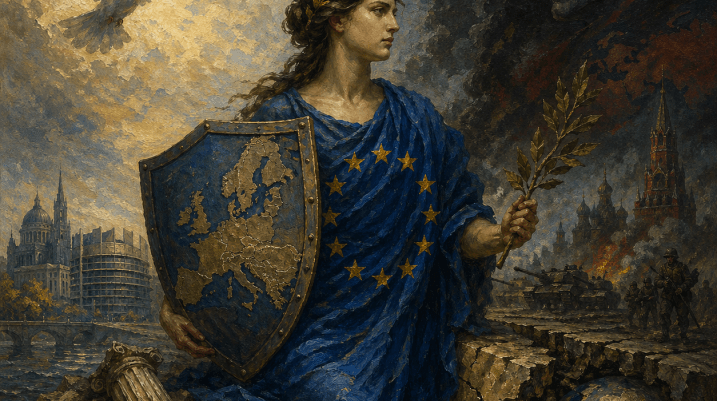
Il contributo esplora gli aspetti chiave della forma di governo europea e la struttura politica imperiale, sottoponendo a un continuo esame critico l’attuale assetto dell’Unione Europea. L’attenzione si concentra sulla questione cruciale e ormai inevitabile, se i Trattati UE necessitino di una riforma, alla luce delle recenti crisi degli ultimi decenni e dello scoppio della guerra russo-ucraina, al fine di rafforzare la governance dell’Unione e tutelare la democrazia europea e i diritti fondamentali dei cittadini. Ogni tentativo di definire il sistema europeo appare ancora oggi inadeguato, proprio come l’idea imperiale sembra, all’autore, insufficiente a descrivere un sistema che rimane intrinsecamente sui generis. Sviluppare le capacità militari, riorganizzare razionalmente le politiche europee, rafforzare il mercato interno e la competitività dell’Unione attraverso le proprie strategie economiche e industriali e avviare concrete riforme istituzionali sono passi essenziali che non possono più essere rinviati se si vuole che l’integrazione europea avanzi – e persino si approfondisca – per istituire un’entità politica europea veramente sovrana.
This essay explores the key aspects of the European form of government and the imperial political structure, continuously critically examining the current structure of the European Union. The main focus centers on the crucial and now unavoidable question of whether the European Treaties need reform after the recent crises of the past decades and the outbreak of the Russian-Ukrainian war, to enhance the Union’s governance and protect European democracy and citizens’ fundamental rights. Every effort to define the European system still seems inadequate today, just as the imperial idea appears, to the author, insufficient to describe a system that remains inherently sui generis. Developing military capabilities, reorganizing European policies rationally, strengthening the internal market and the Union’s competitiveness through its own economic and industrial strategies, and initiating concrete institutional reforms are essential steps that can no longer be delayed if European integration is to advance – and even deepen – to establish a truly sovereign European political entity.
1. The governance of “large spaces” and Europe’s form of government
To look at Europe in this historical moment – one in which its Member States, driven by repeated crises and by the Russian-Ukrainian conflict, are compelled to rethink the form of government they have given to the European Union – means to reflect critically on its institutional structure.
After the election of the new Parliament in 2024, it remains to be seen what decisions will be taken both regarding the proposals to amend the European Treaties to strengthen the political character of the Union, and with reference to the Union’s capacity to pursue the policies most suited to ensuring its international presence – including its military presence –the effective completion of the internal market, and its role within the global economy.
President Mario Draghi clearly alluded to this need for a radical transformation when he stated, shortly before delivering his report on the future of European competitiveness to the Commission, that «We need a European Union that is fit for the world of today and of tomorrow». He immediately added: «We need to become a State»[1]; and, in his address marking one year since the report, he further emphasized that the Union must begin to act less as a confederation and more as a federation, if it is to stand on equal footing with the United States and China in all domains, including the military one[2].
It goes without saying that the governments of the Member States – although it was French President Emmanuel Macron who made it explicit – have long been fully aware that reform of the European system is no longer postponable, under penalty not merely of a setback, as in past years, but of Europe’s very disappearance and of a default affecting all European States, including those that have so far appeared the most economically robust. Even the Member States most reluctant toward integration, therefore, do not seem to have many alternatives: either preserve their independence together with the others within the process of European integration, or find themselves reduced to vassals of other empires.
In other words, the European trajectory necessarily points forward, for reasons that are logical even before they are historical or political. Yet the direction in which this advancement should proceed has for some time encountered considerable difficulties, as evidenced by the range of opinions expressed by national governments and by the political forces within the Member States, where anti-European impulses go hand in hand with pro-European ones.
Any reflection on the path to be undertaken must consider European developments within the broader context of the crisis of globalization – a crisis which does not, in itself, signify the end of globalization, even though its cosmopolitan dimension appears increasingly marked by fractures that constrain its juridical aspirations, foremost among them the protection of human rights and democracy, including within Europe itself.
Europe, particularly with the advent of the second Trump presidency in the United States, finds itself confronted with a resurgence of imperial policies that govern the world’s large spaces through economic and political processes oriented more toward dominance than collaboration. Economic competition, notably in the field of technological development and military capability, has become a defining feature of international relations, and the European Union’s external action should seek to address it.
Moreover, within the Union itself, a complex condition has emerged in which European relations operate. Indeed, the interconnections and interdependencies among Member States are so extensive that any notion of grim isolation or extreme forms of national self-protection – such as exiting from the Union toward politically and economically autarkic arrangements – cannot be seriously considered. Consequently, in the face of the challenges posed by various crises (economic, migratory, environmental, energy-related, etc.) and the proliferation of armed conflicts, the only viable response lies in a renewed expansion of relations and negotiations within the European Union to advance integration.
From this perspective, Europe must certainly reflect on its internal institutional developments not only over the past fifteen years – that is, since the economic crisis of 2009, which coincided with the entry into force of the inadequate Lisbon Treaty – but also on the preceding decade. To clarify, this refers to the period following the consolidation of European growth with the single currency (1999), when the issue of European constitutionalization arose (2001). This effort ultimately failed, as between deepening integration and the enlargement of the Union, the latter prevailed at the expense of the former (2004).
The question that must be asked, in relation to the European developments mentioned, therefore appears to concern Europe’s status and significance – that is, the political definition of Europe – taking into account that the European space constitutes a “large (or great) space”[3] and that European economic capacity can remain competitive even within this new international context, while preserving the European qualities of stable democracy, the protection of rights, and widespread social welfare.
In this context, then, the discussion aimed at determining institutional change in the near future – and at safeguarding European democracy and the fundamental rights of “European citizens” – directly concerns the definition of the optimal form of government (polity) that the European Union should assume.
1.1. Europe and the characteristics of Empires
Calling for a political transformation of Europe has become an obvious necessity. Europe is no longer what it was in the early decades of the second half of the twentieth century, even though the reasons for its founding, beginning with peace, remain intact. The question instead asks why it has for so long failed to evolve in its political form.
Aside from the original attempts in 1954 aimed at creating a European Defense Community and a Political Community – which, as is well known, failed due to the veto of the French National Assembly – a clear process of Europe’s political development is visible in recent history, beginning with the Maastricht Treaty (1992/3). Consider, for example, European citizenship, the shared competence based on subsidiarity, the enhanced role of the European Parliament, the initial stabilization and subsequent codification of fundamental rights within the Union’s legal order, the countless European policies, the euro, the creation of an area of freedom, security, and justice, the removal of internal borders and the unification of entry policies, cooperation in matters of justice and policing, and the revival of common foreign policy, including the common security and defense policy.
Official documents also referred to “a European social model” and affirmed that Europe had created a new vision of the future, one that would eclipse the American dream[4].
It seemed obvious that, after a decade of expansion in the European Union’s political role, the question of Europe’s political form would arise. Scholars of international law still feel the temptation to consider the European Union as a regional-type international organization; the more discerning, confronted with the evident exceptions and deviations from the standard international model, have referred to it as a sui generis[5] international organization.
However, the most authentic representation of Europe’s development has been provided by the Court of Justice, which, through its case law, introduced a language entirely foreign to international law. Consider, for instance, the notion of a common legal order created by the Member States, the transfer of sovereignty by those States, the primacy of European law over national law – even of constitutional rank[6] – and its organizational configuration according to the principles of the rule of law, that is, a Community of law in which the allocation of powers among institutions is defined, and the protection of fundamental rights is ensured precisely through the jurisprudence of the Court of Justice[7]. In essence, the European judge has articulated and advanced the European project, which, despite the silence regarding the nature of Europe, has been progressively constitutionalized[8].
It is worth recalling that, over the past decade (beginning with the election of the European Parliament in 2014), while on one hand there was observable political growth within Europe, on the other hand, countervailing pressures of a nation-state nature also emerged, complicating the definition of Europe – especially given that not all contradictions inherent in the European design had been resolved.
In this context, therefore, two interpretations of Europe’s form ultimately came into opposition: the intergovernmental (or confederal) and the community-based (or federal). The former drew strength from the role of the European Council, institutionalized by the Maastricht Treaty, while the latter’s main asset lay in the Commission and the European Parliament. This opposition was further expressed in the manner in which the two forms make decisions: the European Parliament and the Council tend to approve legislative acts by majority vote, thereby creating European law directed at Member States and European citizens; by contrast, the European Council issues decisions voted unanimously and tends to encroach upon the role of the community (or federal) Europe, exceeding the functions assigned to it by the Treaties.
In fact, the European Council was supposed to act according to defined procedures and in an intermittent and limited manner[9]; instead, in practice, it has exceeded the provisions of the Treaties, interfering in the procedures and policies within the remit of other European institutions. This is not only because the European Council has repeatedly acted as the ultimate decision-maker and as the highest political authority of appeal on contentious issues, but above all because it has developed a governmental-type agenda, covering, in various ways, the full range of European policies and the determinations of the Union budget[10].
The European Council, therefore, exercises a form of supremacy over the other European institutions, including the European Parliament, whose direct legitimacy is considerably constrained, as it lacks effective governing capacity. In practice, the European Council acts as a brake on European integration, in the name of the national interests of the Member States.
These two forms of European governance, intergovernmental and community-based, have nevertheless become insufficient in many respects. The European Council, in fact, appears incapable of formulating a common European interest and normally acts predominantly by consensus, that is, unanimously, so that each member of the European Council effectively holds a veto power (as in international assemblies). Moreover, within the European Council, Member States tend more to divide and cluster around their own interests, rather than to converge on common European interests, which concretely undermines the European Union’s position vis-à-vis international competitors, who can define their general interests immediately. Finally, neither the European Council nor the Member States are capable of ensuring the functioning of the supranational system exclusively. This task, with all its imperfections, is generally carried out by the Commission, also thanks to the trust engendered by a process of legitimation involving the European Parliament and the representative political role it performs, together with the political parties operating within it[11].
Finally, the European Council and the Member States, lacking the capacity to produce the Union’s political unity, often prolong this condition in times of crisis, to the detriment of the European Union and its citizens. Consider, for example, the humanitarian crisis and the “area of freedom, security, and justice” (Article 68 TFEU), when no European solution was found to amend immigration legislation (Dublin III), and the absence of an agreement led to the reemergence of internal borders, in contravention of the Treaty provisions[12].
Even the framework centered on the Commission, the Council, and the European Parliament – based on the community method and through which legislative activity is conducted – no longer appears capable of advancing European integration.
Guiding Europe through regulation has been the engine that, since1957 to the present, has ensured the success of the supranational idea. Through the incremental method, step by step, the common market and the single currency have been built, European policies have been designed and implemented, and the freedoms established by the Treaties, as well as fundamental rights, have been guaranteed.
The community method certainly created convergence and, subsequently, unification, but it is inevitably tied to a historical period in which the current challenges were not present. At the time, it was appropriate for fostering integration and internal cohesion, as it allowed Member States to engage with integration at their own pace.
Such discrepancies between Member States can no longer be accepted. It appears necessary to move at the same pace, both due to the rapidity of technological changes and the new geopolitical condition, marked by the crisis of multilateralism and the assertive emergence of empires. Today’s Europe appears incapable of meeting the interests of its citizens. Hence arises the necessity, for the very survival of Europe, to do what has not been done before, and to overcome the limitations inherent in the European model, whether intergovernmental or community-based.
If, therefore, public law frameworks and international law do not entirely fit the European case, and the instruments of federalism are often hybridized with those derived from international law and State doctrine, the result is that any attempt to define the European system appears perpetually insufficient – whether one considers one of the earliest definitions of the phenomenon as a ‘purpose-driven union producing functional integration’[13], or the definition offered by the German Constitutional Court in its Maastricht Treaty judgment, which refers to an «association of states» (Staatenverbund)[14].
In both cases, the aim pursued is to exclude any form of supranational unification, so as not to encroach upon the political unity of each nation-state, to preserve its sovereignty intact, and to regard European powers merely as delegated competencies. Moreover, this reductive interpretation of the European framework was maintained by the German Constitutional Court even in its judgment on the Lisbon Treaty[15], despite the literal tenor of this treaty being profoundly different from previous European treaties, also as a result of the language developed at the European level during the Laeken Convention, which had shaped the drafting of the 2004 Constitutional Treaty. Not coincidentally, this latter decision of the German constitutional judge was sharply criticized domestically and considered not europafreundlich, in violation of a specific constitutional principle[16].
Thus, the European model tends to be described, rather than defined, as a multilevel system of governance, in which the various territorial levels are included, on the basis of a distribution of competencies that obscures the political dimension, in favour of an ostensibly value-free technocracy. Consequently, the question of sovereignty remains unresolved and without a definitive answer[17].
Those who have examined the European order in this post-national context, developing a political conception of power and society no longer anchored to the notion of the State, have found sufficient points of contact between Europe and the notion of an “empire”, albeit in a highly specific sense.[18] Even those who have consistently criticized Europe for lacking, for instance, a phone number for the Foreign Minister, have invoked the figure of the Empire, acknowledging that the current institutionalization of the European Union has «produced a degree of unity that had not been seen in Europe since the Holy Roman Empire»[19].
If one questions the appropriateness of this characterization for Europe, one cannot help but be disappointed. Indeed, invoking the Empire refers to a particular form of government (polity) that denotes a specific structure of political dominion over “great spaces”.[20] The current crisis of globalization and statehood has brought this form of governance back into prominence, due to the continuous challenges and confrontations to which ‘empires’ are subjected[21].
The characterization of Europe as an “empire”, however, was not merely a reflection of the European Union’s enlargement on 1st May 2004, which brought the Union to its maximum territorial extent in 2007, with 28 countries. This was still a strongly expansionist era, and the European Union still included, among others, the United Kingdom, which would later leave the Union following the so-called Brexit referendum.
At that time, the European Union appeared to be in a phase of strong territorial expansion and endowed with considerable integrative capacities; nevertheless, it remained something distinct from a Federation, as its external policies produced uncertainty regarding its borders. This revealed, in the European phenomenon, certain elements typical of an imperial structure, foremost among them the Union’s ability to project its influence beyond its geographical limits, extending its political reach into “space”, defined by linear borders, generating interest and proposals for accession. Indeed, the issue of European Union enlargement is by no means a closed matter; on the contrary, it appears to be one of the sources of friction that contributed to the Russian-Ukrainian war. Conversely, Russia’s aggression against Ukraine can be considered, politically, beyond its appeal to the natural right of self-defense (Article 51 UN Charter), as an action aimed precisely at containing the EU’s expansionist prospects.
In this regard, it should be noted that, since 1995, eight other European states have applied for membership in the European Union, including Turkey, raising a series of issues that cannot be addressed in this context; and three states – Ukraine, Moldova, and Bosnia and Herzegovina – submitted their applications precisely in 2022, during the Russian-Ukrainian conflict. The other states that had applied before 2022 include North Macedonia, Montenegro, Serbia, and Albania.
Enlargement has indeed been a constant feature of the European phenomenon, considering that the founding states in 1950, at the time of the European Coal and Steel Community, numbered only six (still the case in 1957, when the European Economic Community was established), of which only three were of significant size, while the remaining three belonged to the category of so-called “small states”. Moreover, the European institutions have addressed this issue without ever defining the borders of Europe – that is, the boundaries of their political authority and of the European legal and institutional order.
The absence of clearly defined borders and the capacity to influence and affect external states are therefore typical features of an imperial form, with immediate consequences. It should be noted that the mere submission of an accession application already imposes specific obligations on the applicant states toward the Union, namely: respect for European values, as prescribed by Article 2 TEU; adherence to the democratic principle; and compliance with the so-called “acquis Communautaire”, meaning that the legal system of the applicant state must be aligned with it to ensure the full effectiveness of the European legal order.
Moreover, this circumstance has a direct impact on both the state and the international community, because it alters, among other things, a fundamental characteristic of the latter, namely the equality of states, giving rise to an asymmetry. This too is a typical feature of the imperial form, in which the states of the Empire are by no means in a position of equality; rather, each can belong to a different sphere and be situated in an asymmetrical position relative to the other states.
The imperial character of the European Union, moreover, beyond the situation of the enlargement states, which could become full-fledged EU member states, is manifested in the various layers produced by European integration, giving rise to internal borders that can even overlap in a non-uniform way, thus deepening the element of imperial asymmetry. Consider, in particular, the multiple “Europes” created by the member states: the Schengen Europe does not correspond to the Eurozone Europe, and the Eurozone Europe does not correspond to the Europe of accession. In short, there are three or four overlapping Europes within the European Union itself. Not to mention the asymmetry in forms and rights of membership (the so-called “variable geometry”), whereby states differ in their participation (Denmark – Poland), with reservations attached to the conclusion of the European Treaties in their declarations. Furthermore, there are forms of interdependence connected to de facto inequalities of power, such as the Baltic States, the “Frugal Countries”, and the PIIGS countries, which hinder homogeneity, that is, the formation of a federal-type people.
Another point to consider are also the association agreements, such as that of the European Economic Area, which include Norway, Iceland, and Liechtenstein; the peculiar relationship with Switzerland, which, although outside the EEA, aligns its legal system with that of Europe; and the European currency, the euro, which, in addition to being used in twenty member states, has also been adopted by the so-called “European microstates”, and by countries entirely outside the Union, such as Kosovo and Montenegro.
Furthermore, it is necessary to recall the European Union’s participation in the commonly termed “Northern Policies”, which extend to the North Pole; the establishment of the so-called “European Neighbourhood Policy” (ENP), through which the Union requires policy coordination with neighbouring states and strengthened economic integration, ensuring greater mobility and closer interpersonal contacts. In this context, the so-called ‘Eastern Partnership’ and ‘Southern Partnership’ are also significant. The former was created to enhance the Union’s relations with most of the eastern neighbouring countries: Armenia, Azerbaijan, Belarus, Georgia, etc.; the latter concerns the following countries: Algeria, Egypt, Israel, Jordan, Lebanon, Libya, Morocco, Palestine, Tunisia, and Syria.
In this area, moreover, the Union, in a context not devoid of problems due to the instability of the southern region, aims to establish a set of bilateral policies between the European Union and each country, as well as to create a framework for regional cooperation, known as the “Union for the Mediterranean”. Finally, even the United Kingdom continues to maintain a complex set of relations with the European Union, thanks to the “Withdrawal Agreement” of 17th October 2019 and the Trade and Cooperation Agreement of 30th December 2020; furthermore, other forms of collaboration have been formalized in the context of military cooperation between the United Kingdom and several Member States, to address common commitments in relation to the Russian-Ukrainian war.
1.2. Europe as a “Weak Empire”: the missing elements
Nevertheless, asymmetry and lack of homogeneity on the one hand, and undefined borders combined with the capacity to exert influence over a large space on the other, do not make the European Union a true “empire”. If one insists on using this term, it should be specified that, in the case of Europe, it is a “weak empire”.
An empire is such only if it is capable of excluding any other power from its sphere of influence or of subordinating it[22]. The notion of an empire that does not exercise hegemony and is based solely on voluntary cooperation, excluding coercion, is entirely anachronistic[23]. An empire, as a form of political governance, is defined by its capacity to disrupt the State –with its constituent elements of people, territory, and sovereignty – as well as the international community itself, as these have been structured according to the Westphalian model. This model, in fact, is founded on the centrality of the State, with States interacting within a community governed by customary international law and the principles of equal sovereignty, territorial integrity marked by clearly defined borders, non-intervention, and full domestic jurisdiction. All of these aspects are undermined by the presence of empires.
If we then consider the structure of an empire, the primary element of imperial presence appears to be the capacity to prevent the existence of any other political power capable of exerting equivalent influence over a space that, although belonging to other states, falls under the empire’s hegemony and is subject to its command. This is what is referred to as the “principle of non-interference”, which entails political influence exercised through technique, economy, and the more strictly civil and military organizational structures, to exclude other powers of imperial character. This principle is grounded in an ‘idea’ that underpins the empire itself, forming both the basis for non-interference and the justification for the “right of intervention” anywhere in the world for its defense.
Regarding the “imperial idea” itself, since it represents a power that carries a political vision on the international stage – radiating beyond its specific borders and capable of exercising its influence – its content may vary and take different forms: from the principle of nationality, to the (export of) democracy, to free trade, and even to the protection of human rights[24].
It can be observed that the European Union and its Member States exert influence in line with their political traditions and social frameworks. Indeed, one could argue that the shared European values among the Member States[25], together with the upholding of democratic principles and the very structure of a social market economy, form the foundational substrate of the “imperial idea” essential to the empire’s very existence.
Nevertheless, in the European tradition, democracy, human rights, and the social market economy did not take root through the autonomous will of the European States. Rather, their affirmation resulted from a specific form of international interference that shaped Europe at the end of the Second World War, under whose aegis the European States continued to align themselves even after the establishment of the European Institutions. Indeed, these very common Institutions emerged as a result of external will. One need only consider, in particular, of what NATO has represented (and continues to represent) in terms of military defense; of the peculiar condition of Germany until reunification in 1990; of the political interferences in the foreign policy of the Member States; and even of the decisions surrounding the 2004 enlargement, driven more by an international response to the dissolution of the Soviet Union than by internal political will, with the applicant States not fully prepared to meet the necessary accession requirements.
All this suggests that Europe, at least so far, has not been an empire in its own right, but rather that it is – or has been, together with its Member States – part of an empire whose center lies outside the hemisphere in which Europe itself is located. This, moreover, does not exclude the possibility that the situation may change in the future, especially if the empire to which Europeans are tributary were to show a profound lack of interest in the European States and in Europe as such; alternatively, if the latter were to prove capable of severing the umbilical cord, allowing Europe to apply the principle of non-interference internally while, at the same time, projecting its own hegemonic capacity externally.
The minimum condition for this to occur, thereby ensuring Europe’s independence on the global political stage, is precisely that the European Union be endowed with its own military capability. This, in turn, requires the development of an industrial apparatus capable of meeting military requirements, sufficient at a minimum to sustain an “armed front”[26].
It is well known that the European military trajectory, beginning with the crisis of the Treaty establishing the European Defense Community in 1954, has prevented the emergence of a genuine European policy in this field[27]. The attempts to revive a common foreign and security policy, including a common defense, initiated with the Maastricht Treaty, did not extend beyond a coordination among Member States, who essentially decide by unanimity, while the procedures exclude the European Parliament; a framework that remained unchanged even in the Treaty of Lisbon[28].
The Russian–Ukrainian conflict has highlighted the limits of a European military policy and the absence of a European industrial complex capable of supporting a common defense, also because the experience of the “European Defense Agency” has proved largely insufficient. Even the efforts made in recent years, such as the (enhanced) cooperation agreements for the Eurofighter and for common armaments, and the adoption of the so-called “Strategic Compass”, developed after the outbreak of the war and intended to facilitate European military action by the armed forces of the Member States – may be regarded as steps forward, but certainly not decisive in granting the Union a genuine imperial-type right of intervention. Not to mention that the armed conflict has revived the role of NATO and, with it, the power of the United States to impose a financial commitment on its European partners, one for which they were by no means prepared, has served to overcome the ancillary character of today’s European military framework.
The most controversial aspect of the imperial vision of Europe nevertheless remains that of European sovereignty. It should be made clear that imperial sovereignty coexists perfectly well with the sovereignty of other political authorities that exist within the empire or at its margins, because these two forms of sovereignty are qualitatively different, even though both express a form of political authority[29].
From this perspective, it can be observed that when State sovereignty comes into contact with imperial power, it loses its absolute character, and limitations of sovereign autonomy arise, visible both domestically and internationally. One may say that sovereignty, when exposed to imperial power, tends to become “porous”, as it must create the space needed for that power to penetrate and become a determining factor in political action.
Imperial sovereignty, by contrast, appears discontinuous and peripheral; it functions in any case as a power of last resort, and as an absolute power, in addition to presenting itself not as an exclusive jurisdiction but as one that competes with other existing political authorities. These, in turn, exercise their own jurisdiction within the boundaries of their respective competences and may also require forms of cooperation[30].
Nonetheless, in the event of conflict, the relationship between jurisdictions is systematically resolved in favour of imperial power, which, when necessary, becomes a hierarchically superior authority. In such cases, its oversight of the other political authorities turns into a genuine demand for obedience, and their cooperation takes the form of coercive collaboration, even though it never results in full political unification[31].
In the case of the European Union, the very idea of European sovereignty is contested, and not only by the so-called “sovereigntists”, and within the European debate, it remains a highly controversial concept. The Court of Justice has sought to ground the notion of European sovereignty by anchoring it in the common legal order and in the principle of its primacy.[32] Yet this claim was immediately challenged by the constitutional courts of the Member States, starting with the Italian court and, above all, the German one, through the theory of the so-called “counter-limits”.[33] Even the primacy of European law over national legal systems has been severely tested since the failure of the Constitutional Treaty, which had provided for a “supremacy clause”; and ‘Declaration No. 17, concerning primacy’, annexed to the Treaty of Lisbon, appears to receive little deference from the constitutional courts of the Member States[34].
Beyond the jurisprudential developments, it should not be forgotten that the issue of sovereignty is, above all, a decisive question concerning who holds the binding decision-making power for all, thereby determining the “political unity”.
It is now clear that Europe has abandoned the political question, namely, that of sovereignty, and that the European Treaties adopted after the failure of the Political Community and the common defense project embody a different philosophy, based on the principle that pooling the economies of the contracting States would, in any case, generate peace and freedom among the European peoples.
The abandonment of the project of political unity was not openly declared; rather, it was simply asserted that the matter would be postponed to more suitable times. From this vision, there also emerged the policy of incremental integration, through which, with a certain gradualism, efforts were made to reproduce, within the European system, the key institutions of modern political democracy (citizenship, representation, decision-making processes, etc.), as well as social policies that would reflect the sentiments of European citizens[35].
The question of how sovereign the European Institutions actually were, even at the time of the adoption of the euro, which indeed entailed the transfer of monetary sovereignty, was never addressed. By overlooking it, the fact was effectively concealed that the European Treaties could nonetheless limit, as they have in fact always done, the sovereignty of the Member States, which continue to regard themselves as sovereign.
However, the fact that the question of European sovereignty has been continuously postponed, choosing not to address it ex professo, but instead to proceed concretely with the process of European integration, has, when crises emerged, resulted in a growing erosion of the European Union and, with citizens having forgotten the benefits brought by Europe, in an increasing dissatisfaction among European citizens[36].
2. The Need for Change and the Reforms of Europe
The imperial features of Europe must therefore contend with the intrinsic weakness of its system, which prevents it from presenting itself as an international actor on an equal footing with the great empires currently dominating the global stage: China, the United States, Russia, but also India, Brazil, and many other actors capable of exerting control over vast regional spaces in an independent manner. Nor are the individual Member States, including those that once enjoyed great-power status, able to compete on their own in international trade or to defend their interests independently.
Europe has also improved many aspects of its economic and monetary policy in recent years, yet these still require further refinement; indeed, the internal market, economic policy, and even monetary policy all call for significant interventions.
Finally, although Europe has an economic and productive system that, in both quantity and quality, including in the fields of research and innovation, it has not yet developed an industrial system that would enable it to be fully competitive. The great European trusts and the infrastructures suited to Europe’s geographical and political scale are still lacking, and it has not established a supply chain able to render its economy independent and secure. Technological development, which the European Union has sought to regulate through significant legislation, has nonetheless deepened the gap with other geographical areas.
In recent years, Europe has reacted to the many crises, which still do not seem to have been overcome, with ad hoc instruments such as the Fiscal Compact, the ESM, the Dublin Regulation, the Safeguard Clause, Next Generation EU, REPowerEU, the Strategic Compass, and others. The European debate, however incomplete and problematic, seems to have revived the ambition to establish a clear set of objectives. These objectives concern the economy and the safeguarding of the internal market and should be achieved as quickly as possible. The goal is to endow the European Union with an economic, industrial, and infrastructural dimension that transcends the Member States and fully corresponds to the general European interest. This would presuppose greater political responsibility and would require the creation of a European government with a steering function capable of ensuring the political unity of the European Union, with powers also in foreign policy and in common defense, thereby deepening and completing European democracy, a democracy centred on the recognition of fundamental rights, on the principle of non-discrimination, on political representation, and on the participation of ‘European citizens’[37].
The political choice, therefore, should be evident both to the European Institutions and to the Member States: changes in Europe’s economic, social, and political organizations are necessary. Without them, Europe itself and the States that compose it risk becoming insignificant or, worse, falling into a condition of subservience to stronger empires. What follows will outline the main areas in which changes are needed and reforms are expected.
2.1. The Economic and Monetary Union and the Internal Market
One may begin with the Economic and Monetary Union, which has received particular attention since the global financial crisis (GFC). The key elements concern the European economy’s capacity to withstand shocks and thus possess its own fiscal capacity, supported by a fund established within the Union’s budgetary framework. The most appropriate measure would be to incorporate the European Stability Mechanism into the EU institutional system, taking up the draft regulation proposed by the Commission in 2017. This would effectively equip the Union with a European Monetary Fund to assist Member States facing economic difficulties, and would complete the banking union by establishing a common backstop for the Single Resolution Fund.
Moreover, with the easing of the main concerns surrounding common debt, owing to the measures adopted during the pandemic, and considering the Union’s shared commitment to competitiveness, it appears necessary to complete the financial markets union within the euro area. Doing so would allow for the optimal use of European citizens’ savings in the general interest of the Union, particularly through the issuance of European bonds.
Finally, structural reforms conducive to growth and to the strengthening of the internal market appear necessary. Indeed, the current condition of the internal market is still marked by asymmetries among the Member States, distortions, and sector-specific obstacles to integration. Some issues undermine its efficiency, beginning with taxation and fiscal competition. The fragmentation that still exists within the internal market, essentially due to regulatory and administrative barriers, prevents businesses from operating freely across all Member States. Moreover, global competitiveness requires greater attention to the digital sector, to energy, and to telecommunications, as well as ensuring that the policy measures adopted are respected and implemented at the European, national, and regional levels.
On 21st May 2025, the European Commission issued a Communication (COM(2025) 500 final) to the European Parliament, the Council, along with the European Economic and Social Committee, and the Committee of the Regions, bearing the dual title: “Single Market: Our European Internal Market in an Uncertain World” and “A Strategy for a Simple, Integrated and Strong Single Market”. According to the Commission, in order to respond to geopolitical challenges, we must use the internal market to regain the competitiveness needed to protect the European social model, support the clean transition, and safeguard our strategic sovereignty and security, both economic and military. For the Commission, the European market «constitutes our anchor for stability and resilience» in the face of geopolitical challenges and trade tensions, which require «a new approach in which all levels of government assume their responsibilities, and hold each other mutually accountable».
In its strategy, the Commission presents a new vision for the single market, aiming to achieve specific goals and concrete actions based on five main pillars. Firstly, it seeks to remove barriers, starting with a set of obstacles within the single market known as the “terrible ten”, with proposals ranging from simplifying EU rules to eliminating Member State provisions that do not comply with single-market law. Additionally, to help businesses operate across the entire single market, the Commission supports the proposal for a so-called “28th regime” for companies, designed to establish a simple, fast, and fully digital European process for company formation, supporting successful expansion within the EU. Secondly, the plan involves revitalizing the service sector through a more dynamic approach that tackles sector-specific issues. The Commission proposes a Construction Services Act and a new European Delivery Act to modernize the EU’s regulatory framework for postal services and parcels. It also backs measures that enable companies to offer services related to industrial activities; and, finally, it aims to help Member States eliminate unnecessary regulations. Thirdly, the strategy promotes the growth of SMEs, including the creation of a new category: small, low-capitalization enterprises. Fourthly, it focuses on reducing administrative costs through simplification and digitalization, transitioning from a document-based to a data-based single market. Fifthly, it emphasizes cooperation between Member States and the Commission in enforcing EU single-market rules by appointing a high-level Single Market representative, called a “sherpa”, within each central government, who would be coordinated at a European level. The strategy for the European single market is structured as a roadmap, in which the objectives are translated into legislative measures and concrete actions, and whose effectiveness will depend greatly on the behaviour of the Member States.
2.2. European Competitiveness
The recent report on European competitiveness, drafted by former ECB President Mario Draghi, has clearly represented a moment of analysis of Europe’s current condition[38].
The report begins with the premise that the world on which the European system was founded no longer exists. The crises that have followed one another – starting with the Great Financial Crisis (GFC) of 2009 and up to the recent energy crisis – have irreversibly disrupted the global reference framework of European growth, and the failure of the European project to adapt to these changes over time, now profoundly undermines the very existence of the European Union. «This is an existential challenge», the report notes from the outset, continuing:
«Europe’s fundamental values are prosperity, fairness, freedom, peace, and democracy in a sustainable environment. The EU exists to ensure that Europeans can always benefit from these fundamental rights. If Europe is no longer able to provide them to its citizens – or if it must trade one off against another – it will have lost its raison d’être».
Consequently, it affirms: «The only way to meet this challenge is to grow and become more productive, while preserving our values of fairness and social inclusion. And the only way to become more productive is for Europe to change radically».
The report naturally addresses the European economy, but it also carries significant political and institutional implications[39]. It begins with the «three main areas» that currently affect European competitiveness and identifies the measures suitable «to relaunch sustainable growth». The first area concerns the «innovation gap between the United States and China», which must be closed, with direct consequences for labour-productivity growth and corresponding wages. The second relates to «decarbonisation and competitiveness», for which a joint plan (EU–Member States) would be necessary. The third concerns «increasing security and reducing dependencies», given that «security is a prerequisite for sustainable growth»[40].
Moreover, it states that «Europe already has the foundations to be a highly competitive economy» and that «the European model combines an open economy, a high degree of market competition, a solid legal framework, and active policies to combat poverty and redistribute wealth. This model has enabled the EU to combine high levels of economic integration and human development with low levels of inequality».
The report’s economic analysis proceeds from the idea that reliance on the market alone is not sufficient to achieve the stated objectives, even though, as has long been emphasized, it appears necessary to strengthen the “internal market”, which is undermined by numerous national derogations, to complete the Capital Markets Union (CMU), and to further refine the Banking Union. The real issue for the future is identified in a European economic policy, in which investment is carried out with strong public-sector support, and it notes:
«To maximise productivity, joint financing will be needed for investments in key European public goods, such as breakthrough innovation. At the same time, there are other public goods identified in this report – such as defense procurement or cross-border networks – that will be insufficient without common action. If the political and institutional conditions are met, these projects too would require common financing».
To implement the actions and measures needed to renew the European economy in line with the three objectives identified (innovation, decarbonisation, and security, including the reduction of dependencies), the report highlights two essential institutional requirements. The first is the strengthening of Europe’s fiscal capacity to guide, implement, and coordinate European policies; the second concerns the coordination of the Member States in areas of national competence. The first requires overcoming national fragmentation and, consequently, enhancing the Union’s decision-making power and the regulatory capacity of its institutions, with the attendant risk of over-regulation. The second, by contrast, leaves decision-making power in the hands of the Member States and may often fail to reach decisions, due to the absence of agreement, or in delays incompatible with the need for prompt responses to market conditions.
This tension is most evident precisely with regard to the coordination between European and national policies.
Indeed, «today industrial policies, such as those of the United States and China, consist of multi-policy strategies that combine fiscal policies to incentivise domestic production, trade policies to penalise anti-competitive behaviour abroad, and foreign economic policies to secure supply chains. In the EU context, linking policies in this way requires a high degree of coordination between national and EU-level policies. However, due to its complex governance structure and its slow and fragmented policymaking process, the EU finds it more difficult to deliver such a response».
Thus, the reform of governance is essential to ensure the survival of the European Union by equipping it with a level of competitiveness that enables it to stand on equal footing with the United States and China in all areas, including the military sphere. This reform should, on the one hand, reduce the regulatory burdens stemming from EU legislation and from national over-regulation, which weigh on businesses and ultimately on European citizens, and, on the other hand, increase coordination – indeed, as the report puts it, «we must adopt a new stance towards cooperation: removing obstacles, harmonizing rules and laws, and coordinating policies».
From here, the step toward a reassessment of the system governing European procedures is a short one, moving along a trajectory that tends to go beyond the “Community method”, noting that «the “Community method” has been the source of the EU’s success, but it was established in a different era, when the Union was smaller and confronted a different set of challenges»[41].
The idea that guides the report in this respect tends, on the one hand, to overcome certain limits of the current system, such as the Member States’ “right of veto” in the European Council’s decisions[42], which, in a now much larger European Union, appears incompatible with the challenges it must confront and those imposed from outside. On the other hand, it is grounded in «a renewed European partnership among the Member States», enabling Europe to move forward and «to act as a Union in a way never seen before».
In the view of the Report, the achievement of common objectives would be sufficiently ensured by «guaranteeing efficient policy coordination and using existing governance procedures in a new way to allow those Member States that so wish to act more swiftly». Thus, no new allocation of competences compared with the current framework is envisaged; rather, greater coordination and, where appropriate, forms of enhanced cooperation among certain Member States within the scope of common policies.
Thus, in many areas, «a large number of small steps» would suffice «to achieve great results», provided that they are taken «in a coherent manner, aligning all policies with the common objective».
Naturally, it is not denied that «in other areas a smaller number of broader steps would be necessary, delegating to the EU tasks that can only be carried out at that level», as in the case of very high economies of scale and the mitigation of the effects generated by externalities arising from European policies. At the same time, however, it is affirmed that «there are still other sectors in which the EU should do less, applying the principle of subsidiarity more rigorously and exercising greater “self-restraint”».
The most innovative aspect of the Report appears to be its approach to financing European policies, which complements the premise that the European capital market, even after the completion of the CMU, would not be able to meet the financial needs for the required investments. Indeed, it is noted that «to achieve the objectives set out in this report, at least €750–800 billion in additional annual investment is needed according to the latest Commission estimates, equivalent to 4.4–4.7% of EU GDP in 2023».
This “economic investment plan” would be necessary to close the gap between private investment in Europe and in the United States; and with the amounts indicated, «the EU’s investment share» could increase «from the current roughly 22% of GDP to approximately 27%, reversing a decades-long decline in most of the Union’s major economies».
Although «EU households provide ample savings to finance higher investment, (…) these savings are currently not being channelled effectively into productive investment», and therefore, even though «the EU can meet these investment needs without overburdening the resources of the European economy, (…) the private sector will require public support to finance the plan». Moreover, «to finance the investment plan, in addition to direct public investment, tax incentives appear necessary to unlock private investment».
In this regard, the report offers a critique of the EU’s fiscal capacity. This is a long-standing limitation, stemming from the scarcity of the Union’s own resources, and the fact that a budget amounting to around 1% of EU GDP does not allow for any genuine European-level economic policy «for broader pan-European projects». Several factors further aggravate the condition of the EU budget: first, that the bulk of its resources is absorbed by cohesion policy (approximately one-third), and by the Common Agricultural Policy (also approximately one-third); second, the high fragmentation of spending programmes; and finally, the political resistance to «mobilizing private investment through risk-sharing instruments», which reflects «a low appetite for risk». In this respect, the report notes that «at the same time, the EU’s support for public and private investment is constrained by the size of the EU budget, its lack of focus, and an overly conservative approach to risk».
The final proposal is to replicate the experience of common debt issuance and the emission of European securities undertaken during the pandemic, first with SURE (Support to mitigate Unemployment Risks in an Emergency) and later, above all, with the Next Generation EU fund.[43] The idea is that «to maximise productivity growth and to finance other European public goods, joint financing of investments at the Union level is necessary»[44].
This proposal had already been advanced during the energy crisis triggered by the Russian–Ukrainian conflict, but was at the time rejected due to the vetoes of several Member States (notably that of Germany), and has since been taken up again by various commentators[45].
The Report now systematically proposes «the issuance of safe common assets to finance joint investment projects», following the model of NGEU, «which will increase Union-wide competitiveness and security» contribute to the integration of capital markets, and, through common issuance, are expected, over time, to produce a deeper and more liquid EU bond market. These issuances, specific to each mission and project and linked to individual European policies, or to the provision of European public goods, «should be accompanied by all the safeguards required for a step of such magnitude». Indeed, «the systematic issuance of such assets would require a stronger set of fiscal rules ensuring that increases in common debt are matched by a more sustainable trajectory for national debt. In this way, all EU Member States could contribute to such an asset without undermining the sustainability of their own public debt».
One year after the report, on 16th September 2025, at a conference organized by the Commission[46] to assess the progress made in implementing European competitiveness, Draghi considered the new context created by U.S. tariffs and the positions taken by the Trump administration on defense, which would require increasing the projected investments from approximately €800 billion per year for 2026–2030 to around €1.2 trillion[47]. He observed:
«One year on, Europe therefore finds itself in an even more difficult situation. Our growth model is fading. Vulnerabilities are increasing. And there is no clear path to financing the investments we need. And we have been reminded, painfully, that inaction threatens not only our competitiveness, but our very sovereignty».
Three areas of intervention were thus emphasized: the first concerns the proper use of technologies in production processes, starting with artificial intelligence, cloud computing, 5G, fiber networks, and satellites. It proposes for businesses the so-called “28th regime” and for the Union the capacity «to make direct investments in a few large, strategic deep-tech initiatives». The second relates to the regulation of technologies, for which simplification and ex post evaluation are required, «assessing models on the basis of their actual capabilities and demonstrated risks». The third concerns «the vertical integration of artificial intelligence into industry». To achieve all of this, it is stressed that «cross-border projects require planning and execution at an EU level», and that due account must also be taken of energy policy, which should increasingly be conceived and implemented at a European level.
The conference emphasized that not enough is being done; indeed, a substantial delay has already accumulated, as the Member States have acted from a perspective limited to national viewpoints, whereas what is required is the development of major European infrastructures.
For these purposes, greater coordination among the Member States is called for wherever possible; yet, in those areas in which this is not sufficient, «deeper reforms will be necessary: of competences, of the decision-making process, and of financing». In this sense, it is noted that, in certain crucial areas, «Europe must begin to act less like a confederation and more like a federation». At the same time, concern is expressed that «such reform will take time, time we may not have».
Ultimately, it is stated that «for Europe’s survival, we must do what has not been done before and refuse to be constrained by self-imposed limits»; also because «European citizens are calling on their leaders to look beyond daily concerns and to focus on Europe’s common destiny, fully grasping the magnitude of the challenge», so that «only unity of purpose and a sense of urgency will demonstrate that they are ready to confront extraordinary moments with extraordinary actions».
2.3. The Russian-Ukrainian War and the Common Foreign and Security Policy
This approach, based on strengthening the European economy (the internal market and major Europe-wide technological infrastructures), which should enable Europe to compete with the great empires (China, Russia, the United States), requires a very strong internal order, but also a reinforced external presence; indeed, «the line between the economy and security is becoming increasingly blurred».
The security dimension, considered in itself, has become crucial for the European economy in light of the concrete needs generated by the energy crisis and by the pressure placed on the European Union’s Member States by the Russo-Ukrainian war.
Indeed, the wartime events have made it urgently clear that there is a need for both genuine energy independence, in light of the ties that several Member States have had with Russia, and for an authentic Common Foreign and Security Policy (CFSP), including a Common Security and Defense Policy (CSDP).
Without a doubt, the geopolitical confrontations that characterize this historical phase are compelling Europe to adopt a unified approach to foreign policy and common defense, that is no longer occasional but structural, autonomous, and, insofar as possible, self-sufficient, especially in light of the positions taken by the U.S. administration.
In these years of war, the European Union has sought to converge through common measures in the energy sector, accelerating plans to achieve independence from Russian energy sources, and to undertake, albeit modest, common military expenditures in support of Ukraine[48], while also acting in a coordinated manner with regard to sanctions against Putin’s Russia.[49] It has likewise activated a humanitarian policy for Ukrainian refugees through the Temporary Protection Mechanism[50].
All this, however, does not yet amount to a European foreign and defense policy. For such a policy to come into being, the structure of the CFSP must be transformed, and to achieve this transformation, it is necessary to move from a policy based on the common interests of the Member States to one grounded in the general interest of the European Union.
In this regard, it should be emphasized that the “common interest” of the Member States and the “general interest” of the EU are not comparable[51], as is also demonstrated by the adoption of the “Strategic Compass” in the field of common defense policy[52].
The “common foreign policy and the common security and defense policy”, as currently regulated in the Treaties, remain highly rudimentary and insufficient in relation to contemporary challenges, terrorism, migration, emergencies of all kinds, including pandemics, and, above all, to the geopolitical confrontation that is increasingly shaping the fractures of globalization[53].
It is undoubtedly the case that the inclusion of the European Council within the EU’s institutional framework has served above all to construct the second pillar of the Maastricht Treaty, namely the Common Foreign and Security Policy (CFSP), which was entrusted entirely to intergovernmental methods, and hence the enduring weakness of integration in this area.
Even with the establishment of the High Representative for the Common Foreign and Security Policy under the Amsterdam Treaty, the situation did not change at all. Indeed, it is not possible to describe this office as that of a Foreign Minister of the European Union – not even after the Lisbon Treaty provided that the High Representative «shall conduct the Union’s common foreign and security policy» (Article 18(2) TEU), that he or she «shall be one of the Vice-Presidents of the Commission» (Article 18(4) TEU), and that he or she presides over the Foreign Affairs Council (Article 27(1) TEU)[54]. In fact, in the first case, the High Representative acts as a “mandatary of the Council”, a notion quite different from that of a representative. In the second case, the Vice-Presidency of the Commission constitutes yet another constraint on the autonomy of the European Commission, insofar as it absorbs the «responsibilities incumbent upon that institution in the field of external relations»; and finally, the presidency of the Foreign Affairs Council serves the function of exercising the right of initiative in shaping the Union’s foreign and security policy[55] and the task of ensuring the implementation of the decisions adopted by the European Council and the Council (Article 27(1) TFEU), for which the High Representative is assisted by a “European External Action Service” (Article 27(3) TFEU)[56].
Under Title V of the Treaty on European Union, external action, particularly the common foreign and security policy, is entrusted to the European Council.
The Council identifies «the Union’s strategic interests and objectives on the basis of the principles and objectives set out» in the Treaty, to lay down the general guidelines, and to take the decisions that define the actions to be undertaken and the positions to be adopted (Article 25 TEU)[57]. Both the Commission and the European Parliament are excluded from these decisions[58], as the European Council decides based on recommendations from the Council (Article 22 TEU).
Moreover, while the Treaty outlines broad competences in the field of the common foreign and security policy – as it covers «all areas of foreign policy and all questions relating to the Union’s security, including the progressive framing of a common defense policy that might lead to a common defense» – it makes these competences resemble a mere form of coordination among the Member States[59], aimed at strengthening their systematic cooperation in conducting their policies (Article 25 TEU). The means of implementation likewise remain exclusively national (Article 26 TEU), with the Treaty attributing to the Union actions that are, in fact, implemented solely by the Member States.
Therefore, we may say that the real representation of the common foreign and security policy remains firmly in the hands of the Member States, who are required to consult one another «on any matter of foreign and security policy of general interest, in order to define a common approach», and to ensure, «through the convergence of their actions, that the Union is able to assert its interests and values on the international stage». Only where genuine convergence is achieved may the European Council or the Council define a «common approach» and, consequently, through the High Representative, «coordinate their activities within the Council» (Article 32).
This is evidenced by the observable phenomenon whereby certain Heads of State or Government of the Member States, in the international community, may either reinforce the European foreign policy[60], or, when they diverge from the political lines of other Member States, may further weaken the international image of the European Union.
2.4. The Common Security and Defense Policy
As regards the “common security and defense policy”[61] it is the Member States who, under the explicit provisions of the Treaty, provide the operational capabilities; and in any event, the Treaty on European Union does not regulate a common defense policy, but merely envisages «the progressive framing of a common Union defense policy», since a “common defense” would be conducted in the future «when the European Council, acting unanimously, so decides». In that case, «the European Council would recommend that the Member States adopt such a decision in accordance with their respective constitutional requirements» (Article 42(2) TEU).
In short, as far as the Common Security and Defense Policy (CSDP) is concerned, there are no common institutions, no common armed forces, and not even a common budget in this field[62].
Therefore, it is the Member States that «make available to the Union, for the implementation of the common security and defense policy, civilian and military capabilities to contribute to the achievement of the objectives defined by the Council» (Article 42(3) TEU). However, as far as the European Union is concerned, there is no longer any real coordination at the intergovernmental level; rather, action is taken individually by each Member State, which in this field may relate either to NATO or to its own possible neutrality.
Even the European Defense Agency[63], which is supposed to concern itself with the development of a European defense industry, remains today politically, technically, and financially entirely insignificant[64]. Indeed, only a few operations – and not particularly significant ones – have been launched under the provisions of the Treaty.[65] Finally, the structured cooperation under Article 46[66], established in 2017 among 25 Member States (Council Decision (CFSP) 2017/2315 – PESCO), still has, in fact, a very limited scope[67].
Ultimately, the entire structure of the CSDP lies outside any framework in which the European Parliament can play a meaningful role, and even the European Commission has limited and ancillary functions in relation to the European Council and the Council of the EU. The acts adopted in the context of the Russo-Ukrainian war clearly illustrate this trend: in the conclusions of the European Council meetings of 24th February 2022, 10–11th March 2022 (Versailles), and 23–24th June 2022 (Brussels), decisions were taken on sanctions, defense, and the candidate status of Ukraine and Moldova; with Council Decision (CFSP) 2022/338 of 28th February 2022, restrictive measures against Russia and the so-called SWIFT package – through which the European Union excluded Russian banks from the SWIFT system to hinder the financing of the Russo-Ukrainian conflict – were adopted; the Strategic Compass for Security and Defence, as already mentioned, was adopted by the Council on 21st March 2022; and with Council Decision (CFSP) 2022/1968 of 17th October 2022, the EU Military Assistance Mission in support of Ukraine (EUMAM Ukraine) was established.
By contrast, the Commission has so far proposed the adoption of a Regulation of the European Parliament and of the Council (the Ukraine Facility, legislative proposal COM(2023) 338 final, 20 June 2023) to establish a multiannual financial assistance mechanism; and the European Parliament, apart from several Question Time sessions devoted to the war in Ukraine[68], has provided, through the European Parliamentary Research Service (EPRS), only valuable explanatory documents on the European contribution[69].
The Russo-Ukrainian war also calls for reflection, in light of the incursions of Russian drones into the territory of the European Union and its Member States, on the so-called “solidarity clause”, set out in Article 42(7) TEU, according to which «if a Member State is the victim of armed aggression on its territory, the other Member States shall have, towards it, an obligation of aid and assistance by all the means in their power, in accordance with Article 51 of the United Nations Charter», a provision that must be read with due caution. Indeed, this clause, which, moreover, safeguards the possible neutrality of certain Member States, insofar as it «shall not prejudice the specific character of the security and defense policy of certain Member States», has an almost identical wording to Article 5 of the North Atlantic Treaty[70], albeit in a more attenuated form. Notably, even the referenced Article 5, which expresses a solidarity clause within an active military alliance, does not, by itself, require contracting parties to participate directly and immediately in a conflict if ‘an armed attack against one or more of them in Europe or North America’ occurs. Rather, it provides only a “commitment of assistance” to the party or parties, «so attacked by taking forthwith, individually and in concert with the other Parties, such action as it deems necessary, including the use of armed force».
Consequently, both in the case of Article 5 of the NATO Treaty and in that of Article 42(7) TEU, although the door is opened to the application of Article 51 of the UN Charter (the natural right of individual or collective self-defense), the Member States other than those directly attacked may, if they so choose, remain outside the armed conflict itself, without thereby failing to comply with the obligations laid down in the respective treaties.
3. The future of Europe between Member State coordination and the parliamentarisation of the Union
In essence, the weakness of the European Union is now felt both on the internal front, concerning the Economic and Monetary Union and the internal market, and on the external front, which includes the Common Foreign and Security Policy as well as the Common Security and Defense Policy. Both of these areas appear to require a unified government exercised with efficiency, effectiveness, and strong legitimacy, not only on the part of the Member States but also directly from the European citizens; above all because European governance is closely linked to the issue of EU taxation, which, in order to meet contemporary demands in terms of budgetary capacity, requires a revision of the Union’s own-resource system.
However, it is precisely in these two areas, the parliamentarisation of the Union and the European fiscal capacity, that the core of the issue lies. Although they had already been addressed in the Commission’s 2012 Blueprint, with proposals capable of adapting the European institutional system to strengthen the democratic legitimacy of European governance, and to ensure fiscal capacity while safeguarding European policies and the internal market, the developments that have unfolded since that document reveal significant difficulties in advancing the reforms envisaged.
The Draghi Report on competitiveness likewise warns that a «new industrial strategy for Europe will not work without parallel changes to the Union’s institutional set-up and functioning». Public policies, in fact, require strategies that encompass a complex set of elements such as «investment, taxation, education, access to finance, regulation, trade and foreign policy».
The Report notes that «Europe’s main rivals, as individual countries, are able to apply these strategies». In the case of the European Union, however, decisions are «slow and cumbersome compared with developments taking place outside».
The Report, however, with considerable realism, instead of dwelling on the institutional inefficiencies of the European system, stemming from the cumbersome nature of intergovernmental procedures, considers it possible to achieve the stated objectives through action carried out under the rules of the Union’s current system of government. Indeed, the most logical path would have been to call for a modification of the European decision-making process, strengthening the legislative power of the European Parliament and the executive powers of the Commission. The Report, by contrast, while acknowledging that Treaty change would strengthen the Union, realistically affirms that such change is not a “prerequisite” for Europe to make progress, and that «much more can be achieved through targeted adjustments», at least until consensus for amending the Treaties emerges.
At this point, with the idea of institutional growth at a European level set aside, the entire plan for reviving competitiveness is essentially entrusted to the intergovernmental method, under which «the new framework would concern only the strategic priorities at Union level (the “EU Competitiveness Priorities”), which would be formulated and adopted by the European Council», and to the coordination of all economic policies relevant to the strategic priorities agreed upon by the EU[71].
This amounts, albeit guided by the indications contained in the Competitiveness Report, to relying once again on Article 121 TFEU, under which «the Member States shall regard their economic policies as a matter of common concern and shall coordinate them within the Council, in accordance with the provisions of Article 120»; that is, the implementation of economic policy remains a competence of the Member States, while nonetheless contributing to the achievement of the Union’s objectives set out in Article 3 TEU, «within the framework of the broad guidelines» which Article 121(2) TFEU provides shall be formulated by the Council, on a recommendation from the Commission, and subsequently decided upon by the European Council. On the basis of the conclusions adopted by the latter, the Council would then adopt a recommendation by laying down those broad guidelines. Finally, once the deliberative procedure is completed, the Council would inform the European Parliament of the recommendation.
As can be seen, the only body of genuine European political relevance and direct representation of European citizens, the European Parliament (Article 10 TEU), is merely informed, but has no deliberative power.
But that is not all. Indeed, once the entire competitiveness policy is placed in the hands of the governments of the Member States, through horizontal coordination, it follows that it is again the Council which, on the basis of reports submitted by the Commission, carries out surveillance «over economic developments in each of the Member States and in the Union», as well as assessing «the consistency of economic policies with the broad guidelines referred to in Article 121(2)», and undertaking «an overall assessment» (Article 121(3) TFEU).
It is well known that “horizontal coordination” and “multilateral surveillance” were among the most evident weaknesses of the Economic and Monetary Union (EMU), which during the years of the “Great Financial Crisis” came close to overwhelming even the single currency. The history of the coordination of the Member States’ economic policies dates back to the report presented by the Werner Committee in 1970 for the establishment of the EMU.
The “Werner Report”, in its conclusions, stated that «the final objective», namely that of economic and monetary union, «appeared to be a feasible goal within the current decade [the 1970s], provided that it received the constant political support of governments». It added that «economic and monetary union would mean that the main decisions of economic policy would be taken at the Community level and that the necessary powers would therefore be transferred from the national to the Community plane», concluding that economic and monetary union could «lead to the adoption of a single currency, which would guarantee the irreversibility of the undertaking», that is, the creation of «an area within which goods and services, persons and capital will move freely, free from distortions of competition, without thereby generating structural and regional imbalances»[72].
Although the findings of the report were endorsed by the European Council in March 1971, the issue of EMU dragged on throughout the 1970s without achieving significant results, due in part to the economic crisis and the oil crisis of that decade.
When, several years later, the Delors Committee presented its report (on 12th April 1989), which was approved by the Commission under his presidency, the approach to EMU changed profoundly, since a monetary union would not be followed by an economic union; indeed, it affirmed that «even after an economic and monetary union has been achieved, the Community would continue to consist of individual nations with differing economic, social, cultural and political characteristics». Consequently, the Delors Report continued, «the existence and preservation of this plurality would require that a certain degree of autonomy in economic decision-making remains with the individual Member States and that a balance be struck between national and Community competences»; and it concluded: «for this reason it would not be possible simply to follow the example of existing federal states; an innovative and unique approach would be required» (point 17).
In the Committee’s opinion, it was clear that «the process of achieving monetary union [was] conceivable only if a high degree of economic convergence [was] attained» (point 21). In this regard, it was argued that «a monetary union constitutes a monetary area in which policies are managed jointly in order to achieve common macroeconomic objectives» (point 22). Accordingly, the report affirmed the need for a certain “parallelism” between economic and monetary integration[73].
Over time, with the establishment of a Monetary Union, a clear dissonance has emerged between an economic policy and a monetary policy: the former remaining in the hands of the Member States, the latter in those of the European Union; the former being intergovernmental, the latter supranational, or, more precisely, federal, given the role of the European Central Bank (ECB).
As long as favorable economic conditions lasted and the benefits of globalization were felt, the imbalance between economic policy and monetary policy, coupled with an almost non-existent European fiscal policy, did not raise concerns. But as soon as the trend shifted and globalization revealed its negative side, with the “Great Financial Crisis”, the divergence between economic policy and monetary policy led to a budgetary policy in the Member States based on austerity, in which substantial resources were consumed to consolidate public finances and stabilize public debt, also because neither the European Union, due to a European budget lacking genuine fiscal capacity, nor the Member States, constrained by European budgetary rules, had the possibility of implementing counter-cyclical policies[74].
The delays in completing the strengthening of the Economic Union (the Banking Union, the Capital Markets Union, and the incorporation of the ESM into the EU’s institutional framework) are resulting in an institutional inadequacy of the Union. However, when the pandemic crisis hit Europe, the lesson of the GFC immediately pushed policymakers to pursue a different path, and to take decisions in favour of common debt and a strengthened European fiscal capacity, through the introduction of new EU own resources, and in all this, the role played by the European Parliament proved decisive[75]. This ultimately led to the establishment of Next Generation EU and the National Recovery and Resilience Plans.
Given this, if the path indicated by the Report on European competitiveness is indeed the correct one, namely, that for Europe’s very survival it is indispensable to deploy, over many years, a set of annual European investments roughly equivalent in scale to those of NGEU. It would be a serious mistake not to complete the European institutional framework. This is especially true if it is not fully parliamentarised. Nor can one assume that the procedures of the current Article 121 TFEU, with horizontal coordination and multilateral surveillance, are sufficient, or adequate. Indeed, even apart from a comprehensive reform of the European Treaties, which would need to address multiple dimensions (a reorganisation of competences, reform of the legislative procedure, the governmental role of the Commission, the unification of the Union’s power of representation, the development of a common foreign and security policy, the genuine establishment of an autonomous military defense capability, etc.), the very article in question should be reformed, so as to entrust the economic policies of the Member States and of the Union to the triad Commission–Council–European Parliament.
In other words, the political role currently exercised by the European Council should be assigned to the Parliament; consequently, the formulation and adoption of the «broad guidelines for the economic policies of the Member States and of the Union» should fall within the competence of the Council and the European Parliament, and, in place of the European Council’s conclusions, a European legislative act should be adopted. The execution and monitoring of these guidelines should then be entrusted to the Commission, based on a specific legal foundation to be inserted into the Treaties, with the obligation for the Commission to present its assessments to the European Parliament.
In this respect, it should not be forgotten that the commitment to implement Part IV of the Commission’s proposal, presented at the end of November 2012 in the document, already mentioned above, entitled “A Blueprint for a Deep and Genuine Economic and Monetary Union: Launching a European Debate”[76], is still in place.
The “Blueprint” referred to was indeed highly significant, as it revealed a clear awareness on the part of the Commission, and also of the other Institutions that, over the previous year, had devised the responses to the GFC, that the European Union needed to be reformed to continue to exist, and that it had to be equipped with a robust economic and monetary union endowed with more democratic decision-making legitimacy, to become politically more significant than the very nation states that support it. Hence, the envisaged modifications and reforms of the European Treaties.
In particular, the Blueprint envisaged that «the further and progressive integration of the euro area towards a genuine banking, fiscal and economic union» would require «parallel measures aimed at a political union with greater democratic legitimacy and accountability», and that «the progress achieved in terms of integration» should also «be reflected externally, in particular through measures aimed at a single external economic representation of the euro area»[77].
The amendments envisaged to adapt the European Treaties to the level of financial responsibility («the further sharing of fiscal prerogatives presupposes a commensurate degree of political integration») were consciously anchored in the issue of the transfer of sovereignty from the Member States («the level of democratic accountability must remain proportionate to the degree of sovereignty transferred from the Member States to the European Union») and in the attribution of «responsibility at the level at which the relevant executive decision is adopted, while duly taking into account the level on which that decision has an impact». This meant that if a decision were a matter of European responsibility, it would fall onto the Institutions. Still, if it had repercussions for the Member States, it would have to take into account, in accordance with the principle of sincere cooperation, each Member State’s views on that decision.
From the perspective of the Treaty reform envisaged by the “Blueprint”, it was first argued that «the European Parliament would have the primary role of ensuring the democratic legitimacy of all decisions taken at a Union level, in particular by the Commission’. Furthermore, regarding the processes of legitimation, it was affirmed that the method guiding the Institutions, especially in the coordination of economic policies, could not be the intergovernmental one, but had to be the Community method. It is no coincidence that the ESM was placed under scrutiny, with the argument that ‘it is unclear where accountability to Parliament lies within an intergovernmental European framework that seeks to influence the economic policies of individual euro-area Member States».
When the “Blueprint” was effectively revisited – first in the report of the four Presidents[78], and subsequently in that of the five Presidents in June 2015, “Completing Europe’s Economic and Monetary Union”[79] – the institutional aspects concerning the parliamentarisation of the European system of government remained unchanged, and their implementation was envisaged to begin from 2025 onwards. It is no coincidence that the President of the ECB at the time, Mario Draghi, during his hearing before the ECON Committee of the European Parliament on 22–23 September 2014, emphasized that «Monetary Union required political guidance capable of taking the relevant fiscal, economic and financial decisions for the euro area as a whole, swiftly, transparently and with full democratic legitimacy», and that, in his view, this would require moving from the current coordination framework «to a genuine sharing of sovereignty in economic and budgetary matters»[80].
Indeed, the “Blueprint” did not provide for anything concerning the Union’s external action, and in particular for the CFSP and the CSDP; but this was because, at the time, there were no threats to peace and security in Europe. Now that the situation has changed profoundly, the institutional provisions devised in those years should be complemented by those recently proposed by the European Parliament. Indeed, the European Parliament, in its resolution of 22nd November 2023, on the “Parliament’s proposals for the amendment of the Treaties”[81], has taken up many of the proposals that emerged from the “Conference on the Future of Europe” (2021/22), and has put forward a series of treaty amendments, requesting for that purpose that the European Council convenes a “Convention pursuant to the ordinary revision procedure laid down in Article 48(2)–(5) TEU”.
The European Parliament’s proposal concerns the entire body of EU treaty provisions and envisages institutional reforms, aimed at a fully-fledged parliamentarisation of the European system, as well as a reorganization of the Union’s competences in light of recent developments, including areas such as healthcare, civil protection, the environment, and energy. It also sets out specific proposals to strengthen, on the one hand, the single market and the social policies linked to the labour market, and, on the other, the area of freedom, security and justice, including border protection and immigration control policy.
Among the Treaty amendments proposed, as regards to the common foreign and defense policy, these should be brought under shared competence, with decisions adopted by qualified majority, and through the ordinary legislative procedure. The proposal further calls for «the establishment of a Defense Union comprising military units and a permanent rapid-deployment capacity under the operational command of the Union». Consequently, it proposes that the joint procurement and development of armaments be financed by the Union through a specific budgetary allocation adopted under the codecision procedure and subject to parliamentary oversight, and, finally, that «the competences of the European Defense Agency be adjusted accordingly».
There is still no real awareness of all this. Indeed, it seems that one cannot even speak of the need for a profound reform of the European Treaties, and this has led to the shelving, at least up to now, of Part IV of the “Blueprint”. Moreover, both the Letta Report on the “internal market” and, above all, the Draghi Report on “competitiveness”, although they identified immediate actions and urgent changes, have, in practice, been disregarded.
It was Mario Draghi himself who, in the speech delivered one year after the presentation of his report, stated that «one year on, Europe therefore finds itself in a more difficult situation», adding that «our growth model is fading. Vulnerabilities are increasing. And there is no clear path to finance the investments we need», and, naturally, that «inaction threatens not only our competitiveness, but our very sovereignty»[82].
4. The Unavoidable Question of the European Union’s Sovereignty
The peculiarity of the current situation is that the issue of “European sovereignty” now emerges almost spontaneously, regardless of whether the Member States wish to reform the European Treaties, even gradually. Indeed, all the various aspects of the European order, from the common foreign policy to the common defense policy, and also from the “internal market” to the “currency”, require not only a “common economic policy” but, above all, a strong and shared supranational sovereignty[83].
On the issue of sovereignty, both the European Parliament’s resolution and the competitiveness report appear to remain silent. However, in this context, in which a reform of the European Treaties no longer seems postponable, the question of sovereignty can no longer be avoided, as it is decisive for the “future of Europe”.
The question of sovereignty must be resolved to put an end to the oscillation in the relations within the entire European system, the Member States and the European Union, by embracing at least the principle of “dual sovereignty” or “shared sovereignty”, as a consequence of the idea that Europe constitutes a “polity” divided between two political domains: a national one and a European one, each of which is sovereign and may exercise full supremacy within the sphere assigned to it[84].
This would make it possible to strengthen the European sentiment and European parliamentary democracy, as many have advocated. It would entail a path that must address the question of the European Union’s legitimacy in a manner different from that followed thus far, a path that can no longer be repeated, nor based on simple reciprocity among the Member States, but rather on an original configuration of European sovereignty (and of the sovereignty of the Member States), which should lead to a foundational political decision for Europe.
Everything turns, as has often been the case in the history of European integration, on the formation of a core group of States endowed with strong leadership and bearing responsibility for Europe’s destiny. This is a group capable of taking the political decision to push integration forward, even through a treaty based on enhanced cooperation (Art. 20 TEU), thereby giving rise to an initial sovereign European political formation[85].
Only then could there be a “strong centre” in Europe capable of acting in defense of the very idea of Europe.
- See, for instance, the address delivered on Tuesday, 16th April 2024, at the La Hulpe Conference on Social Europe, https://www.ilsole24ore.com/art/draghi-proporro-cambiamento-radicale-l-ue-AFzPOcYD, in which – starting from the political premise that «the world has changed; the old rules are being ignored, if not violated; instances of unfair competition among countries have multiplied» – he concludes that «Our decision-making process and our financing methods were designed for the “world of yesterday” – that is, before Covid, before Ukraine, before the outbreak of the crisis in the Middle East, before the return of great-power rivalry. We need a European Union that is fit for the world of today and tomorrow. Consequently, in the report that the President of the European Commission has asked me to prepare, I will propose a radical change, because that is what is needed». ↑
- M. Draghi, One year after the Draghi report: what has been achieved, what has changed, Keynote Speech, 16 September 2025, https://commission.europa.eu/topics/competitiveness/draghi-report/one-year-after_en. Recently, Mario Draghi returned to the topic of the European Union’s transition from a confederation to a federation (see the speech given on 2 February 2026, at the Catholic University of Leuven, on the occasion of receiving an honorary degree, with even more explicit words: «So we must decide: do we remain merely a large market, subject to the priorities of others? Or do we take the steps necessary to become one power? But let us be clear: grouping together small countries does not automatically produce a powerful bloc. This is the logic of confederation – the logic by which Europe still operates in defence, in foreign policy, in fiscal matters. This model does not produce power. A group of states that coordinates remains a group of states –each with a veto, each with a separate calculus, each vulnerable to being picked off one by one. Power requires Europe to move from confederation to federation. Where Europe has federated – on trade, on competition, on the single market, on monetary policy – we are respected as a power and negotiate as one», https://www.corriere.it/economia/finanza/26_febbraio_02/draghi-europe-s-goal-not-looser-cooperation-but-genuine-federation-083b742b-2bea-46a5-b6ed-9f288dbfexlk.shtml?refresh_ce. ↑
- For the concept of the “great space,” connected to the formation of empires as a political form of domination said to characterize the international community, C. Schmitt, Die Einheit der Welt (1952), in Id., Staat, Großraum, Nomos. Arbeiten aus den Jahren 1916 – 1969, Berlin, Duncker & Humblot, 1995, p. 496 ff., this volume was published by Günter Maschke (ed), with his foreword and annotations. ↑
- J. Rifkin, The European Dream, Penguin, New York, 2004. ↑
- In this regard, S. Mangiameli, Il sistema europeo: dal diritto internazionale al diritto costituzionale e ritorno?, in Diritto e Società, 1, 2016, p. 11-58. ↑
- Court of Justice, judgement of 5 February 1963, Case 26/62, Van Gend & Loos v Netherlands Inland Revenue Administration, in Reports, 1963, IX–7 ff.; judgement of 15 July 1964, Case 6/64, Flaminio Costa v E.N.E.L., in Reports, 1964, X–1135 ff.; judgement of 9 March 1978, Case 106/77, Simmenthal, in Reports, 1978, 630 ff. ↑
- Court of Justice, judgement of 23 April 1986, Case 294/83, Les Verts v Parliament, in Reports, 1986, 1365; judgement of 2 May 1990, Parliament v Council, Case C-70/88, cit.; judgement of 18 June 1996, Parliament v Council, Case C-303/94; judgement of 28 May 1998, Commission v Council, Case C-22/96; judgement of 5 October 2000, Germany v Commission and Council, Case C-376/98; judgement of 18 March 2014, Commission v Parliament and Council, Case C-427/12; judgement of 16 July 2015, Commission v Parliament and Council, Case C-88/14. ↑
- Court of Justice, Opinion of 14 December 1991, in Reports, 1991, I-6079, para. 21. For the European case-law cited, reference may be made, if I may, to my L’esperienza costituzionale europea, Rome, Aracne 2008) passim. ↑
- This Institution, apart from treaty revision (Art. 48 TEU) and the appointment of institutional office-holders (the President of the Commission, the High Representative, the President of the European Council itself, and the President and members of the Executive Board of the ECB– with the sole exception of the President of the European Parliament), was meant to confine itself to providing «the necessary impetus» for the Union’s development and to defining its «general political directions and priorities» (Art. 15 TEU). It was to convene only four times a year, see Art. 15(3) TEU («The European Council shall meet twice every six months at the summons of its President»). ↑
- See S. Bartsch – W. Wessel, The European Council: Tasks and Decision-Making, TRACK Dossier (https://track.uni-koeln.de/sites/jean_monnet/user_upload/TRACK_-_TEDO_Dossie.pdf), where it is noted that «In various ways, though with varying degrees of impact, the heads of state or government have set the EU’s agenda and priorities, shaped doctrines and formulated guidelines for most public policies, and have moreover monitored and moderated implementation processes in many sectors». ↑
- See S. Mangiameli, The institutional Design of the European Union after Lisbon, in H.J. Blanke – S. Mangiameli (eds), The European Union after Lisbon, Heidelberg, Springer 2012, p. 93-128. ↑
- See S. Mangiameli, L’Unione europea e la crisi umanitaria, in A. C. Amato Mangiameli, L. Daniele, M. R. Di Simone, E. Turco (eds), Immigrazione, Marginalizzazione, Integrazione, Turin, Giappichelli, 2018. ↑
- H.P. Ipsen, Europäisches Gemeinschaftsrecht, Tübingen, Mohr, 1972, p. 196. ↑
- BVerfG. Urteil vom 12. Oktober 1993, Az. 2 BvR 2134, 2159/92 (BVerfGe 89, 155), and also see I. Winkelmann (Hrsg.), Das Maastricht-Urteil des Bundesverfassungsgerichts vom 12. Oktober 1993. Dokumentation des Verfahrens mit Einführung, Berlin, Duncker & Humblot, 1994. ↑
- BVerfG, Urteil des Zweiten Senats vom 30. Juni 2009 – 2 BvE 2/08 -, Rn. 1-421 (BVerfGe 123, 267- 437). See R. Chr. van Ooyen, Die Staatstheorie des Bundesverfassungsgerichts und Europa. Von Solange über Maastricht zu Lissabon, 3. Aufl., Nomos, Baden-Baden, 2010; and also P. Chr. Müller-Graff, Das Lissabon-Urteil: Implikationen für die Europapolitik, in Aus Politik und Zeitgeschichte, APuZ,, 18, 1, 2010, p. 22–29. ↑
- See V. J. Bergmann/U. Karpenstein, Identitäts- und Ultra vires-Kontrolle durch das BVerfG, Zeitschrift für Europarechtliche Studien (ZEuS), 2009, p.491 ff.; R. Lhotta u. a. (Hg.), Das Lissabon-Urteil. Staat, Demokratie und europäische Integration im verfassten politischen Primärraum, Heidelberg, Springer, 2013; D. Murswiek, Das Lissabon-Urteil und sein Gegenteil, Zeitschrift für öffentliches Recht (ZöR), 2022, p. 699–704. ↑
- See S. Mangiameli, The Constitutional Sovereignty of Member States and European Constraint: The Difficult Path of Political Integration, in Id. (ed), The Consequences of the Crisis on European Union and on Member States. The European Governance between Lisbon and Fiscal Compact, Heidelberg, Springer, 2017, p. 189 ff. ↑
- Among the most significant attempts in this direction, see U. Beck and E. Grande, Cosmopolitan Europe (2004), Italian translation, Rome, Carocci, 2006; add J. Zielonka, Europe as Empire. The Nature of the Enlarged European Union, OUP, 2006; both taken up again by J.M. Colomer, Empires versus States, in Oxford Research Encyclopedia of Politics, June, 2017. ↑
- H. Kissinger, World Order , New York, Penguin, 2014. ↑
- In this regard C. Schmitt, Die Einheit der Welt, op. cit. ↑
- For a more detailed analysis, see S. Mangiameli, Empires and States and the new International Relations, in Humanities and Rights Global Network Journal, 4, 2, 2022, p. 7-73. ↑
- S. Mangiameli, Empires and States and the new International Relations, op. cit., in part. 39 ff. ↑
- M. Koskenniemi, International Law and Hegemony: A Reconfiguration, in Cambridge Review of International Affairs, 17, 2, 2004, p. 197-218; N. Krisch, International Law in Times of Hegemony: Unequal Power and the Shaping of the International Legal Order, in European Journal of International Law, 16, 3, 2005, p. 369-408; A. Zidar, The World Community between Hegemony and Constitutionalism, Independent Publishers Group, Chicago, 2019. ↑
- S. Mangiameli, Empires and States and the new International Relations, op. cit., p. 39 ff. ↑
- S. Mangiameli, The Union’s Homogeneity and Its Common Values in the Treaty on European Union, in H.J. Blanke – Id. (eds), The European Union after Lisbon. Constitutional basis, economic order and external action, Berlin – Heidelberg – New York, Springer 2011, p. 21-46. ↑
- On the issue of empires’ ability to maintain at least one “armed front”, see S. Mangiameli, Empires and States and the new International Relations, op. cit., p. 70 f. ↑
- In practice, in fact, no decision has yet been taken on a “common defense”, as provided for in Art. 42(2) TEU: «The common security and defense policy shall include the progressive framing of a common Union defense policy. This shall lead to a common defense when the European Council, acting unanimously, so decides. In that case, the European Council shall recommend that the Member States adopt a decision to that effect in accordance with their respective constitutional requirements». ↑
- On this point, see our Il ruolo del Parlamento europeo nella PESC, alla luce delle innovazioni apportate dal Trattato di Lisbona, in Carmela Decaro and Nicola Lupo (eds), Il “dialogo” tra parlamenti: obiettivi e risultati, Rome, LUISS University Press, 2009. ↑
- S. Mangiameli, Empires and States and the new International Relations, op. cit., p. 54 ff. ↑
- M. Hardt – T. Negri, Impero. Il nuovo ordine della globalizzazione, Milan, Rizzoli, 2001,175 ff. ↑
- S. Mangiameli, Empires and States and the new International Relations, op. cit.,, p. 55 ss. ↑
- See Costa v Enel, C-4/1964. ↑
- See M. Cartabia, Princìpi inviolabili e integrazione europea, Milan, 1995; Id., “Unità nella diversità”: il rapporto tra la Costituzione europea e le Costituzioni nazionali, in Diritto dell’Unione Europea, 10, 3, 2005, p. 592 ff.; S. Mangiameli, Unchangeable core elements of national constitutions and the process of European integration. For a criticism to the theory of the “controlimiti” (counter-limits / Schranken-Schranken), in Teoria del diritto e dello Stato, 8, 2010, p. 68-90; M. Luciani, I controlimiti e l’eterogenesi dei fini, in Questione giustizia, 1, 2015, p 89; following the case “Taricco”, A Bernardi (ed), I controlimiti. Primato delle norme europee e difesa dei principi costituzionali, Naples, Jovene, 2017; S. Polimeni, Controlimiti e identità costituzionale nazionale. Contributo per una ricostruzione del “dialogo” tra le Corti, Naples, 2018, p. 174 f.; E. Cannizzaro, Sistemi concorrenti di tutela dei diritti fondamentali e controlimiti costituzionali, in A. Bernardi (ed), I controlimiti. Primato delle norme europee e difesa dei principi costituzionali, op. cit. , p. 46 ff.; D. Gallo, Controlimiti, identità nazionale e i rapporti di forza tra primato ed effetto diretto nella saga Taricco, in , Diritto dell’Unione Europea, 22, 2017, p. 249 ff.; V. Manes, La “svolta” Taricco e la potenziale “sovversione di sistema”: le ragioni dei controlimiti, in Diritto Pubblico Comparato, 6 May 2016; D. Pellegrini, I controlimiti al primato del diritto dell’Unione europea nel dialogo tra le Corti, Firenza, Firenze University Press, 2021. ↑
- See. S. Mangiameli, The Institutional Design of the European Union after Lisbon, Id., La garanzia dei diritti fondamentali nell’ordinamento europeo e le funzioni nazionali, in I diritti costituzionali: dallo Stato ai processi di integrazione, Torino, Giappichelli, 2020, p 146 ff. ↑
- S. Mangiameli, Costituzionalismo e sovranità in Europa. Appunti per la formazione di una nuova cittadinanza, in A. Ciancio (ed), Le trasformazioni istituzionali a sessant’anni dai Trattati di Roma, Torino, Giappichelli, 2020. ↑
- S. Mangiameli, La democrazia rappresentativa nell’UE e l’opinione pubblica europea. Problemi e prospettive, in Dirittifondamentali.it, 2, 2022, p. 293-346; see also the Spanish version: La democracia representativa en la UE y la opinión pública europea. Problemas y perspectivas, in ReDCE, 37, 2022. ↑
- S. Mangiameli, La funzione di governo nell’ordinamento dell’Unione europea e la sua legittimazione, Paper presented at the 40th National Conference of the Association of Constitutionalists, Turin 10-11 October 2025, in Rivista AIC. ↑
- For a full reading of the Report, see the European Commission website (https://commission.europa.eu/topics/strengthening-european-competitiveness/eu-competitiveness-looking-ahead_en). From the Report on the Future of European Competitiveness, Part A, which outlines a general policy for the European Union, will be considered; Part B, on the other hand, concerns sectoral and horizontal policies. ↑
- See the brief commentary by O. Fontana and S. Vannuccini, Rapporto Draghi: si scrive competitività si legge politica, in Centro Studi sul Federalismo, Commenti, 305, 20 September 2024. ↑
- On this point, the Report warns that «The most immediate risk for Europe is that dependencies may be used to create an opportunity for coercion, making it more difficult for the EU to maintain a unified position and undermining its common political objectives». ↑
- «For much of the EU’s history» the Report continues, «the primary objective has been to generate integration and internal cohesion, which Member States could address at their own pace». ↑
- For which, see the criticisms outlined above. ↑
- See, for European economic policy, in the context of the Covid-19 pandemic, our Covid-19 and European Union – The Answer to the Health Crisis as a Way of Resuming the Process of European Integration, in Italian Papers on Federalism, online legal journal – ISSIRFA-CNR, 1, 2021, p. 17-48. ↑
- The Report observes: «The more governments implement the strategy outlined in this report, the greater the increase in productivity and the easier it will be for governments to bear the budgetary costs of supporting private investment and the investments themselves. Joint funding for specific projects will be essential to maximize the productivity gains of the strategy, for example by investing in research and innovative infrastructure to integrate AI into the economy. At the same time, there are other public goods mentioned in this report (such as investments in networks and interconnectors, and the funding of joint procurement of military materials and defense R&I) that will not be sufficiently provided without common action and funding. Finally, for greater convergence of Member States’ policies (both regarding the single market and, more generally, the policies described in this report, such as climate, innovation, defense, space, and education), both regulations and incentives will be required. The latter will also necessitate common funding». ↑
- See S. Grund – A. Steinbach, European Union debt financing: leeway and barriers from a legal perspective, Working Paper, Bruegel, 15, 2023. ↑
- M. Draghi, One year after the Draghi report: what has been achieved, what has changed, Keynote Speech, https://commission.europa.eu/topics/eu-competitiveness/draghi-report/one-year-after_en. ↑
- «These commitments for defense, however, add to an already enormous funding requirement. The ECB now estimates the annual investment needs for the period 2025–2031 at nearly €1,200 billion, up from €800 billion a year ago. The public share has almost doubled, from 24% to 43%, representing an increase of €510 billion per year, since defense is financed primarily through public funds». O. Bouabdallah, E. Dorrucci, L. Hoendervangersand C. Nerlich, Time to be strategic: how public money could power Europe’s green, digital and defense transitions, in The ECB Blog, 25 July 2025. ↑
- See M. G. Amadio Viceré, EU Foreign Policy Integration at Times of War: From Short-Term Responses to Long-Term Solutions in IAI Commentaries, 22, 63 – December, 2022; N. Helwig, EU Strategic Autonomy after the Russian Invasion of Ukraine: Europe’s Capacity to Act in Times of War, in Journal of Common Market Studies, 57-67, 2023; L. Simón, European strategic autonomy and defence after Ukraine, in ARI , 74, 2022; E. Michaels & M. Sus, (Not) Coming of age? Unpacking the European Union’s quest for strategic autonomy in security and defence, in European Security, 2024, p. 383-405. ↑
- The EU has already adopted 19 sanctions packages against Russia, and the 19th package has also been prepared. The legal basis is provided by Art. 29 TEU, under which the Council «adopts decisions defining the Union’s position on a specific issue of a geographical or thematic nature» When restrictive measures involve the interruption or reduction, in whole or in part, of economic and financial relations with one or more third countries, or target natural or legal persons, groups, or non-state entities, the legal basis is Art. 215 TFEU. These measures are implemented through a Council decision, and the European Parliament is informed. ↑
- See Conclusions of the European Council of 24–25 March 2022, Brussels, 25 March 2022 (OR. en) EUCO 1/22 CO EUR 1 CONCL 1. ↑
- There are numerous examples of areas that already constitute the Union’s “general interest.” To name just a few, these include the customs union, trade policy, competition regulation, and monetary policy. Many others should now be included, together with the common foreign and security policy, in order to stabilize the European framework in the face of shocks such as the economic crisis, the pandemic, migration challenges, energy and climate change issues, and wars. ↑
- See Council of the European Union, Outcome of Proceedings, A Strategic Compass for Security and Defense – For a European Union that Protects Its Citizens, Values and Interests and Contributes to International Peace and Security, Brussels, 21 March 2022 (OR. en) 7371/22, in which common defense remains a matter of “common interest,” with decisions still taken unanimously. It should be noted, however, that this act identifies four priorities (Act – Secure – Invest – Partner) for the EU in the CFSP/CSDP: enhancing operational capacity, anticipating threats, investing massively in defense while consolidating European strategic industrial chains, and strengthening cooperation with international organizations and partners sharing the same strategic vision (see A. Ruffo, La difesa europea (PSDC) e la Costituzione italiana alla prova della Bussola Strategica 2022, in federalismi.it, 2024. The Strategic Compass has been considered the most significant step toward a more autonomous European defense, while remaining in synergy with NATO, moving beyond the “reactive” approach (responding to crises on a case-by-case basis) toward a proactive defense strategy. It has contributed to legitimizing the use of European Funds (EPF, EDF) for military procurement and to normalizing the debate on the EU’s hard power dimension, according to statements by the President of the European Commission at the 2020 World Economic Forum in Davos (“Europe also needs credible military capabilities”). ↑
- It should be recalled that Art. 1 of the EDC Treaty provided that «By this Treaty, the High Contracting Parties establish among themselves a European Defence Community of a supranational character, comprising common institutions, common Armed Forces, and a common budget». The subsequent Art. 38 laid the foundations for a political Europe, whether federal or confederal, and democratic in nature. ↑
- Moreover, it should not be forgotten that, for the High Representative, even though they are subject, together with the President of the Commission and the other members of the latter, «to a vote of approval by the European Parliament», the European Council may terminate their term of office through the same appointment procedure, namely by a qualified majority decision and with the agreement of the President of the Commission. ↑
- Indeed, «the Council shall act on a proposal from the High Representative, after consulting the European Parliament and with the approval of the Commission» (Art. 27(3) TFEU). ↑
- «The service works in cooperation with the diplomatic services of the Member States and is composed of officials from the relevant services of the General Secretariat of the Council and of the Commission, as well as staff seconded from national diplomatic services. The organization and functioning of the European External Action Service are established by a Council decision» (Art. 27(3) TFEU). ↑
- In this context, the European Council interacts with a Political and Security Committee tasked with «monitoring the international situation in areas falling within the common foreign and security policy» and contributing «to policy definition by formulating opinions for the Council, at its request, the High Representative of the Union for Foreign Affairs and Security Policy, or on its own initiative», as well as overseeing «the implementation of agreed policies, without prejudice to the powers of the High Representative». Under the responsibility of the Council and the High Representative, the Committee also has political oversight and strategic direction of crisis management operations provided for in Article 43 (Art. 38 TEU). ↑
- On the role of the European Parliament in the CFSP, see S. Mangiameli, Il ruolo del Parlamento europeo nella PESC, alla luce delle innovazioni apportate dal Trattato di Lisbona, op. cit. See also Art. 36 TEU, which provides: «The High Representative of the Union for Foreign Affairs and Security Policy shall regularly consult the European Parliament on the main aspects and fundamental choices of the common foreign and security policy and the common security and defense policy and shall keep it informed of the development of these policies. They shall ensure that the opinions of the European Parliament are duly taken into account. // The European Parliament may put questions to or make recommendations to the Council and the High Representative. It shall hold a debate twice a year on progress made in the implementation of the common foreign and security policy, including the common security and defense policy». ↑
- According to Art. 24(1), second subparagraph, TEU, «The common foreign and security policy is subject to specific rules and procedures. It is defined and implemented by the European Council and the Council, acting unanimously, except in cases where the Treaties provide otherwise. The adoption of legislative acts is excluded. The common foreign and security policy is implemented by the High Representative of the Union for Foreign Affairs and Security Policy and by the Member States in accordance with the Treaties» (see also Art. 30 TEU). The same provision further specifies that «The specific role of the European Parliament and of the Commission in this area is defined by the Treaties», while that of the Court of Justice of the European Union is very limited, concerning exclusively the control of compliance with Art. 40 TEU, which establishes a kind of mutual limit between powers related to the CFSP and the competence system governed by Arts. 3–6 TFEU. Moreover, the European judge has the function of «reviewing the legality of decisions providing for restrictive measures against natural or legal persons adopted by the Council pursuant to Title V, Chapter 2 of the Treaty on European Union» (Art. 275(2) TFEU); see also Art. 29 TEU «The Council shall adopt decisions defining the Union’s position on a specific issue of a geographical or thematic nature. The Member States shall ensure that their national policies are consistent with the positions of the Union». ↑
- As in the case of the meeting held at the White House on 18 August, which saw, in addition to the Ukrainian President Volodymyr Zelensky and the U.S. President Donald J. Trump, the European leaders of France, Germany, Italy, and Finland (Emmanuel Macron, Friedrich Merz, Giorgia Meloni, Alexander Stubb), joined by the British leader Keir Starmer and NATO Secretary General Mark Rutte; the European Union was also represented by the President of the Commission, Ursula von der Leyen. ↑
- Art. 42(1) TEU provides for missions outside the Union «to ensure the maintenance of peace, the prevention of conflicts, and the strengthening of international security, in accordance with the principles of the United Nations Charter», and Art. 43(1) TEU specifies that «the missions referred to in Article 42(1), in which the Union may employ civilian and military means, shall include joint disarmament actions, humanitarian and rescue missions, military advisory and assistance tasks, conflict prevention and peacekeeping missions, and combat units for crisis management, including missions aimed at peace restoration and post-conflict stabilization operations». In such a case, «the Council may entrust the conduct of a mission to a group of Member States willing and able to carry it out. These Member States, in association with the High Representative of the Union for Foreign Affairs and Security Policy, shall agree on the management of the mission» (Art. 44 TEU). ↑
- It is true that the European Commission has prepared a European plan called ReArm EU / Readiness 2030, amounting to approximately €800 billion. The plan was presented to the Member States on 4 March 2025 and approved by the European Parliament on 12 March 2025, together with the White Paper on European Defense. In reality, however, the measures are aimed at promoting national defense investments of nearly €650 billion over four years through the activation of the national safeguard clause of the Stability and Growth Pact, while the remaining €150 billion would be mobilized through a loan instrument, the Security Action for Europe (SAFE). ↑
- Established by the Council of the European Union through a Common Action (2004/551/CFSP, of 12 July 2004) and subsequently updated (Council Common Action 2008/299/CFSP of 7 April 2008), the concept of “Common Action” belongs to the terminology of the Treaties prior to the Treaty of Lisbon. It indicated the possibility for the EU, together with its Member States, to pursue the objectives set out in the Treaties and in the strategic guidelines expressed by the European Council, where such objectives could be more effectively achieved through supranational cooperation rather than through the action of individual countries. Common Actions were adopted by unanimous decision of the Council of the European Union, based on the general guidelines of the European Council or, in certain specific cases, on the initiative of any Member State or of the Commission.
The Treaty of Lisbon simplified the nomenclature of EU acts related to foreign policy, eliminating the distinction between positions and common actions; these are now uniformly referred to as Council decisions. Like previous common actions, CFSP/CSDP decisions are adopted unanimously by the Member States on the basis of the general guidelines and strategic lines defined by the European Council. The High Representative of the Union for Foreign Affairs and Security Policy is granted a right of initiative that complements that of the Member States. Finally, the Treaty of Lisbon introduced the possibility of so-called “constructive abstention” for those Member States not interested in a given decision, yet not opposed to it. In such cases, a Member State may abstain by refraining from applying the decision, while accepting that the EU as a whole is committed. However, this mechanism does not apply if the Council members resorting to constructive abstention constitute at least one-third of the Member States, who together account for at least one-third of the Union’s population. ↑
- The budget of the European Defense Agency (EDA) for 2024 amounts to €47 million. The Agency’s funds are therefore modest and often operate in collaboration with other European instruments, or even indirectly benefit from EU defense funding. For example, this is the case with the European Defense Fund (EDF), one of the EU’s main financial instruments to support defense research and the development of collaborative capabilities among Member States, whose budget for the 2021–2027 period amounts to nearly €8 billion. Similarly, under the SAFE (Security Action for Europe) Fund, the total amount could reach up to €150 billion; however, these are loans that the EU can make available to Member States requesting them, up to 2030. ↑
- These amount to fewer than ten operations: EUFOR Althea (since 2004, Bosnia and Herzegovina), a military stabilization mission, still ongoing; EU NAVFOR Atalanta (since 2008, Indian Ocean), combating piracy off the coast of Somalia; EUTM Mali (since 2013), a training mission for the Malian armed forces; EUTM Somalia (since 2010), military training; EUTM CAR (since 2016), training of the Central African Republic’s armed forces; EUNAVFOR MED – Operation Sophia (2015–2020, Mediterranean), aimed at countering migrant trafficking and enforcing the UN arms embargo on Libya; EUNAVFOR MED – Operation IRINI (since 2020), a naval mission to enforce the UN arms embargo on Libya; and EUMAM Ukraine (since 2022), a military assistance mission to train Ukrainian soldiers on EU territory. ↑
- See Article 42(6) TEU, which provides that: «Member States that meet higher criteria in terms of military capabilities and that have undertaken more binding commitments for the most demanding missions shall establish a permanent structured cooperation within the Union», adding that «such cooperation is governed by Article 46». See also Protocol No. 10 (on Permanent Structured Cooperation established by Article 42 of the Treaty on European Union). ↑
- It should be noted that participation in Permanent Structured Cooperation (PESCO) is voluntary, with decision-making entirely in the hands of the individual Member States, which take into account the specific nature of their security and defense policies. Moreover, the European objectives are relatively general, such as enhancing the European Union’s capabilities in the field of international security; contributing to the protection of EU citizens; and optimizing the effectiveness of defense spending. Finally, Member States’ projects are limited to improving training and military exercises and jointly strengthening their capabilities, including in cyberspace. ↑
- EPRS, PE 733.514 – June 2022. ↑
- EPRS, Russia’s war on Ukraine: Background, EPRS, January 2024; EPRS, Ukraine’s future in the EU, PE 772.895, June 2025; EPRS, EU sanctions against Russia 2025: State of play, perspectives and challenges, PE 767.243 – February 2025; EPRS, State of Play: EU support to Ukraine, PE 775.834 – June 2025. ↑
- Article 5 of the North Atlantic Treaty, signed in Washington, D.C., on 4 April 1949, provides that: «The Parties agree that an armed attack against one or more of them in Europe or North America shall be considered an attack against them all, and consequently agree that if such an attack occurs, each of them, in the exercise of the right of individual or collective self-defense recognized by Article 51 of the Charter of the United Nations, will assist the Party or Parties so attacked by taking immediately, individually and in concert with the other Parties, such action as it deems necessary, including the use of armed force, to restore and maintain the security of the North Atlantic area. Any armed attack of this kind and all measures taken as a result thereof shall be immediately reported to the Security Council. These measures shall terminate when the Security Council has taken the measures necessary to restore and maintain international peace and security». ↑
- «The Competitiveness Coordination Framework would be divided into Competitiveness Action Plans for each strategic priority, with clearly defined objectives, governance, and funding». ↑
- On the Werner Report, see v. A. Majocchi, Compatibilité entre l’équilibre de la balance des paiements et d’autres objectifs de politique économique dans une union monétaire. Une analyse critique du rapport Werner, in XVIe année, Le Federaliste, Numéro unique, 1974, 51 ff. ↑
- «Parallel advancement in economic and monetary integration would be indispensable in order to avoid imbalances which could cause economic strains and loss of political support for developing the Community further into an economic and monetary union» (point 42). ↑
- S. Mangiameli, Il sistema europeo: dal diritto internazionale al diritto costituzionale e ritorno?, op. cit. , p. 56.; Id., Crisi economica e distribuzione territoriale del potere politico – Relazione al XXVIII Convegno annuale dell’AIC, in AIC Rivista, 4, 2013. ↑
- See S. Mangiameli, Covid-19 and European Union – The answer to the health crisis as a way for resuming the process of European integration, in Italian Papers on Federalism, online legal journal – Issirfa – Cnr, 1, 2021, 17-48. ↑
- European Commission, A blueprint for a deep and genuine economic and monetary union. Launching a European Debate, COM(2012) 777 final/2, 30.11.2012. ↑
- European Commission, Ibidem, 14. ↑
- The “Four Presidents’ Report” (5 December 2012), Towards a Genuine Economic and Monetary Union, was drafted – at the request of the European Council of 28–29 June 2012 – by the President of the European Council, in close collaboration with the Presidents of the Commission, the Eurogroup, and the European Central Bank. ↑
- Known as the so-called “Five Presidents’ Report” because the drafting of the document also involved the President of the European Parliament; the report, authored by Jean-Claude Juncker, in close cooperation with Donald Tusk, Jeroen Dijsselbloem, Mario Draghi, and Martin Schulz, is entitled Completing Europe’s Economic and Monetary Union. The report was published on 12 June 2015 and presented to the European Council in June 2015, although the discussion on it was postponed to the European Council meeting of December 2015. ↑
- See Dialogo monetario con Mario Draghi, Presidente della Banca centrale europea, ECON/8/00521. ↑
- P9_TA (2023)0427. ↑
- M. Draghi, One year after the Draghi report: what has been achieved, what has changed’, op. cit. ↑
- In this regard S. Mangiameli, The Constitutional Sovereignty of Member States and European Constraints, op. cit., p. 189-216. ↑
- According to a design originating in the past, still present today in the United States model, see U. S. Supreme Court, Gonzales v. Raich, 545 U.S. 1 (2005). Gonzales, Attorney General, et al. v. Raich et al.; certiorari to the United States Court of Appeals for the Ninth Circuit, No. 03–1454. Argued November 29, 2004–Decided June 6, 2005. Where it reads: «Congress may not use its incidental authority to subvert basic principles of federalism and dual sovereignty. Printz v. United States, 521 U. S. 898, 923-924 (1997); Alden v. Maine, 527 U. S. 706, 732-733 (1999); Garcia v. San Antonio Metropolitan Transit Authority, 469 U. S. 528, 585 (1985) (O’Connor, J., dissenting); The Federalist No. 33, pp. 204-205 (J. Cooke ed. 1961) (A. Hamilton)». ↑
- See S. Mangiameli, La democrazia rappresentativa nell’UE e l’opinione pubblica europea. Problemi e prospettive, op. cit., p. 342; Id., Il sistema europeo: dal diritto internazionale al diritto costituzionale e ritorno?, op. cit., p. 56 ff. Essentially, this would involve establishing the first European federal formation, according to a model described as “vanguard/rearguard” (Vorhut-Nachhut-Modell), which would prospectively allow all EU Member States to join. This proposal was put forward at the conclusion of the GCF by J. Fischer, Scheitert Europa?, Köln, 2014. Now, finally, even M. Draghi (see the speech delivered on February 2, 2026, at the Catholic University of Leuven [n 2]) seems to support this model, defining it as “pragmatic federalism”:«European integration is built differently: not on force, but common will; not on subjugation, but shared benefit. It is integration without subordination – vastly preferable, but vastly more difficult. This demands a different approach. I have called it “pragmatic federalism”. Pragmatic, because we must take the steps that are currently possible, with the partners who are currently willing, in the domains where progress can currently be made. But federalism, because the destination matters. Common action and the mutual trust it creates must eventually become the foundation for institutions with real decision-making power – institutions able to act decisively in all circumstances. This approach breaks the impasse we face today, and it does so without subordinating anyone. Member states opt in. The door remains open to others, but not to those who would undermine common purpose. We do not have to sacrifice our values to achieve power. The euro is the most successful example. (…) Not all countries will join every initiative from the outset, whether in energy, technology, defence, or external policy. But every step must remain anchored in the goal: not looser cooperation, but genuine federation». ↑
