
Nel corso del XXI secolo il mondo ha assistito a una serie di grandi crisi e emergenze come la pandemia COVID-19, i disastri naturali, gli attacchi terroristici e le crisi economiche che mettono in evidenza la necessità di una gestione efficace da parte delle autorità pubbliche per minimizzarne l’impatto e garantire la sicurezza. L’articolo esamina le pratiche e le esperienze di successo di altri paesi nella gestione delle crisi, concentrandosi su Nuova Zelanda, Spagna, Norvegia, Germania, Corea del Sud e Singapore. Sottolinea l’importanza della pubblica amministrazione nel mantenere la stabilità e la sicurezza durante le crisi. L’articolo sottolinea la necessità di una chiara condivisione delle informazioni, della cooperazione tra governo, organizzazioni non governative e pubblico, nonché dello sviluppo e del regolare aggiornamento dei piani di gestione delle crisi. Le tecnologie della comunicazione e dell’informazione sono anche cruciali per una rapida comunicazione e informazione pubblica e le conclusioni qui raggiunte potranno essere utilizzate a fini di ottimizzare le politiche pubbliche nella gestione delle crisi e delle emergenze.
In the 21st century, the world has witnessed a number of major crises and emergencies, such as the COVID-19 pandemic, natural disasters, terrorist attacks, and economic crises, which highlight the need for effective management by public authorities to minimise their impact and ensure security. The article examines successful practices and experiences of a range of countries in crisis management, focusing on New Zealand, Spain, Norway, Germany, South Korea, and Singapore. It highlights the importance of public administration in maintaining stability and security during crises. The article emphasizes the need for clear information sharing and cooperation between government, non-governmental organizations, and the public, as well as the development and regular updating of crisis management plans. Communication and information technology are also crucial for rapid communication and public information, and the findings of this article can be used to optimize public policy for crisis and emergency management.
1. Introduction
Studying the effectiveness of public administration in crises and emergencies is highly relevant in today’s world, where states face various challenges such as natural disasters, pandemics, economic crises and terrorist threats. The COVID-19 outbreak has shown that effective public management plays a crucial role in dealing with public health crises. The experiences of various countries in managing a pandemic, including taking measures to prevent the spread of the virus, mobilizing medical resources and supporting the economy, provide valuable lessons for other nations. Disasters such as earthquakes, floods, fires, and hurricanes require a rapid and effective response from public authorities. Analysing the experience of different countries in managing natural disasters will identify best practices and improve response mechanisms. In economic crises, public administration plays a key role in maintaining stability and economic recovery. Analysing the experience of different countries in economic responses will identify effective strategies and tools. Security management and counter-terrorism also require effective public administration. Studying the experiences of different countries in dealing with terrorist threats will enable the development of more effective security strategies. Thus, the topic of public administration effectiveness in crises and emergencies remains relevant and important for ensuring stability and security in the world.
During the analysis, according to Sembiyeva[1], the existing mechanisms and tools are assessed, and their effectiveness is determined. Specific cases of crisis situations, their causes, and consequences are also considered. The analysis allows identifying successful and unsuccessful examples of public administration in crisis situations and to draw lessons for future work. As Abisheva et al.[2] point out, accountability and transparency of processes are also important components of effective crisis management. Constant updating and analysis of the situation, training and coaching of staff, as well as timely public information and cooperation with other states and organizations are integral elements of effective crisis management.
Kumisbaeva[3] concludes that in emergency situations, the effectiveness of public administration depends on the availability and use of appropriate adaptation mechanisms. One such mechanism is the development and implementation of operational action plans that allow for a quick and effective response to crisis situations. It is also important to conduct a systematic risk and threat assessment in order to identify potential problems in advance and develop a strategy to overcome them. According to research by Safarov[4], successful adaptation of public administration requires a high degree of coordination and cooperation between different bodies and structures, as well as the active use of best practices and experiences in crisis management. Education and training of personnel who should be prepared to act quickly in emergency situations is also of great importance.
In conformity with the findings of Nakrošis[5], optimization of public administration in emergencies is an integral part of effective response to various crises and emergencies. Optimization is based on the implementation of a set of measures aimed at improving the responsiveness and efficiency of public authorities and administration apparatus. One of the key aspects of optimization is the development and improvement of the legislative framework regulating the activities of state bodies in emergency situations. In addition, as noted by Zhanseitova et al.[6], an essential step in streamlining public administration is to improve the organizational structure and work system of public bodies, including centralizing decision-making processes, improving coordination and optimizing the use of resources.
There are several aspects that remain unexplored or require further research. It is important to compare the experiences and lessons learnt from different countries with different forms of government (democratic, authoritarian, totalitarian) in order to identify common patterns or unique approaches to crisis management, and to focus on a better understanding of the relationship between the various factors affecting the effectiveness of public administration in crises. According to the above, the purpose of the study is to analyse the methods used by states during crises and emergencies. The objectives of the study are: to investigate the appropriateness and effectiveness of measures taken by states in response to crisis and emergency situations; to identify successful public administration strategies that help minimize the negative effects of crises and ensure the rapid restoration of social stability; to assess the readiness of governance systems to respond to different types of crises; to identify the most effective practices based on the experience of various countries, namely New Zealand, Singapore, Norway, Germany.
2. Materials and Methods
Using the structural-functional method, the key concepts of the topic “emergencies” and “crisis” were investigated, the main aspects of public administration effectiveness and their significance in the context of crises and emergencies were identified. The key challenges faced by states in crisis management were identified, the factors affecting the effectiveness of public administration were identified. The importance of the experience of other countries in the process of forming effective methods and strategies of public administration in crises and emergencies has been investigated. The approaches that use the development of crisis management system were analysed, as well as what risks are taken into account in the formation of a national strategy for critical risk management. The peculiarities of the national security strategy of Spain and New Zealand were identified. Public authorities of different countries, which are responsible for leadership or coordination in the field of critical risk and crisis management, were identified. The dialectical method was used to investigate the views of other scholars on this problem, which helped to formulate a unified idea of the effectiveness of public administration in crisis and emergency situations.
For in-depth study of the topic, the work was conditionally divided into several parts. The first part was to identify the countries to be included in the study and to select specific cases of crises or emergencies for further analysis. The main reforms implemented by the New Zealand authorities after the terrorist attack in Christchurch in 2019 were analysed. The results of the measures taken to combat terrorism are highlighted. The range of measures taken to deal with the situation in Singapore in 2003, during the outbreak of Severe Acute Respiratory Syndrome (SARS) is examined. The number of SARS cases in Singapore, from 1 November 2002 to 31 July 2003, is highlighted. Reforms to counter extremism and psychosocial support measures for victims and their families following the 2011 terrorist attacks in Oslo and Utøya Island in Norway are analysed. The peculiarities of Germany’s migration policy during the European migration crisis in 2015 are highlighted, the positive and negative results of the reforms in this sphere are identified. The measures that were taken by South Korea to effectively counteract COVID-19 are analysed. The main aspects of South Korea in dealing with the COVID-19 pandemic, as well as the statistics of COVID-19 as of 13.04.2024, are identified. Through comparative analysis, the results are examined and lessons learnt from different countries’ experiences of the above countries are analysed to identify common trends, differences, and similarities in the effectiveness of public administration in crises. The legal and regulatory acts of the above countries were analysed, namely: Act “On firearms and ammunition”[7] of Norway, New Zealand’s countering terrorism and violent extremism strategy[8], Infectious diseases act of Singapore[9], Act “On the residence, economic activity and integration of foreigners in the federal territory”[10] of Germany, Infectious disease control and prevention act[11] of South Korea, as well as the Criminal Procedure Act[12] of Norway.
In the second part, based on the processed and analysed data, several important lessons and principles that should be considered when developing public administration strategies in crises and emergencies are highlighted, as well as aspects that should be given special attention in order to improve the effectiveness of public administration in emergencies.
3. Results
The effectiveness of public administration as part of a government body is important because it reflects the quality and ability of the government itself to deal with certain problems within the country. When it comes to emergencies and crises, it is essential for the government to have a clear decision-making process, clear goals, tasks to be allocated to members, effective coordination and positive end results. There are often when public administration cannot provide satisfactory solutions to the people and some of them lead to other problems. This situation arises because the right people are not appointed to the appropriate positions and there are no steps to decide what to do next. The inability to make a decision can be crucial as it is time-consuming and not cost-effective.
The role of public administration in crisis situations is critical to ensuring the stability and security of the state and its citizens. Public administration plays a crucial role in making strategic decisions, coordinating the actions of all actors and mobilizing resources in a crisis. During emergencies, such as natural disasters, pandemics or terrorist attacks, public administration must ensure a rapid response, organizing an effective system of prevention, rescue, and recovery. Experience from different countries shows that public administration must be flexible, adaptable to changing conditions and based on analysis and scientific evidence to make effective decisions. The whole world faces different crises and each country has its own experience in managing them. Some countries emphasize preparedness and prevention of crisis situations. Factors affecting the effectiveness of public management in crises include various aspects. Of great importance is the existence of a clear and transparent decision-making system that ensures prompt and consistent action by public authorities. Also, important is the availability of expertise and skills of public administration managers and staff. In addition, rapid communication and coordination between different levels of government, as well as cooperation with international organizations and other countries, are essential. It is also necessary to consider the specificities of each crisis and to analyse lessons learned from the experience of other countries. Finally, a factor affecting the effectiveness of public administration in crises is the willingness and ability of governments to adapt and respond to changing circumstances in an expeditious manner.
Most developed crisis management systems use an all-risk approach, and each has established a national critical risk management strategy. Examples of best practice in a national approach that establishes clear priorities and rules for managing all risks, including political risks, can be found in the national critical risk management strategies of New Zealand and Spain. As a result, New Zealand’s national security framework provides a framework for all-hazards management. Since 2001, this nation has utilized a method based on the idea of «all hazards, all risks»[13]. Using this method, the national security strategy endeavours to reduce all material risks that New Zealand may face, both social and technological. These include armed and state conflict, transnational organized crime, cybersecurity incidents, natural disasters, biosecurity events and pandemics[14]. In line with the principle of subsidiarity, this policy statement proposes guidelines on how government and other public agencies should cooperate in anticipating and responding to the above-mentioned hazards before, during and after they occur.
The nationwide approach underpinning Spain’s national security strategy ensures that multiple stakeholders work together in a national coordination platform to address political and other threats at the national level[15]. As in New Zealand, the Spanish Ministry assesses all types of thunderstorms, determining which ones pose a threat. Across the entire spectrum of threats and risks, including armed conflict, terrorism, cyber threats, organized crime, economic and financial instability, energy vulnerability, proliferation of weapons of mass destruction, illegal migration, espionage, emergencies and disasters, maritime vulnerability, and vulnerabilities of the most critical infrastructures and basic services, the strategy defines objectives and directions for public administration. The impact of globalization and related processes is taken into account in the Spanish policy approach to risk and crisis management. Risk multipliers including poverty, inequality, radicalism in ideology, demographic differences, climate change and the misuse of new technologies are some examples of how this is achieved. Whilst these may provoke or exacerbate risks or threats as outlined in the document, or may typically have a cascading effect that pushes the consequences of any issue into the political sphere, the latter are not themselves considered hazards or threats as outlined in the document. A national political risk management strategy involves the establishment of suitable institutional frameworks as well as governance and coordination mechanisms at the national level to address the complexity, novelty, unpredictability and often unpredictable nature of contemporary political crises.
In most member countries of the Organization for Economic Cooperation and Development, according to the Critical Risk Management Progress Index, a central government body has a leading or coordinating role in critical risk management and, consequently, crisis management. It can range from specialized ministries responsible for national security (United States, Canada, Netherlands) to departments located in the Prime Minister’s office (e.g. in Canada, France, Ireland, Italy, Japan, New Zealand, Netherlands, Spain, UK) or defence (like Slovenia and Israel)[16]. However, depending on the risk and the type of measures taken by the government, the management of such situations is in practice shared between a number of line ministries and regional levels of government. Inter-ministerial coordination is hampered by the wide range of critical risks, each of which may be political in nature, as well as the many management challenges when an unforeseen public health and safety risk event occurs.
The experience of other countries can provide valuable lessons and examples of effective public management in crises and emergencies. In-depth evaluation of past responses to catastrophic events is widely recognized as a fundamental method of improvement and learning. Only by understanding the mistakes that were made, and their root causes, can major changes be made. Education and training have a clear role in improving both professional competence in emergency management and the competence of the public. This can help to change the culture of emergency management by introducing the best current practice and utilizing a broader knowledge base and evidence to inform decision-making. Steps can also be taken to increase understanding of the wider impacts of disasters and the importance of good governance. This may include raising awareness among policymakers, stakeholders, and the public. Organizations can share both good and bad experiences to increase the body of knowledge and encourage a collaborative approach to problem-solving. An example of this is knowledge sharing between military and civilian organizations involved in disaster response, where there is a significant experience base. This is a good opportunity to identify best practices, defined by the implementation of techniques that have proven effective in a particular situation. The development of best practice guides in different areas of emergency management can be an effective tool for improving quality and efficiency. This can be demonstrated in the field of disaster response medicine, where evidence-based guidelines improve patient outcomes.
Following the 2019 Christchurch terrorist attack, New Zealand has introduced reforms to public administration and emergency coordination. On 15 March 2019, a lone gunman stormed two mosques during Friday prayers in Christchurch. The horrific incident left 51 people dead and several others injured. In response to the terrorist attacks in New Zealand in 2019, numerous counter-terrorism measures have been put in place, including the swift apprehension and sentencing of terrorists by the New Zealand Police. According to research by Nujuliyani et al.[17], in addition to strongly condemning the terrorist attack and recognizing the suspect as a terrorist, Prime Minister J. Ardern has taken several other measures to combat the problem of terrorism in New Zealand: a ban on the use of assault and semi-automatic weapons must be declared within ten days of the attack, as the legal possession of firearms by criminals is one of the causes of these crimes in New Zealand; calling for global cooperation in combating extremism online and bringing countries together to In addition, the New Zealand Government has introduced a “no name, no face” policy in an effort to combat terrorism and limit the appeal of terrorists. The aim of New Zealand’s countering terrorism and violent extremism strategy[18] is to make it harder for terrorists to operate. The Prime Minister has also proposed a counter-terrorism measure that will make it easier for police to track the whereabouts of terrorists and has changed the rules around carrying firearms[19].
However, more terrorist attacks occurred in May 2021. Four people were stabbed in the town of Dunendin. Then in September 2021 there was an attack at an Auckland supermarket. The terrorist attack injured six people and the perpetrator was shot dead by the police[20]. Therefore, it can be concluded that the measures taken by the New Zealand authorities are ineffective in combating terrorism. New Zealand is the second most peaceful country in the world according to the Global peace index for 2022 (Figure 1). A country known for its peace and quiet has been hit hard by a series of terrorist attacks. The attacks have had a lasting impact on the psyche of the nation, instilling fear and insecurity among its inhabitants. As a result of the terrorist attack, the national security of the nation is seriously jeopardized. The explanation is that national security includes the ability of a country to protect only its population and to maintain stability and security within its borders.
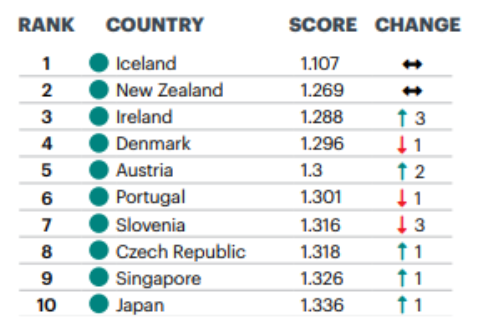
Figure 1: The 10 most peaceful countries in the world
Source: compiled by the authors based on the Institute for Economics & Peace[21].
Singapore learnt lessons from the 2003 health crisis caused by the SARS outbreak. Singapore was one of the five most affected countries. The number of people infected between 1 November 2002 and 31 July 2003 was 238, with 33 deaths. After the World Health Organization (WHO) announced the outbreak on 30 May 2003. The WHO declared Singapore SARS-free, the outbreak in Singapore stopped in June 2003[22]. They have improved their public health system by implementing infection prevention and control strategies and increased cooperation with international partners.
In response to the health crisis caused by the SARS outbreak, Singapore has taken several measures to deal with the situation. The main act that gave the government more powers to control the spread of infectious diseases is the Infectious Diseases Act[23]. Strict control measures were introduced at borders, including mandatory temperature checks for all arriving passengers. There was also an intensive public health and hygiene education campaign, including the use of masks and regular handwashing. Restrictive measures were introduced in public places such as schools and workplaces to reduce contact. Temporary clinics were set up and resources for treating the sick were increased to ensure access to health care. All these measures effectively managed the health crisis and prevented further spread of the virus[24]. Following the 2003 SARS outbreak in Singapore, important lessons were learnt that can be applied to future crisis situations. One of the main lessons is the need for transparent and timely communication with the public. It is important to provide accurate and reliable information about the situation to prevent the spread of panic and misconceptions. In addition, the crisis emphasized the importance of emergency preparedness. It is necessary to have effective plans and mechanisms in place to respond to such crises, including the mobilization of medical resources and training of health personnel. Recommendations for the future include creating a more flexible health system that can adapt and respond quickly to new health threats. Attention should also be paid to the development of national infrastructure and the ability to rapidly scale up health services when needed.
Norway successfully dealt with the aftermath of the terrorist attacks in Oslo and Utøya Island in 2011 with a comprehensive approach to psychological support for victims and their families. They have also strengthened security measures and taken additional measures to counter extremism. The events of 22 July revealed significant gaps in society’s preparedness for emergencies and protection against threats. Following the tragic events in Oslo and Utøya Island in 2011, reforms were undertaken by the Ministry of Justice and Public Security to improve the country’s security[25]. Revision of plans, increased staffing, military-police cooperation plans, equipment purchases, emergency exercises, training and certification programmes, a new division in the Police Directorate responsible for crisis management and preparedness, and a research centre focusing on extremism are some of them. Significant changes were made to the “On firearms and ammunition” Act[26]. Controls on the acquisition of weapons were tightened, new security measures were introduced for public places and transport, and measures to counter extremism and terrorism were strengthened. In addition, changes were made to the justice system to punish terrorists fairly and protect the rights of victims[27].
Terrorist actors often seek to induce political authorities to behave in ways that damage the legitimacy of the government or provoke a series of events that could help the terrorists achieve their goals[28]. In fact, governments can achieve these goals if they show a lack of willingness or ability to respond appropriately. More often than not, overreaction occurs when governments use force in the form of military action or disproportionate repression. This not only undermines the legitimacy of the governments concerned, but also causes radicalization among affected populations. International counter-terrorism cooperation has also been an important part of the reforms. Norway has been resolute and has taken the necessary measures to deal with the aftermath of the terrorist attack.
During the European migration crisis in 2015, Germany demonstrated openness and willingness to accept refugees, while strengthening border control and improving the integration of migrants. This experience enabled them to successfully meet the challenges and minimize the negative effects of the crisis. Immigration in Germany peaked in importance around the end of 2015 and has continued to be one of the most significant issues since 2014. This coincided with a significant drop in the perception of the importance of economic hardship in recent years, most likely as a result of the relative strength of the economy in the country[29]. German migration policy during the European migration crisis resulted in adjustments to the Act on the Residence, Employment, and Integration of Foreigners in the Federal Territory[30]. Firstly, the number of refugees accepted increased significantly, which contributed to the improvement of their living conditions. Due to Germany’s openness and readiness to accept migrants, the new arrivals were able to find asylum, as well as access to education, health care and social programmes. In addition, the country became actively involved in the integration of migrants by providing them with language courses, jobs, and assistance in assimilating German culture. This has promoted better understanding between the German population and migrants, and has also contributed to the country’s economic development. South Korea effectively managed the threat of the COVID-19 pandemic by taking strong measures on testing, contact tracing and quarantine (Table 1). They also utilized information and communication technology to track the spread of the virus and inform the public.
Table 1: Current COVID-19 statistics as of 13.04.2024 in South Korea
| Population | 51,330,000 | |
| Total infections | 34,571,873 | 67.4% |
| Fatalities | 35,934 | 0.1% |
| Recovered | N/A | |
| Being sick right now. | N/A | |
| Tests done | 15,804,065 | |
| 1 million tests | 307,892 | |
Source: compiled by the authors based on “Coronavirus in South Korea”[31].
South Korea has introduced and maintains strict measures, including broad epidemiological investigation, rapid diagnosis, case isolation, contact tracing, quarantine and social distance due to lack of vaccines and treatments. Future studies should examine how different interventions have affected the recent dynamics of COVID-19. The most important existing law regarding the COVID-19 outbreak in South Korea is the Infectious Disease Control and Prevention Act[32]. Due to the measures taken, South Korea has achieved significant results in controlling the COVID-19 pandemic. The country has established a high frequency of testing for the virus, which has enabled the identification and isolation of many infected individuals[33]. Through contact tracing and monitoring organized by the government, it was possible to quickly identify and quarantine those who were potentially infected. Such measures helped to effectively control the spread of the virus and reduce COVID-19 mortality in South Korea. In addition, good communication and timely precautionary information to the public helped to increase awareness and adherence to recommendations, which also contributed to the successful control of the pandemic.
Crisis management and cooperation with the international community is a key aspect of South Korea’s fight against the COVID-19 pandemic. South Korean authorities are actively engaging with international organizations such as WHO and the Centres for Disease Control and Prevention to share information and jointly develop strategies to combat the virus[34]. They are also collaborating with other countries to provide assistance in the form of medical equipment and expertise in the detection and treatment of COVID-19. South Korea is also actively participating in international forums and conferences to share experiences and learn best practices in dealing with the pandemic. The COVID-19 pandemic has shown that an unexpected and new threat can easily outsmart the current political-administrative structure of any country, not only South Korea. To effectively anticipate and manage these crises, governments need new administrative skills. Consistent responses to crises have implications beyond simple operational actions, as they prevent serious dangers from undermining already eroded credibility[35].
Several lessons have emerged from the above examples of crises that are worth considering when developing public management strategies in crises and emergencies. It is important to have a clear and adequate system of information exchange between different levels of government and executive authorities. This will make it possible to respond quickly to crisis situations and take the necessary decisions. Cooperation and coordination between government agencies and non-governmental organizations, as well as with economic actors and the public, should also be improved. This will help to effectively manage crisis consequences and ensure rapid recovery. Special attention should be paid to the preparation of crisis plans and their regular updating. This will help to be prepared for different scenarios and minimize negative consequences. Finally, it is worth actively using information technology and communication tools for prompt interaction and informing the population about the measures taken by the state in a crisis. The effectiveness of public administration in crises and emergencies is a key aspect of ensuring security, protection of the population and economic sustainability. The experience of various countries allows emphasizing several important principles:
- Flexibility and responsiveness: Effective public administration systems must be flexible and able to respond quickly to changing crisis conditions. Public authorities should have mechanisms for rapid decision-making and coordination.
- A system of pre-preparation and planning: countries with good governance invest in the development of emergency strategies, plans, and exercises before emergencies occur. This improves the response to a crisis and minimizes its impact.
- Coordination and cooperation: An important element of successful crisis management is coordination and cooperation between different levels of government and between public and private actors. Only the cooperation of all stakeholders can ensure an effective response to a crisis and minimize its consequences.
- Transparency and communication: public authorities should ensure transparency in their actions and regularly inform the public about the situation, measures taken and recommendations for the population. This helps to build public confidence in public institutions and increase the effectiveness of crisis response measures.
- Training and updating of skills: Public servants must have adequate training and skills for effective crisis management. Continuous training and updating of knowledge enables them to better cope with the challenges of crises and adapt to new conditions.
- Learning from international experience: It is important to learn from and adapt successful experiences of other countries in crisis and emergency management. International cooperation and exchange of experience allows countries to learn lessons and develop their own strategies and approaches.
Consequently, in order to improve the effectiveness of public administration in emergency situations, the following aspects need to be given special attention. Firstly, it is important to develop and regularly update scenarios and action plans for different crisis situations, taking into account experiences and lessons learnt from different countries. It is also necessary to establish a monitoring and warning system for prompt response to possible threats and hazards. Improving cooperation and coordination between different governmental structures, as well as coordination with international partners, is important. To improve communication with the population, it is recommended to organize a system of operational information and counselling of citizens. In addition, investments should be made in the development and modernization of information technology, which will allow for the automation of public administration processes and faster and more effective decision-making in emergency situations. It is also important to conduct regular drills and exercises involving all levels of government in order to improve their preparedness and ability to deal effectively with crises.
4. Discussion
In times of crisis, the job of public administration is to make the necessary decisions to protect the stability and security of the nation. To effectively deal with crisis circumstances, public administration needs to coordinate the efforts of various agencies and organizations. Public administration should also create and implement crisis prevention plans, in addition to providing the public with timely information about potential hazards and necessary risk mitigation measures.
The occurrence of a crisis has an immediate and sometimes delayed negative impact on the environment, requiring an urgent and effective response by public authorities to prevent further damage to society and the economy. Response and relief measures are usually coordinated within pre-existing disaster management and emergency response structures, where specific organizations and agencies may have specific roles and responsibilities. Crisis situations and responses have been investigated by Boin et al.[36], DeLeo et al.[37], Gao and Yu[38]. According to the findings of Boin et al., crises can manifest themselves in different forms and affect society at different levels. It can be a man-made disaster, an oil spill, an earthquake or, more commonly today, the effects of global climate change with an increase in the frequency of floods and extreme weather events. Gao and Yu conclude that sometimes a crisis may require the establishment of a temporary ad hoc structure and the distribution of decision-making authority. Effective response in the immediate aftermath of a crisis often requires a high level of coordination and cooperation between government agencies and external agencies. While response activities are critical, there is growing recognition that prevention and preparedness measures are cost-effective ways to reduce the impact of a disaster on affected communities. In conformity with DeLeo et al.[39], crises, whether small or large, have wide-ranging impacts on society. While the adverse impacts of disasters are often seen as the experiences of affected communities, it should also be noted that disasters are events where broader impacts and risks become a reality. The occurrence of a disaster is often the result or combination of factors arising from past policies and decision-making. It is therefore an opportunity to learn lessons for preventing and reducing disaster risk, building a safer and more sustainable future in the new millennium. Disasters can move societies and public organizations out of complacency and stimulate reforms in various policy areas. It is worth adding that the experience and perception of a disaster can also influence policy processes in local communities and at higher levels of government, leading to increased awareness and prioritization of disaster preparedness measures. Therefore, it becomes important to understand the role of public management in crisis situations and the associated effectiveness.
The experience of Singapore, South Korea and other countries suggests that pandemics and other major disasters may be inevitable. However, the breadth, depth, and impact of these crises on the lives of citizens depend on the adaptability of society and the response of government. The impact of pandemics on society and the state has been studied by Boin et al.[40] and Robinson et al.[41] According to the findings of Boin et al., the importance of effective emergency management and its relationship with public-government cooperation in such difficult times was made evident by the COVID-19 pandemic. This further demonstrated how important public trust in government is for the smooth functioning of modern society. Robinson et al. note that the public’s views on policies that limit damage to the democratic system, the economy and public health are a critical factor in determining the legitimacy of a government’s ability to formulate and implement such policies. This research focuses on these views and offers a model that can help us understand how people perceive government effectiveness in times of crisis.
Public sector effectiveness is rooted in accountability and efficiency, and this has been a recurring theme in public management throughout the 21st century. A factor that has a strong influence on the performance of organizations is precisely the method of governance. Exploring the topic of governance methods, Kutieshat and Farmanesh[42], Dunlap[43] note that this is particularly relevant in times of crisis or emergency as the propensity for efficiency is often questioned. Kutieshat and Farmanesh argue that there is a high degree of pressure and many unknowns associated with a crisis, and the government’s response is examined under a microscope both during the occurrence of the crisis and in its reflection. Most of the publications past and present identify resource management in crisis situations as a vital topic of public sector activities. According to Dunlap, it is because of crisis that the public becomes acutely aware of the interdependence that binds the government and the people. The crisis is a defining moment for the government as it faces the challenge of protecting the future interests of the public and restoring public trust. The outcome of these tasks depends on the capacity of the governing body, and effective governance mechanisms are essential to ensure that the tasks are carried out at a satisfactory level. High-profile failures during crises, such as the Federal Emergency Management Agency’s ineffective management of Hurricane Katrina, can ultimately undermine public confidence in government and public administration. Consequently, effective public management is never more important than in times of crisis; however, pressures and unfamiliar conditions make it difficult to maintain rigorous management strategies.
According to this study, crises can reinforce existing social inequalities and divisions in society. This can lead to increased divisions and conflicts between different population groups. Emergencies can pose threats to the security of citizens and the state. These can include terrorist attacks, military conflicts, natural disasters and epidemics. They can also lead to economic losses due to reduced production, job losses, reduced investment and loss of investor confidence. This can lead to higher unemployment, lower incomes and reduced social programmes. Having studied the issue of impact of crises and emergencies, Agrawal[44], Van der Wal[45], Mizrahi et al.[46] conclude that the immediate consequences of emergencies are usually disruptions in man-made or natural systems that affect humans. As denoted by Van der Wal, the very nature of crises and emergencies resulting in large-scale loss of life, mass destruction and devastation places a tremendous strain on the work of society to protect the health, safety, and order of the population. Such periods of unrest are thus the periods when the functions of public administration are most vital. According to the findings of Agrawal[47], one of the objectives of public administration and its functions related to maintaining the environment or providing services and regulation to protect people is to reorient the work of these functions to protect threatened or affected communities and help in environmental restoration. It is impossible to disagree with the findings of Mizrahi et al.[48] that minimizing costs and reducing risks to society are key components of effective crisis management. It is worth believing that public appreciation of the government’s handling of these crises is important in building trust among stakeholders, which in turn promotes compliance and participation in government initiatives to address the problems these crises leave behind.
Consequently, States face several challenges that are different from and more acute than those faced in normal times. Some of these challenges will be to carry out their day-to-day functions in such a way as to protect the public and minimize the loss and damage caused by an emergency, while others will be to plan and coordinate the work of many various organizations within and outside the public sector involved in responding to emergencies or playing a role that affects the ability of society to cope with different aspects of crises and emergencies.
5. Conclusions
In times of crisis, public administration plays a vital role in maintaining the stability and security of a country and its citizens. When it comes to making strategic decisions, coordinating everyone’s actions and mobilizing resources during emergencies, public administration is indispensable. Good governance is essential to minimize negative impacts and maintain stability in times of crisis. The experience of other countries can provide valuable guidance and practical illustrations of crisis and emergency management.
Having analysed the experiences of Germany, Singapore, South Korea, Norway, Spain and New Zealand, it was possible to identify a number of lessons that should be taken into account when creating public management plans during emergencies and crises. A clear and sufficient system of information sharing between the executive branch and the different levels of government is crucial. Increased cooperation and coordination is needed, not only with business and public stakeholders, but also between government agencies and non-governmental organizations. The cooperation of all parties involved is necessary to guarantee a successful solution to the problem and mitigate its consequences. The creation and frequent updating of crisis management plans also requires special attention. In order to facilitate rapid communication and notify the public of government actions during a crisis, it is important to actively use information technology and communications.
Ensuring security, protection of the population and economic sustainability during crises and emergencies largely depends on the effectiveness of public administration. Rapid decision-making and coordination mechanisms must be in place within government agencies. Countries with strong governance invest in contingency plans, exercises, and strategies before crises occur. Coordination and cooperation between public and private organizations, as well as between government levels, are essential components of effective crisis management. It is critical for government agencies to maintain transparency in their operations and to keep the public informed of the status, actions taken, and recommendations of the public. To deal effectively with crisis situations, public servants must have the necessary training and competences. Learning and implementing effective crisis and emergency management strategies from other countries is crucial. Countries can develop their own strategies and approaches and learn from each other through international cooperation and exchange of experiences. Consequently, in order to improve the effectiveness of public emergency management, special attention needs to be paid to the above-mentioned aspects. The basis for optimization is the application of several measures aimed at increasing efficiency and effectiveness.
The study faced limitations in accessing the necessary information about the current model of library education in the university or in the country at large, which makes the study difficult. There was also insufficient data to conduct a comprehensive analysis of the situation. The prospect for further research is to investigate the role of civil society, the private sector and local communities in supporting and managing crises, including analysing the mechanisms of partnership and cooperation between different sectors of society.
- L.M. Sembiyeva, State audit of implementation of anti-crisis measures in Kazakhstan, in Proceedings of the International Round Table “Transformation of Accounting, Analysis and Control in the Context of Socio-Economic Challenges”, Ternopil: West Ukrainian National University, 2021, pp. 142-148, http://dspace.wunu.edu.ua/handle/316497/45521. ↑
- M.A. Abisheva, R.T. Dulambaeva, S.A. Dzhumabaev, T.V. Marmontova, B. Baglay, Public administration in a pandemic, in Astana: Academy of Public Administration under the President of the Republic of Kazakhstan, 2020, https://repository.apa.kz/bitstream/handle/123456789/394/Государственное%20управление%20в%20условиях%20пандемии.Pdf?sequence=1&isAllowed=y. ↑
- G. Kumisbaeva, Mechanism for increasing the effectiveness of the services of the ministry of emergencies, in Astana: Academy of Public Administration under the President of the Republic of Kazakhstan, 2022, https://repository.apa.kz/bitstream/handle/123456789/963/МП_Кумисбаева%20Г.pdf?sequence=1&isAllowed=y. ↑
- U.H. Safarov, Theoretical aspects of the essence of crisis and anti-crisis management of enterprises in modern conditions, in Herald of Tajik State University of Commerce, 4/1(33), 2020, pp. 180-187. http://tguk.tj/vestnik/arhive/0.%20Вестник%20-%204-1(33)-2020.pdf#page=182. ↑
- V. Nakrošis, Lithuania: Public administration reforms during 2008-20, In Handbook of Theories of Public Administration and Management, Edward Elgar Publishing, Cheltenham, 2021, pp. 275-285 https://doi.org/10.4337/9781789908251.00035. ↑
- G.S. Zhanseitova, S. Tleuberdiyeva, A.K. Auelbekova, Risk management in public administration, in Bulletin of the L.N. Gumilyov Eurasian National University, Economic Series, 2, 2022, pp. 144-154. https://doi.org/10.32523/2789-4320-2022-2-144-154. ↑
- Act “On firearms and ammunition”, 1961, https://233773342789-lic.s3.eu-central-1.amazonaws.com/attachments/legislation/norway/Act%20No.1%20-%20Firearms%20ammunition_09.06.1961.pdf. ↑
- New Zealand’s countering terrorism and violent extremism strategy, 2020, https://www.dpmc.govt.nz/publications/new-zealands-countering-terrorism-and-violent-extremism-strategy. ↑
- Infectious diseases act, 1976, https://faolex.fao.org/docs/pdf/sin215983.pdf. ↑
- Act “On the residence, economic activity and integration of foreigners in the federal territory”, 2008, https://www.gesetze-im-internet.de/englisch_aufenthg/index.html. ↑
- Infectious disease control and prevention act, 2009, https://elaw.klri.re.kr/eng_mobile/ganadaDetail.do?hseq=37239&type=abc&key=INFECTIOUS%20DISEASE%20CONTROL%20AND%20PREVENTION%20ACT¶m=I. ↑
- The Criminal Procedure Act, 1981, https://legislationline.org/sites/default/files/documents/30/Norway_Criminal_Procedure_Act_1981_am2013_en.pdf. ↑
- K. Tennakoon, S. Serrao-Neumann, C. Hanna, Examining the incorporation of small-scale recurrent disasters in emergency management frameworks: Insights from Aotearoa – New Zealand, in International Journal of Disaster Risk Reduction, 66, 2021, 102595, https://doi.org/10.1016/j.ijdrr.2021.102595. ↑
- V. Rigby, T. Juneau, M. Bloodworth, K. Buck, W. Elcock, D. Fadden, M. Husain, D. Jean, M. McCuaig Johnston, J. McNee, R. Paris, M. Rosenberg, N. Semaan, M. Drohan, A national security strategy for the 2020s, University of Ottawa, Ottawa 2022, https://www.ceasefire.ca/wp-content/uploads/2022/05/natsec_report_gspia_may2022.pdf. ↑
- A.M. Omar, A. Halim, Whole-of-nation approach in COVID-19 management: The case of Brunei Darussalam, in Global Perspectives on Change Management and Leadership in the Post-COVID-19 Era, IGI Global, Hershey, 2021, pp. 35-55, https://doi.org/10.4018/978-1-7998-6948-1.CH003. ↑
- O. Adamska, Anti-crisis management in the context of responding to regional challenges: Theoretical-methodological aspects, in Efficiency of Public Administration, 55(2), 2018, pp. 30-38, https://doi.org/10.33990/2070-4011.55.2018.148495. ↑
- S. Nujuliyani, D. Tirto, Y. Azhari, P. Widodo, New Zealand counter-terrorism strategy for building positive peace to support national security, in International Journal of Humanities Education and Social Sciences, 3(1), 2023, 185-191. https://doi.org/10.55227/ijhess.v3i1.582. ↑
- New Zealand’s countering terrorism and violent extremism strategy, 2020, https://www.dpmc.govt.nz/publications/new-zealands-countering-terrorism-and-violent-extremism-strategy.Infectious diseases act, 1976, https://faolex.fao.org/docs/pdf/sin215983.pdf. ↑
- S. Nujuliyani, D. Tirto, Y. Azhari, P. Widodo, New Zealand counter-terrorism strategy for building positive peace to support national security, cit. ↑
- C. Rivera, T. Oxholm, W. Hoverd, New Zealand religious groups’ responses to the Christchurch terror attacks: Inclusion, exclusion and the state response to the mosque victims, in Journal for the Academic Study of Religion, 36(1), 2023, 1-27, https://doi.org/10.1558/jasr.21175%20. ↑
- Institute for Economics & Peace. Global peace index 2022: Measuring peace in a complex world, 2022, https://www.visionofhumanity.org/wp-content/uploads/2022/06/GPI-2022-web.pdf. ↑
- Communicable diseases surveillance in Singapore 2003, Singapore: Ministry of Health, 2004, https://www.moh.gov.sg/docs/librariesprovider5/resources-statistics/reports/cds2003.pdf. ↑
- Infectious diseases act, 1976, https://faolex.fao.org/docs/pdf/sin215983.pdf. ↑
- S. Kim, Y. Goh, J.H.B. Kang, Moving towards a common goal via cross-sector collaboration: Lessons learnt from SARS to COVID-19 in Singapore, in Globalisation and Health, 18, 2022, 82, https://doi.org/10.1186/s12992-022-00873-x. ↑
- M. Nilsen, E. Albrechtsen, O.M. Nyheim, Changes in Norway’s societal safety and security measures following the 2011 Oslo terror attacks, in Safety Science, 110(Part C), 2018, pp. 59-68, https://doi.org/10.1016/j.ssci.2017.06.014. ↑
- Act “On firearms and ammunition”, 1961, https://233773342789-lic.s3.eu-central-1.amazonaws.com/attachments/legislation/norway/Act%20No.1%20-%20Firearms%20ammunition_09.06.1961.pdf. ↑
- The Criminal Procedure Act, 1981, https://legislationline.org/sites/default/files/documents/30/Norway_Criminal_Procedure_Act_1981_am2013_en.pdf. ↑
- T. Bjørgo, A.R. Jupskås, Introduction by the guest editors of the special issue: The long-term impacts of attacks: The case of the July 22, 2011 attacks in Norway, in Perspectives on Terrorism, 15(3), 2021, pp. 2-13, https://www.jstor.org/stable/27030879. ↑
- T. Talò, Public attitudes to immigration in Germany in the aftermath of the migration crisis, European University Institute, Florence, 2017, https://doi.org/10.2870/516256. ↑
- Act “On the residence, economic activity and integration of foreigners in the federal territory”, cit. ↑
- Coronavirus in South Korea, 2024, https://index.minfin.com.ua/reference/coronavirus/geography/south_korea/. ↑
- Infectious disease control and prevention act, cit. ↑
- H. Ryu, A. Abulali, S. Lee, Assessing the effectiveness of isolation and contact-tracing interventions for early transmission dynamics of COVID-19 in South Korea, in IEEE Access, 9, 2021, pp. 41456-41467, https://doi.org/10.1109/ACCESS.2021.3064371. ↑
- J. You, Lessons from South Korea’s Covid-19 policy response, in The American Review of Public Administration, 50(6-7), 2020, 801-808, https://doi.org/10.1177/0275074020943708. ↑
- D.P. Carter, D.P. May, Making sense of the U.S. Covid-19 pandemic response: A policy regime perspective, in Administrative Theory & Praxis, 42(2), 2020, pp. 265-277, https://doi.org/10.1080/10841806.2020.1758991. ↑
- A. Boin, M. Lodge, M. Luesink, Learning from the COVID-19 crisis: An initial analysis of national responses, in Policy Design and Practice, 3(3), 2020b, pp. 189-204, https://doi.org/10.1080/25741292.2020.1823670. ↑
- R.A. DeLeo, K. Taylor, D.A. Crow, T.A. Birkland, During disaster: Refining the concept of focusing events to better explain long-duration crises, in International Review of Public Policy, 3(1), 2021, https://doi.org/10.4000/irpp.1868. ↑
- X. Gao, J. Yu, Public governance mechanism in the prevention and control of the COVID-19: Information, decision-making and execution, in Journal of Chinese Governance, 5(2), 2020, pp. 178-197, https://doi.org/10.1080/23812346.2020.1744922. ↑
- R.A. DeLeo, K. Taylor, D.A. Crow, T.A. Birkland, During disaster: Refining the concept of focusing events to better explain long-duration crises, cit. ↑
- A. Boin, M. Ekengren, M. Rhinard, Hiding in plain sight: Conceptualising the creeping crisis, in Risk, Hazards & Crisis in Public Policy, 11(2), 2020, pp. 116-138, https://doi.org/10.1002/rhc3.12193. ↑
- S.E. Robinson, J.T. Ripberger, K. Gupta, J.A. Ross, A.S. Fox, H.C. Jenkins-Smith, C.L. Silva, The relevance and operations of political trust in the COVID-19 pandemic, in Public Administration Review, 81(6), 2020, pp. 1110-1119, https://doi.org/10.1111/puar.13333. ↑
- R. Kutieshat, P. Farmanesh, The impact of new human resource management practices on innovation performance during the COVID 19 crisis: A new perception on enhancing the educational sector, in Sustainability, 14(5), 2022, p. 2872, https://doi.org/10.3390/su14052872. ↑
- K.H. Dunlap, Linking trust in government with federal disaster relief aid: A case study of hurricane-prone Gulf coast residents, George Mason University, Fairfax, 2022. https://hdl.handle.net/1920/13207. ↑
- S.K. Agrawal, Understanding disaster management: An analysis, in Asiatic Society for Social Science Research, 2(1), 2020, pp. 58-67, https://www.i-scholar.in/index.php/asssr/article/view/208914. ↑
- Z. Van der Wal, Being a public manager in times of crisis: The art of managing stakeholders, political masters, and collaborative networks, in Public Administration Review, 80(5), 2020, pp. 759-764, https://doi.org/10.1111/puar.13245. ↑
- S. Mizrahi, E. Vigoda-Gadot, N. Cohen, How well do they manage a crisis? The government’s effectiveness during the Covid-19 pandemic, in Public Administration Review, 81(6), 2021, pp. 1120-1130, https://doi.org/10.1111/puar.13370. ↑
- S.K. Agrawal, Understanding disaster management: An analysis, in Asiatic Society for Social Science Research, 2(1), 2020, pp. 58-67, https://www.i-scholar.in/index.php/asssr/article/view/208914. ↑
- S. Mizrahi, E. Vigoda-Gadot, N. Cohen, How well do they manage a crisis? The government’s effectiveness during the Covid-19 pandemic, in Public Administration Review, 81(6), 2021, pp. 1120-1130, https://doi.org/10.1111/puar.13370. ↑


