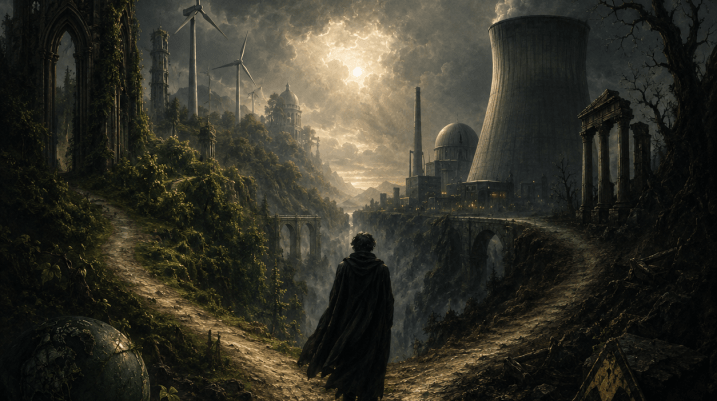
Lo scritto intende esaminare il rapporto tra gli obiettivi di decarbonizzazione fissati dall’Unione europea attraverso il c.d. “Green Deal” europeo e le più recenti strategie dell’UE in materia di energia nucleare, al fine di valutare se tali programmi convergano verso un obiettivo climatico comune o, al contrario, seguano traiettorie normative e politiche divergenti. Muovendo dall’analisi delle fonti giuridiche dell’UE e degli strumenti di soft law eurounitari, lo studio esplora le recenti iniziative relative all’energia nucleare, comprese quelle relative alla sicurezza, alla gestione dei rifiuti e al suo potenziale ruolo nel raggiungimento degli obiettivi climatici. Pur riconoscendo che l’energia nucleare non è al centro del Green Deal, lo scritto mira a evidenziare le principali peculiarità di questa fonte energetica analizzandone le implicazioni giuridiche e amministrative.
The paper aims to examine the relationship between the decarbonisation targets set by the European Union through the EU’s “Green Deal” and the EU’s latest nuclear energy strategies to assess whether such programmes converge toward a common climate objective or, conversely, follow divergent regulatory and policy trajectories. Drawing on an analysis of EU legal sources and soft law instruments, the study seeks to investigate recent initiatives related to nuclear energy, including those related to safety, waste management, and its potential role in achieving climate goals. While acknowledging that nuclear power is not at the heart of the Green Deal, the paper aims to highlight the main peculiarities of this energy source by analysing its legal and administrative implications.
1. Background and paper goals
The European Union is currently navigating a complex intersection of environmental ambition and energy security, embodied respectively in the European Green Deal (hereinafter “GD”) and the EU Nuclear Energy Strategy (hereinafter “NES”). While both policy frameworks aim to ensure decarbonisation, economic resilience, and energy sovereignty, their coexistence raises delicate questions under administrative law and public governance[1].
The GD, introduced in 2019, sets the EU on a path to climate neutrality by 2050. It redefines energy and environmental policy through integrated legislative packages (e.g. “Fit for 55”), governance mechanisms under the Regulation on the Governance of the Energy Union, and sectoral targets. At the same time, the EU’s renewed approach to nuclear energy – reflected in the 2022 inclusion of nuclear technologies in the EU Taxonomy for Sustainable Activities and the political relaunch of Euratom governance – has revitalised interest in nuclear as a stable, low-carbon baseload source. The balance between these strategies hinges on regulatory discretion, multi-level governance, and procedural adaptation. One of the core legal tensions arises from the fragmented competence distribution among EU institutions and Member States.
The result is a layered legal architecture that requires national authorities, EU agencies, and supranational bodies (such as the European Commission and Euratom Supply Agency) to coordinate decisions over environmental impact assessments, licensing procedures, public consultations, and state aid control. A particularly contentious administrative issue involves the inclusion of nuclear energy in sustainable finance frameworks. While the delegated act under the EU Taxonomy Regulation classifies nuclear energy as sustainable under strict conditions (notably on waste management and safety), several Member States and NGOs have initiated legal and political challenges. This situation shows how administrative discretion and evidentiary thresholds (e.g. technical screening criteria) become contestation places in implementing sustainability classifications (it also underscores the growing importance of technocratic regulatory governance – based on scientific expertise, risk assessment, and stakeholder involvement – in nuclear energy planning).
Nevertheless, potential synergies are emerging through evolving procedural instruments. Strategic Environmental Assessments, Integrated National Energy and Climate Plans and Transition Mechanisms can serve as harmonisation platforms where nuclear and green energy trajectories are jointly assessed. Moreover, the development of Small Modular Reactors (SMRs) and microreactors opens new legal scenarios: due to their scale, these technologies challenge traditional permitting models and may require adaptive licensing frameworks, simplified administrative pathways, and integrated digital monitoring. This could foster regulatory experimentation, with implications for proportionality, legal certainty, and access to justice. Another potential synergy lies in the digital and procedural integration of permitting processes. The Green Deal’s push for a clear carbon policy (see the “ETS” regulation), the restoration of the natural environment and the protection of what already exists (see the so called “Nature Restoration Law”), and faster renewable energy deployment (see the sol called “Red II Directive”, as amended in 2024) have led to calls for streamlined administrative procedures and digitalisation of authorisation pathways. A similar momentum could benefit the nuclear sector, especially as it transitions to decentralised and modular designs. The application of the “one-stop-shop” model and time-bound procedures – already envisaged for renewables – could be extended to nuclear technologies, provided that safety and participation guarantees are not diluted. From a broader governance perspective, the future balance between the Green Deal and the nuclear strategy will depend on the adaptability of the EU’s administrative law system to integrate emerging technologies while preserving environmental standards and legal accountability.
The potential revision of Euratom’s legal framework – currently criticised for its outdated governance model and limited transparency – offers an opportunity to align nuclear oversight with the participatory and sustainability principles of the Green Deal.
Against this background, the paper aims to explore the evolving legal and institutional tensions and synergies between these two pillars of EU policy, with a specific focus on the administrative law instruments and decision-making procedures that mediate their interaction, considering that reconciling the EU’s Green Deal and Nuclear Energy Strategy requires more than political compromise: it necessitates a dynamic recalibration of administrative procedures, regulatory standards, and institutional mandates. By embedding procedural coherence, public participation, and scientific accountability into energy governance, the EU can transform apparent policy tensions into long-term synergies (supporting both decarbonisation goals and energy resilience in an era of ecological transition and geopolitical uncertainty).
2. The European Green Deal: general regulatory framework
First of all, it should be clarified that the GD is a strategy to combat climate change launched by the EU in December 2019. The act that outlines its essential features is, in fact, a Commission Communication, a policy document entitled European Green Deal COM(2019)640[2]. The strategy, of course, is not limited to the above communication but encompasses a wide variety of measures: European sectoral strategies (e.g. on biodiversity, food security and industrial policy), action plans for the circular economy and proposals in strategic sectors such as energy and fuels, transport and land use in the so called “Fit for 55%” package[3] . The term “Green Deal” therefore does not refer to a single act but to the overall regulatory process through which the Commission is giving shape and substance to the strategy to combat climate change outlined at the end of 2019[4]. Moreover, the GD – and the acts adopted to implement it – are also based on the European Union’s participation in international climate agreements, including the Paris Agreement. In particular, these acts also implement the Nationally Determined Contribution notified by the European Union pursuant to Article 4(2) of the Paris Agreement above.
The ambitions of this strategy are many and great. The GD, according to the aforementioned Communication, aims to reformulate the Commission’s commitment to tackling climate and environmental issues on a new basis and consists of a new growth strategy aimed at transforming the EU into a fair and prosperous society[5]. Above all, however, it commits the EU to achieving the goal of climate neutrality[6] by 2050. This is a goal that, on closer inspection, has an obvious and inevitable transformative capacity. In fact, this neutrality is added to the objectives already codified in the treaties, starting with that of sustainable development, effectively modifying their content. What is envisaged here is a redefinition of European policies, which are being rethought and combined with each other in line with the new objective[7]. Several strategies have been developed for the implementation of the GD: this is the case of the European biodiversity strategy for 2030 (see Communication COM(2020) 380, incorporated into the so-called “Nature Restoration Law”); the “Circular Economy Action Plan. For a cleaner and more competitive Europe” [COM(2020) 98], which aims to reduce the life cycle of emissions and increase the rate of recycling and reuse of products and materials[8]; the strategy «From farm to fork for a fair, healthy and environmentally friendly food system», which aims to ensure fair, healthy and environmentally friendly food systems by reducing the use of pesticides, fertilisers and antibiotics [COM(2020) 381]; the strategy for sustainability in the chemical sector [COM(2020) 667]; the EU strategy for energy system integration, which aims to increase its efficiency and interconnection [COM(2020) 299]; the EU hydrogen strategy, which aims to promote its clean use as part of the transition to a zero-emission economy [COM(2020) 301]. These strategies, developed under the GD, are also linked to shorter-term financial interventions aimed at preparing for recovery in the post-pandemic era (“Next Generation EU”[9] and the national PNRR[10])[11].
Now, leaving aside the purely genetic profiles of the GD, it seems appropriate to immediately isolate its distinctive features in order to better define its differentiation process and potential relevance in the process of European integration. Firstly, this is not a purely defensive programme, i.e. an emergency response to a series of critical and unexpected events (such as the pandemic); on the contrary, the GD explicitly aims to develop a political project and reflects the Commission’s desire to guide the present and future agenda of Member States[12]. From this perspective[13], therefore, the European GD represents a clearly innovative initiative compared to past EU regulatory initiatives on the subject and clearly sets out a long-term perspective that presupposes changes across the entire spectrum of economic and social policies[14]. Secondly, it is a regulatory project that concerns the EU as a whole and, on closer inspection, initiates a process that does not confirm the trend towards the progressive autonomy of the Eurozone but involves all Member States of the Union. It should be noted that the Commission does not present the Green Deal as a process of legal and institutional unification but rather assumes that the EU is already a unified construct, foreshadowing a process aimed at making that construct more solid and robust[15]. Thirdly, the substantive content. From the perspective of the GD, the macro-objective of a climate-neutral Europe should be achieved through various interconnected measures that cut across and link different public policies, from energy to biodiversity protection, from transport to construction.
Numerous sub-objectives then specify and give substance to the above “super objective”: this is the case, for example, and of particular interest here, of the Carbon Border Adjustment Mechanism (hereinafter also referred to as “CBAM”[16]), which serves to define the import price of certain energy intensive goods. Now, all the measures provided for therein have an inevitably technical-scientific basis, i.e. it can be said that a climate-neutral Europe is first and foremost a system that complies with certain scientific parameters, defined by technology[17]. But it is also certainly, secondarily, a system that is committed on a political and administrative level, supported by a growth model capable of responding to the challenges of climate change and environmental degradation, improving the quality of life[18]. From this perspective, therefore, GD is nothing more than a regulatory project with a strong transformative capacity, which exerts, in particular, with respect to the economic constitution of the European Union[19]. In fact, it affects each of its main components, enriching its objectives and setting the conditions for the development of genuine EU public policies, focused on balancing public interests and between these and private interests. This force also involves environmental protection regulations, which are an important part of the European economic constitution, so much so that the main innovation consists in the identification of a new policy-making objective[20], that of the protection and restoration of sustainable ecosystems, which departs from the concept of sustainable development to promote the different logic of ecological primacy[21].
2.1. The components of GD and its intrinsic aims
As for the main components of the GD, it is fairly easy to find references to them. First and foremost, a renewed industrial policy consistent with the objectives of reducing emissions. A series of measures aimed at supporting the decarbonisation process (which is a central aspect of climate neutrality, as will be discussed below). The fascinating project of a circular economy[22]. Social support for those who are and will be most directly affected by the economic transformations that this strategy brings with it. Finally, a new focus on biodiversity protection. The link between these components would seem to lie, also according to some of the doctrine[23], in the conceptual and operational horizon of sustainable development, which requires a reasoned balance between economic growth, social interests and environmental protection. From this perspective, it could even be argued that GD represents an evolution of sustainable development: the ingredients remain the same (economy, society and environment) but one of them, the environment, is now represented in the more articulated terms of ecosystems.
A shift in balance, therefore, in favour of environmental protection[24]. This shift is reflected in the new terms coined by scholars in the field: the Green Deal is referred to as an ecological transition or a competitive sustainability strategy[25]. However, it is also worth highlighting the following: the usual point of view tends, in fact, to superimpose the objective of environmental protection on that of climate neutrality[26]. But the point is that, despite its name, the GD is not a project aimed at strengthening environmental protection, but a strategy anchored to the much broader objective (a principle?) of climate neutrality. In other words, the Green Deal does not appear to be a strategy for ecological transition but, precisely, for climate neutrality and, as such, must manage multiple transitions (ecological, energy, social and even digital) and use very different measures[27]. Furthermore, on closer inspection, the GD is nothing more than a construction that assembles different components, oriented towards neutrality but each with its own specific rationale (think of the circular economy, which shows how the link between growth and environmental protection is less automatic than one might think[28]). This is without considering the extreme attention paid by the strategy in question to the sustainability of ecosystems (understood in the broadest sense of their integrity and ability to provide their own services), according to an underlying logic of ecological primacy (which implies prevalence over conflicting economic and social interests)[29]. And yet, from this perspective, there are also weaknesses in the Green Deal framework. Consider, for example, the fact that among the activities eligible for funding, considered compatible with the objectives of the Green Deal, there are also those aimed at producing energy through nuclear power and gas, supply systems that are far from climate neutral[30].
Furthermore, consider the relationship between biodiversity protection and other components of the GD. The protection of ecosystem health is an objective in itself, which finds its raison d’être in the integrity of the ecosystems themselves[31]. So much so that, on careful reading of the strategy, some ecosystems of particular importance, such as primary forests, are excluded from the balance between economic, social and environmental interests required by sustainable development. Doubts and concerns also seem to arise regarding the implementation of the initiative as a whole. The public institutions responsible for implementing the GD operate in a decidedly broad arena, a multi-level and polycentric administrative space that is also fragmented. On this point, the path taken by the Commission seems to maintain the central approach, entrusting implementation to the periphery. In other words, while the definition of the individual elements of the Green Deal remains firmly in the hands of the Commission, the implementation of the various regulations is entrusted mainly to domestic administrations. Consider, for example, European climate legislation, in particular EU Regulation 2021/1119[32]: Article 2 provides that the competent institutions of the Union and the Member States shall take the necessary measures at Union and national level respectively to enable the collective achievement of the climate neutrality objective[33] (an objective, moreover, confirmed by the Member States of the Union also at COP29 in Baku[34]). On the one hand, in essence, the emphasis is placed on the centralisation, at supranational level, of important decisions, including political ones; on the other hand, however, too decisive a step towards administrative centralisation is avoided by entrusting Member States with the task of implementing the GD[35]. Now, while the advantage of such an approach is flexibility (i.e. the freedom of choice for Member States to decide how to pursue the various objectives), the disadvantage is equally clear, namely excessive discretion on the matter, which can lead to resistance to change, slowing down the process.
3. Public authorities shaping the Green Deal: market instruments and trade mechanism
The regulatory activity of the Green Deal itself also has original features. It is certainly social in nature, as its primary objective is to correct information gaps and the side effects of economic activities for the direct benefit of social goals or, rather, general interests[36]; but it is also economic, as it aims to create the legal conditions necessary for the development and maintenance of competitive markets[37]. The Green Deal, in fact, pushes public administrations to accentuate their role as interveners in the economy, so that public authorities not only regulate and guarantee rights, but also shape the activities of private individuals, conditioning the way they produce goods and services through the use of various legal instruments: incentives, aid, restrictions, economic planning[38]. This regulation (even if applied with the involvement of economic operators and citizens) remains conforming, i.e. it can certainly trigger virtuous cycles of circular and sustainable economies, but it should be noted, it may not be able to plan new ecologically compatible production models and may place an unbearable burden on the public purse[39]. In any case, as with traditional environmental protection, public administration and therefore administrative law institutions are central to the Green Deal strategy, so much so that, although the approach to the subjects dealt with therein can only be interdisciplinary, it seems possible to find in this European strategy an “administratization” of environmental protection that refers both to the centrality of administrative action and to the fact that, in a proactive and forward-looking vision of environmental regulation, the fundamental role is inevitably played by public authorities through typical instruments of administrative law[40] (authorisations, prohibitions, sanctions, plans, incentives as mentioned, etc.).
So the GD, like past EU environmental policies, is based on a very specific assumption: namely, that the post-pandemic market still has numerous limitations and many of the failures that arise from it require corrective and conformative intervention by the public sector[41]. On the other hand, orienting new production and consumption models towards the goal of sustainability is an institutional operation that requires, even for the Green Deal, a level of capillarity and flexibility that only a flexible system of incentives can promote and that, therefore, cannot be entrusted to the mere establishment of obligations and prohibitions or to the exclusive exercise of authority. In fact, behavioural mechanisms based on incentives and disincentives, if used with the necessary caution, facilitate de facto information gathering and a process of individual and collective learning, which are key ingredients for any environmental protection programme[42].
This is evident from the main measures of the “Fit for 55”, which has brought about a comprehensive review of European climate and energy legislation, aimed at aligning the regulatory framework with the climate targets set out in the Climate Act[43], also by virtue of a renewed public intervention to shape the conduct of operators (through targets translated into binding provisions) towards effective decarbonisation of the EU territory. In summary, therefore, while it is true that the public and scientific debate, at times very heated, has focused mainly on the more “hot” and, from a certain point of view, more political aspects of GD (see the Union’s interventionist shift in economic matters for ecological conversion or the balance chosen by the legislator between environmental protection and the collective rights and interests that oppose it)[44]. It is equally true that, from a different perspective, other equally fundamental and problematic issues have emerged within the strictly scientific and legal debate, such as the one examined above concerning the role of public administrations in European ecological conversion[45].
It is clear that the GD – by having a significant impact on industrial policy choices, but also on the territorial, economic and social development choices of individual Member States –reinforces the need for stronger coordination not only horizontally between different European policies, but also vertically in relation to the economic and industrial policies of the Member States. From this perspective, it is the very ambition of the Green Deal regulatory process that accentuates the many limitations of the intergovernmental logic that still inspires the European integration process, both from the point of view of budgetary policies and from the point of view of the weakness of supranational powers in the field of economic and fiscal policy[46]. On the other hand, the very high economic and social costs of the ecological transition[47], and the multiple risks underlying the conversion of industrial and production models, cannot be managed solely within the traditional spaces of solidarity of national communities, but will require greater sharing (and greater economic solidarity) among Member States themselves[48].
With regard to the broader issue of the adequacy of the regulatory measures and governance model designed by the EU to achieve the macro-objective of climate neutrality (thus crystallising the EU’s green transition[49]), there appears to be a certain asymmetry between the deeply transformative ambitions expressed by the GD and the instruments put in place to ensure their realisation[50]. On this point, it should be noted that European climate legislation, as the legal framework for implementing the Union’s ecological transition process, not only stripped the European Commission, in its final version, of the power to adopt delegated acts to identify a binding European-level trajectory for greenhouse gas reduction – a prerogative that would have allowed it to react more effectively to violations and non-compliance by Member States – it does confer on it an important supervisory and coordinating role, tasking it with monitoring compliance and evaluating performance at both national and European level, but it does not provide for sufficiently robust measures to enforce compliance with the rules[51].
It should be noted that in European policy to combat climate change[52], and in particular to achieve the 2030 emissions reduction target in a cost-effective manner, a central role is assigned (or at least has been assigned to date) to the European Emissions Trading System[53] (“European Emission Trading System” or “EU ETS”[54]), established by Directive 2003/87/EC[55], updated several times in 2009 and 2018, and revised in May 2023, in the context of the GD, by Directive (EU) 2023/959[56]. Following a market-based approach, the EU ETS[57] allows each tonne of carbon dioxide (CO2) emitted by installations covered by the system to be priced through a cap-and-trade mechanism[58], which sets a cap on the amount of greenhouse gases that can be produced[59]. Within this limit, companies receive or purchase emission allowances free of charge which, thanks to the limitation on the total number of allowances available, have a value and can be traded, thus allowing a market price for carbon to emerge[60]. The mechanism, based on the European polluter pays principle[61], is therefore clearly aimed at incentivising the productive activities covered, reducing emissions and allowing excess quotas to be sold on the market[62] or, in any case, not having to acquire additional quotas beyond those allocated[63]. The functioning of the system therefore entails – as a desired, physiological effect – that the total number of allowances available will be reduced over time on the basis of a linear reduction factor, resulting in an increase in the price of allowances. In other words, the stronger the carbon price signal, the greater the incentive for companies to reduce their emissions by adopting less polluting production processes and investing in decarbonisation technologies[64].
Now, in the absence of a global carbon pricing mechanism and a coordinated international approach to the climate change issue[65], it goes without saying that until the EU’s international partners adopt policies that are as ambitious as European policies, the EU’s unilateral efforts to reduce emissions may be undermined by carbon leakage (as mentioned, this refers to the relocation of carbon emissions[66]); this is all the more true when one considers that the main risk of such a scenario lies precisely in the fact that European companies in carbon-intensive industrial sectors transfer production to countries with less stringent emissions constraints, or that European products are replaced by imported products with a higher carbon content[67].
4. The latest EU green strategies: brief considerations on EU Regulation 2024/1991 “Nature Restoration Law”
With the adoption of the Green Deal, the Commission is reformulating, on new and more ambitious grounds, the Union’s commitment not only to combating climate change and protecting the environment, but also to protecting Europe’s natural capital. The Communication continues in the wake of the previous strategy “A Clean Planet for All”[68], which highlights, from the outset, the close link between the climate crisis, biodiversity loss, deforestation and soil degradation. The conservation and restoration of ecosystems are presented as values and objectives that cut across all economic sectors, and the achievement of which must guide all of the Union’s policymaking on climate issues[69].
Preserving Europe’s natural capital, conserving and restoring ecosystems[70], and building more harmonious and balanced relationships and interactions between humans and nature have therefore been clear objectives of the GD since its inception. These also constitute (inevitably) fundamental parameters against which to measure, ex post, the success of the Union’s ecological transition process (in addition to instruments such as the CBAM, which operate on entirely different fronts and with entirely different planning[71] and governance models). However, it would be wrong to believe that instruments such as the CBAM alone are capable of leading Europe and its Member States to the goal of climate neutrality. More correctly, the GD as a whole must be placed in the context of the regulatory process it has triggered.
In fact, it looks to the future in legal (no longer just political) terms and serves as a basis – as a first step – for a new type of regulatory strategy functionally oriented towards ecological transition[72]. As far as the main focus of this paper is concerned, it is worth noting that a systematic reading of the GD essentially confirms the existence of inextricable links between the climate crisis (which decarbonisation processes, such as the CBAM and ETS, aim to resolve) and the biodiversity crisis (the protection of which is entrusted to entirely different, but related, measures, including the Nature Restoration Law, which will be discussed in more detail shortly), highlighting the need for a unified response to both problems; on the other hand, it presents the restoration of ecosystems and nature as an operation functionally oriented not only towards the protection of biodiversity, but also (and above all) towards the achievement of climate neutrality, through a greater contribution of natural carbon sinks[73].
In this sense, for example, the new strategies at for the protection of forest ecosystems[74] and the rules to curb deforestation and forest degradation, aimed at raising environmental standards in the European Union and worldwide, in accordance with the role of rule-maker that leads Europe to exercise its regulatory power through the development of environmental protection models capable of influencing and therefore, de facto, regulating global markets[75]. To curb deforestation and forest degradation, the new Regulation (EU) 2023/1115 aims to reduce greenhouse gas emissions and biodiversity loss by promoting the consumption of deforestation-free products and reducing the EU’s impact on global deforestation and forest degradation. For example, it is envisaged that products purchased, used and consumed in the internal market[76] must not contribute to and/or impact the environmental phenomena described above, thus obliging companies intending to market such products to exercise due diligence (Art. 5 et seq.). At the same time, a system of country benchmarking is being set up to assess the respective level of risk of marketing products and raw materials associated with deforestation and forest degradation practices (Art. 15 et seq.). On closer inspection, this is a climate policy that is, in fact, a trade policy instrument, with which Europe intends to order non-EU countries to align themselves with European standards and targets for reducing emissions and protecting biodiversity.
Another (recent) example of GD green strategy is EU Regulation 2024/1991[77], known as the “Nature Restoration Law” (“NRL”)[78]. This fully encompasses the multidisciplinary approach to ecological restoration, which aims to completely rebuild damaged ecosystems through multi-year planning of interventions in which restoration and conservation are complementary actions.
In this context, the regulation in question adopts an environmental paradigm inspired by sustainable protection, with a view to gradually replacing the sustainable development standard[79]. The NRL, moreover, and as far as is of particular interest here, is instrumental in protecting and increasing biodiversity, but also in eliminating and storing carbon dioxide (as well as in long-term food productivity). A careful reading of the text shows that the restoration of the state of the environment is not punitive in nature but rather focuses on the environmental principles of prevention[80] and correction, as a matter of priority, at the source of the damage (Article 191(2) TFEU), in the prevailing interest of future generations. Given the impossibility of restoring each habitat to its original state in a backward-looking process that, from a logical point of view, could be endless, a mixed qualitative and quantitative performance model has been chosen. Restoration must in fact be geared towards achieving a good status of the sites, in relation to a favourable reference area and an improvement of the habitat of a species to a sufficient quality and quantity, within a time frame and in compliance with percentage parameters[81] defined by law[82]. In this sense, the NRL certainly constitutes the implementation of specific policies, such as the EU Biodiversity Strategy for 2030, but it is also a means of achieving medium-term climate neutrality targets (the so called “Net-zero age”) by 2050.
However, the most interesting aspect linking the instruments mentioned above, at least from a systemic perspective, is perhaps the central role assumed by the “regulation” (as a means) on decarbonisation in the European political context and the close connection between nature conservation, energy and international geopolitics, which would seem to suggest that the Union is gradually abandoning the emergency logic linked to the environment and climate change in favour of a more structural one. This transition in the construction of environmental policy could be understood as a manifestation, in terms of secondary legislation, of a genuine environmental and ecological sovereignty of the EU, which is proceeding in tandem with the parallel quest for global leadership in the sector[83]. In fact, from this perspective, the NRL represents a further piece in the complex framework of climate neutrality mentioned above, which is noteworthy not only because it highlights the main causes of biodiversity loss, which, as is well known, are to be found in the continuous anthropogenic pressures on natural systems (i.e. land consumption, pollution, climate change, etc.), but also because it emphasises the need to safeguard healthy ecosystems, which provide carbon sinks and protection from natural disasters caused by the climate crisis[84].
Biodiversity and the climate crisis are therefore intrinsically linked: climate change accelerates the destruction of the natural world through droughts, floods and fires, while the loss and unsustainable use of nature are in turnkey drivers of climate change[85]. The Nature Restoration Law finds its greatest application where humans have most altered the natural conditions that existed prior to settlement and exploitation of nature. The Regulation is therefore on a completely different level from the fiscal/regulatory measures typical of the EU ETS and CBAM instruments, i.e. at the heart of urban and territorial planning, where it explicitly intervenes, inter alia, on urban greenery[86].
5. The “energetic matter” in GD: notes about “RED II” and “RED III” Directives
Directive (EU) 2018/2001 of the European Parliament and of the Council of 11 December 2018 on the promotion of the use of energy from renewable sources establishes a common framework for the promotion of energy from renewable sources and sets a binding Union target for the overall share of energy from renewable sources in the Union’s gross final consumption of energy in 2030. The directive, commonly referred to as “RED II” (Renewable Energy Directive II), constitutes the recast of the previous Directive 2009/28/EC, which had established the first systematic regulatory framework at European level for the promotion of renewable energy sources.
In terms of legal basis, the directive is anchored to Article 194(2) of the Treaty on the Functioning of the European Union (TFEU), which recognises the promotion of renewable energies as one of the objectives of the Union’s energy policy[87]. The European legislature proceeds from the premise that increased resort to energy from renewable sources constitutes an important part of the package of measures needed to reduce greenhouse gas emissions and to fulfil the Union’s commitments under the 2015 Paris Agreement on climate change, concluded following the twenty-first Conference of the Parties to the United Nations Framework Convention.
Directive 2018/2001 provides that Member States shall collectively ensure that, in 2030, the share of energy from renewable sources in the Union’s gross final consumption of energy is at least 32% – as established in Article 1 and Article 3(1) – and that the share of energy from renewable sources in the transport sector is at least 14% of final consumption in that sector, pursuant to Article 25(1)[88]. This is a binding target at Union level that, however, does not translate into individual binding national targets, unlike the previous Directive 2009/28/EC: Member States are required to define their national contributions within their Integrated National Energy and Climate Plans (NECPs), pursuant to Regulation (EU) 2018/1999 on the Governance of the Energy Union.
As regards its normative structure, RED II is articulated around six pillars: financial support for renewable electricity (Articles 4-6); rules on self-consumption (Article 21) and renewable energy communities (Article 22); provisions on heating and cooling (Articles 23-24); rules for the transport sector (Articles 25-31); guarantees of origin (Articles 19-20); and, of decisive importance for the administrative law scholar, administrative procedures (Articles 15-17)[89]. The directive lays down rules on financial support for renewable electricity, self-consumption of such electricity, the use of renewable energy in the heating and cooling sector and in the transport sector, regional cooperation between Member States and between Member States and third countries, guarantees of origin, administrative procedures and information and training, and also sets sustainability criteria and greenhouse gas emission saving criteria for biofuels, bioliquids and biomass fuels.
From an administrative law perspective, the datum of greatest interest lies in Articles 15 et seq. of the Directive at hand, which design a procedural regime for the authorisation of renewable energy installations. The European legislature proceeds from the observation that the excessive complexity and length of national authorisation procedures constitute one of the principal obstacles to the development of renewable energy sources in Europe. The directive therefore introduces the so called “one-stop-shop” principle, requiring Member States to designate a single competent authority responsible for facilitating and coordinating the entire permit-granting procedure[90]. This principle of procedural concentration has theoretical relevance well beyond the practical dimension of efficiency: it affects the morphology of administrative proceedings, redefining the relationships between the administrations involved and imposing a logic of horizontal coordination in place of the traditional vertical fragmentation[91].
The progressive evolution of the European regulatory framework on renewable energies was not limited to formal revisions of the directives: numerous measures adopted within the “Fit for 55” package interacted with RED II, producing substantial changes even before the so called “RED III” Directive was adopted. In this regard, Regulation (EU) 2022/2577, adopted on 22 December 2022 – known as the “Emergency Renewables Regulation” –introduced temporary measures to accelerate the granting of permits for renewable energy installations, setting maximum timescales for urgent authorisation procedures. This regulation, adopted under Article 122 TFEU to address the energy crisis following Russia’s invasion of Ukraine, anticipated some of the procedural innovations that would subsequently be crystallised in RED III.
The geopolitical context assumed, from 2022 onwards, a decisive weight in the evolution of energy regulation. Russia’s invasion of Ukraine dramatically highlighted Europe’s dependence on Russian gas supplies, accelerating the transition towards renewables and redefining the regulatory agenda in terms of energy security. The REPowerEU plan, presented by the European Commission in May 2022[92], integrated this geostrategic dimension into the Green Deal’s normative framework, elevating renewable energies to instruments not only of decarbonisation but also of energy independence. Directive RED III is part of the “Fit for 55” package, which adapts the existing EU legislation on climate and energy to achieve the EU’s new objective of a minimum reduction of 55% in greenhouse gas emissions by 2030.
So, Directive 2023/2413 (Directive RED III), amending and updating Directive 2018/2001, is – at time – one of the principal European normative instruments for accelerating the energy transition in the short term, intervening on two complementary fronts: raising the quantitative objectives on renewable energies and radically revising the procedural mechanisms for the granting of authorisations[93].
The real systemic innovation of RED III, from an administrative law perspective, lies in the introduction of the institution of “renewable energy acceleration zones” (or “go-to areas”). The designation of renewable energy acceleration zones enables renewable energy production plants and co-located energy storage plants, as well as the grid connection of such plants and storage facilities, to benefit from the predictability and streamlining of administrative permit-granting procedures[94]. The rationale of the institution is clear: to transfer the evaluative burden from the individual authorisation procedure to the upstream planning phase, reserving to the former only the verification of the absence of unforeseen impacts not already assessed at the planning stage[95].
In particular, national authorities may not take more than 12 months to authorise the construction of new renewable energy installations located in acceleration zones; outside such zones the procedure may not exceed 24 months. These peremptory timescales mark a good step in the approach of European legislation on energy authorisation procedures[96].
RED III also intervenes on the crucial question of environmental impact assessments. The designation of acceleration zones does not prevent the ongoing and future implementation of renewable energy projects in all areas available for such deployment: projects outside acceleration zones continue to be subject to the obligation of specific environmental impact assessment pursuant to Directive 2011/92/EU and to the permit-granting procedures applicable to renewable energy projects located outside acceleration zones. The European legislature thus draws a clear distinction between the regime applicable within acceleration zones – characterised by a significant reduction in evaluative burdens by virtue of the upstream SEA – and that applicable outside them, which maintains the ordinary individual EIA regime[97].
5.1. Italy’s approach to GD: brief consideration on the transposition of the RED II and RED III Directives
On 30 November 2021, Legislative Decree of 8 November 2021, No. 199, was published in the Official Gazette of the Italian Republic, entitled “Implementation of Directive (EU) 2018/2001 of the European Parliament and of the Council of 11 December 2018 on the promotion of the use of energy from renewable sources”, entering into force on 15 December 2021. Legislative Decree No. 199/2021 is a normative act of broad systematic scope that does not merely transpose the European directive’s requirements but substantially redesigns the national regulatory framework on renewable energy, intervening on incentives, authorisation procedures, self-consumption, renewable energy communities and sector governance. The decree identifies the instruments, mechanisms, incentives and institutional framework needed to achieve the objectives of increasing the share of energy from renewable sources by 2030, aiming to identify a set of measures and instruments oriented towards updating national objectives, consistent with the provisions necessary for the implementation of the National Recovery and Resilience Plan (NRRP) measures on energy from renewable sources, in conformity with the Integrated National Energy and Climate Plan (NECP)[98].
As regards the national objective, the decree declares in Article 3 that Italy’s target is 30% of renewables in gross final energy consumption, specifying that this may be adjusted in light of the EU 2030 target to cut emissions by 55% adopted through the European Climate Law.
From a procedural standpoint, the decree introduces an articulated system of enabling titles for the installation of renewable energy plants, differentiated according to installed capacity, type of source and plant location. Directive RED II, transposed through Legislative Decree No. 199/2021, introduced further measures of simplification and rationalisation of administrative procedures for the realisation of renewable energy installations, starting with the identification of suitable areas. This represents a qualitative step forward in the evolution of energy administrative law[99]: from the system of “unsuitable areas” – which, as is well known, had generated serial litigation between private operators, Regions and central administrations – there has been a transition to a proactive model of territorial planning based on the positive identification of areas suitable for plant installation[100]. The regulation of authorisation regimes for renewable energy installations represents, in all likelihood, the most delicate and, at the same time, most productive node of the entire subject[101].
The identification of suitable areas – introduced as the cornerstone of the new planning system by Article 20 of Legislative Decree No. 199/2021 – has assumed central importance in administrative litigation. Constitutional jurisprudence has repeatedly affirmed that a regional measure that does not respect the reservation of administrative procedure and thus does not permit a case-by-case balancing of interests, closely tied to the specificity of the place, impedes the best valorisation of all public interests involved and, in consequence, violates the principle – consistent with EU law – of the maximum diffusion of renewable energy installations[102]. The principle of maximum diffusion of renewable energy installations, derived by constitutional jurisprudence as a fundamental systemic principle, has had significant consequences for the allocation of competences between State and Regions in the siting of plants[103].
The authorisation procedure framework was further redesigned by Legislative Decree of 25 November 2024, No. 190, entering into force on 30 December 2024 and commonly referred to as the “Consolidated Renewables Act”. The decree aims to consolidate the multiple normative provisions on the authorisation of renewable energy installations, introducing important simplifications and reorganising the authorisation procedures into: free activity, Simplified Enabling Procedure (PAS) and Unified Authorisation (AU). Article 6 of the Consolidated Renewables Act defines the types of procedures for the deployment of renewable energy installations, identifying three administrative regimes and introducing a specific discipline for acceleration zones, in implementation of Directive RED III, with relevant effects on both the characterisation of the public interest and EIA procedures[104].
More recently, with the Legislative Decree of 09 January 2026, No. 5, Italy completed the transposition of EU Directive 2023/2413. The aforesaid Legislative Decree strengthens the national regulatory framework on renewable energy sources and updates Italy’s objectives in line with the European decarbonisation and climate neutrality strategy for 2050. An important element of the decree is the structural reinforcement of the role of renewable electricity, considered an enabling factor for the electrification of consumption and for the production of renewable hydrogen and renewable fuels of non-biological origin (RFNBO), accompanied by simplification of authorisation procedures[105]. Renewable energy acceleration zones are introduced[106], with streamlined authorisation procedures and certain timescales, recognising renewable energy installations as works of overriding public interest. Legislative Decree No. 5/2026 is inserted into a framework already partially innovated by the Consolidated Renewables Act (Legislative Decree No. 190/2024). Pursuant to Art. 12 of Legislative Decree No. 190/2024, as amended by Art. 13 of Law No. 105/2025, each Region and Autonomous Province must adopt a plan for the identification of terrestrial acceleration zones, to be included within the suitable areas already identified under Article 20 of Legislative Decree No. 199/2021, on the basis of the mapping provided by GSE[107].
6. The EU Nuclear Energy Strategy: an introduction
As said, homegrown, affordable and clean energy supports EU decarbonisation, competitiveness and resilience objectives, as clearly set forth in GD. However – despite the above and almost at odds with the GD’s green strategies described above (see the NRL) –for some EU Member States (see France and Germany in particular), nuclear energy is an important component of decarbonisation[108], industrial competitiveness, and security of supply strategies[109].
It is noteworthy to reconstruct the international energy landscape with regard to energy supply, which may be broadly divided into two macro-systems: one characterised by the predominant use of nuclear energy, and the other by the prevailing reliance on traditional resources, namely fossil fuels[110]. Within these two macro-systems, it is possible to identify differing degrees of propensity towards the use and promotion of renewable energy sources, and, consequently, to distinguish those States whose energy policy choices demonstrate a stronger commitment to the protection of the environment and ecosystems, as well as to the reduction of greenhouse gas emissions[111].
In this regard, the updated National Energy and Climate Plans (NECPs)[112] indicate that installed nuclear capacity is anticipated to increase. As a matter of fact, nuclear power plants supply clean power, suitable for low-carbon baseload electricity, also enhancing system integration and providing flexibility facilitating further roll-out of other clean technologies. These benefits accrue to the whole EU energy system as clearly stated in the EU Commission “Nuclear Illustrative Programme presented under Article 40 of the Euratom Treaty for the opinion of the European Economic and Social Committee” of June 13, 2025[113]. Based primarily on the aforementioned NECPs and investment projects notified to the Commission under Article 41 of the Euratom Treaty, the Programme provides for a“base case”scenarioof109 GWe of net electricity generation capacity from large scale nuclear reactors in 2050 derives from the assumptions that: (i) at least some of the existing reactors extend their service life beyond 60 years; and (ii) planned reactor new build projects are delivered on time. As lifetime extensions are subject to verification that standards for nuclear safety, safeguards, and security are met, there is uncertainty around the availability of all such reactors in 2050[114].
Moreover, as outlined in Commission’s 2040 climate target impact assessment, all zero and low carbon energy solutions are needed to de-carbonise the energy system[115]. The choice of the energy sources in the energy mix, including the decision to use or not use nuclear energy, remains within the remit of each Member State in accordance with the EU Treaties. In general, the EU industrial leadership in nuclear energy has firm roots in fundamental commitments: mastering of the entire fuel cycle, fostering innovative start-ups ecosystems and conducting leading-hedge research, all while ensuring the highest standards of nuclear safety, security and safeguards, of safe and responsible management of radioactive waste, high-class education and training, as well as promoting transparency and public engagement. Further developing essential infrastructure for spent fuel and radioactive waste management, such as deep geological disposal facilities, as well as integrating circular economy principles are therefore critical components in all nuclear programmes[116].
Please consider also that, in order to foster economic security of the EU, the Commission has presented the roadmap towards ending Russian energy imports outlining measures to diversify energy supplies and reduce dependence on external sources[117]. This nuclear illustrative programme of the Commission – or Programme Illustrative Nucléaire Communautaire (PINC), which is an obligation of the Commission under Article 40 of the Euratom Treaty – provides quantitative and qualitative information on the scope of investment needs across the nuclear energy life cycle, pinpointing areas where Member States’ action should be prioritised. The fundamental commitments on ensuring highest possible standards in nuclear safety across three pillars is the foundation of the EU strategic leadership in this sector. Strong and independent national regulatory authorities are instrumental to achieving high levels of nuclear safety. Endowing the national regulators with sufficient resources – both human and financial – to carry out their tasks of regulating, monitoring, and enforcing nuclear safety rules is an essential component of regulatory independence. The Euratom legislation, particularly through the Nuclear Safety Directive (Council Directive 2009/71/Euratom as amended by Council Directive 2014/87/Euratom) and the Radioactive Waste Directive (Council Directive 2011/70/Euratom), addresses the aspects of adequacy of regulators’ financial resources and human capacity[118].
At the same time, the environmental acquis must be implemented, through assessments such as those stemming from relevant Directives[119]. Such technical criteria should therefore reflect the highest standards of nuclear safety, radiation protection and radioactive waste management, and be based on the provisions of the EU Treaty establishing the European Atomic Energy Community (the “Euratom Treaty”) and on secondary EU law, in particular Council Directive 2009/71/Euratom. Among the objectives of the aforesaid Directive is the achievement of a high level of nuclear safety throughout all stages of the life cycle of each nuclear installation, namely site selection, design, construction, commissioning, operation and decommissioning. In particular, the directive at hand calls for a significant improvement in the safety of the design of new reactors, including so called “Generation III+” reactors, for which state-of-the-art knowledge and technologies should be employed, considering the latest international nuclear safety requirements. These requirements entail the effective attainment of the nuclear safety objective, including the application of the principle of defence in depth and the establishment of an effective safety culture. They further ensure the minimisation of the impact of extreme risks of both natural and human origin, including earthquakes and flooding, as well as the prevention of abnormal operation, failures or loss of control systems, inter alia through the use of protective structures and backup cooling or emergency power supply systems.
Another fundamental aspect of the EU nuclear strategy is the effective decommissioning and responsible management of radioactive waste and spent fuel, key to ensuring safety and continued public support to the use of nuclear energy. Alongside any nuclear expansion plans, Member States are encouraged to set out policies incentivising progress in decommissioning and to advance the realisation of the needed infrastructure for the management of radioactive waste, including deep geological disposal facilities[120].
6.1. The sustainable nuclear power through the Taxonomy and the UN Agenda
At the European level, Regulation (EU) 2020/852, “Taxonomy Regulation”, established a unified EU classification system for environmentally sustainable economic activities. The Regulation was subsequently supplemented by two Commission delegated regulations: (EU) 2021/2139 and (EU) 2022/1214[121]. The latter measure includes nuclear energy within the taxonomy, defining (in Recital 6) activities related to nuclear energy as low-carbon activities that do not constitute «energy from renewable sources» as defined in the relevant EU directive on the promotion of the use of such sources. Nor do such activities fall within the categories of economic activities that, per se, make a substantial contribution to climate change mitigation as listed in the Taxonomy Regulation (Article 10(1)). Rather, economic activities related to nuclear energy may be classified among the aforementioned activities pursuant to Article 10(2) of the Taxonomy Regulation, «in the absence of technologically and economically feasible low-carbon alternatives on a sufficiently large scale to meet energy demand in a continuous and reliable manner».
This regulatory framework is premised on the view, held by certain Member States, that nuclear energy constitutes a complementary pillar to renewable sources for the achievement of carbon neutrality by 2050. In summary, the EU recognises nuclear energy as a transitional technology, while conditioning financial support upon compliance with some of the most stringent safety and sustainability criteria worldwide. In particular, the inclusion of nuclear energy in the taxonomy is subject to rigorous technical screening criteria designed to ensure that nuclear projects: (i) make a substantial contribution to climate change mitigation; (ii) do not cause significant harm to other environmental objectives (in light of the general DNSH principle); (iii) are based on the highest safety standards throughout all phases (design, operation, and decommissioning), as well as on the safe management of radioactive waste. In its Communication of 13 June 2025, the European Commission presented to the European Economic and Social Committee an Illustrative Nuclear Programme (PINC), pursuant to Article 40 of the Euratom Treaty. The Commission estimates that, by 2040, more than 90% of electricity in the EU will be generated from decarbonised sources, primarily renewables, complemented by nuclear energy. Installed nuclear capacity across the EU is projected to increase from 98 GWe in 2025 to approximately 109 GWe by 2050. According to the Commission, it is therefore essential to maintain the EU’s industrial leadership in this sector. At the same time, ensuring the highest standards of nuclear safety, security and safeguards, together with the safe and responsible management of radioactive waste, will remain an absolute priority for the Union. To this end, the Commission considers that enhancing the skills of the existing workforce, attracting new talent, and supporting start-ups will foster innovation, as well as the commercialisation and market deployment of cutting-edge nuclear technologies. These include, in particular, small modular reactors (SMRs), advanced modular reactors (AMRs), microreactors, and, in the longer term, nuclear fusion, all of which are regarded as crucial for the future of the sector in Europe and globally[122].
Moreover, moving beyond the European framework, it should be noted that the report prepared by the United Nations Economic Commission for Europe (UNECE), entitled “Application of the United Nations Framework Classification for Resources and the United Nations Resource Management System: Use of Nuclear Fuel Resources for Sustainable Development”[123], analyses – against the backdrop of the objectives pursued by the 2030 Agenda for Sustainable Development – the potential of nuclear energy as part of the so called “energy portfolio”. The report illustrates how the use of uranium resources at the local or regional level may provide a platform for sustainable development. The document explores potential entry pathways in light of local and regional factors, including the use of domestic uranium resources that could facilitate the development of nuclear energy and economic growth, by applying the United Nations Framework Classification for Resources (UNFC) and the United Nations Resource Management System (UNRMS)[124].
With specific reference to Goal 7 of the 2030 Agenda, “Affordable and Clean Energy”, the report states that «nuclear energy is complementary to renewable energy sources. When used together, these technologies can help deliver decarbonised electricity systems at low cost to consumers, as demonstrated by France and Sweden. Nuclear energy technology is evolving, and a range of new reactor technologies are being developed that offer greater flexibility and efficiency. These technologies can more readily contribute to energy services such as industrial heat, low-carbon hydrogen and synthetic fuel production». The report further notes that for some countries nuclear energy plays a role in the (relative) energy mix. While some nuclear countries have decided not to maintain this technology, most remain committed to it and many plan to expand it. Moreover, a growing number of countries are turning to nuclear energy to meet their clean development needs. Countries are also facing the challenge of transitioning towards a deeply decarbonised energy system and are finding, through their climate-energy modelling, that technology pathways excluding dispatchable low-carbon options – such as nuclear – render the objective almost unattainable. While considerable attention is devoted to the development of wind, solar and battery technologies, it should be noted that innovation is also reshaping the nuclear sector, opening significant opportunities to contribute to the decarbonisation of electricity and other sectors in the future. It is therefore unsurprising that nuclear energy has been among the central issues addressed at recent United Nations climate change conferences. At the twenty-eighth Conference of the Parties (COP28), held in Dubai between November and December 2023[125], a decision was adopted which, inter alia, recognises the need for deep, rapid and sustained reductions in greenhouse gas emissions, in line with the objective of limiting global temperature increase to 1.5°C, and calls upon Parties, among other actions, to accelerate zero – and low- emission technologies, including renewable energy, nuclear energy, hydrogen, and abatement and removal technologies such as carbon capture, utilisation and storage. The issue was likewise at the centre of the twenty-ninth Conference of the Parties (COP29), held in Baku in November 2024[126].
6.2. Common grounds and differences with the GD
As said, the GD represents a genuine “new growth strategy”, designed to transform environmental and climate-related challenges into economic and social opportunities, placing at its core the establishment of a sustainable, secure, and competitive energy system. Within this framework, energy policy is identified as a pivotal sector, given that energy production and consumption account for more than 75% of total EU greenhouse gas emissions; consequently, the decarbonisation of the energy system is considered indispensable for achieving the Union’s climate objectives[127].
The role of nuclear energy within the EU’s decarbonisation strategy (GD) has increasingly attracted both regulatory attention and legal-political controversy. Under the existing legal framework, the aforementioned Euratom Treaty, together with EU legislation on nuclear safety and radioactive waste management, establishes a system of competences, obligations, and safety standards binding on Member States. The work of entities such as the European Nuclear Safety Regulators Group (ENSREG) further contributes to the harmonisation of safety requirements at EU level. The European Commission has repeatedly acknowledged that nuclear energy constitutes a low-carbon energy source capable of supporting the energy transition by providing stable and dispatchable electricity generation, complementing variable renewable energy sources. From a legal standpoint, the interaction between nuclear energy and the Green Deal is particularly evident in the EU Taxonomy Regulation (Regulation (EU) 2020/852), which establishes a framework to facilitate sustainable investment by defining criteria for environmentally sustainable economic activities[128].
Through delegated and implementing acts, the Commission has specified technical screening criteria under which certain nuclear activities may be deemed to make a substantial contribution to climate change mitigation, provided that strict safety requirements and the do no significant harm principle are fully respected. The inclusion of nuclear energy within the taxonomy framework – recently upheld by the General Court of the Court of Justice[129] of the European Union, which dismissed legal challenges brought by Austria and Luxembourg[130] – has conferred a form of legal recognition on nuclear energy as part of the EU’s climate transition, notwithstanding persistent opposition from several Member States and political actors concerned about environmental risks and the potential for regulatory “greenwashing”.
So, the Taxonomy Regulation recognizes nuclear energy and natural gas as activities instrumental to achieving decarbonisation objectives, provided that they comply with the specific technical criteria set out. In particular, regarding nuclear energy, the Regulation establishes that new nuclear power plants authorised by 2045 may be considered environmentally sustainable if they meet the highest safety standards established under Euratom and the International Atomic Energy Agency (IAEA) regulations and if detailed plans are in place for the safe and long-term management of radioactive waste, including the use of deep geological repositories. Existing nuclear power plants may also be classified as sustainable, but only if they are upgraded with the latest safety technologies, in accordance with EU nuclear safety directives. This represents the first substantial and authoritative recognition of the central role that nuclear energy production in Europe can play in addressing the climate emergency. Based on these scientific assessments, the European Commission has concluded that nuclear energy, due to its specific characteristics, can make a decisive contribution to reducing carbon dioxide emissions and achieving the goal of climate neutrality. Although the Regulation continues to leave Member States the discretion to decide independently whether to include nuclear energy in their national energy mix, its inclusion in the EU Taxonomy for sustainable activities constitutes a significant step.
This has the potential to influence future policy choices, not only at the level of individual Member States but also across the Union, guiding energy strategies toward a path that is increasingly sustainable and consistent with decarbonisation objectives. However, a fundamental distinction between renewable energy sources and nuclear energy within the Green Deal framework concerns their respective legal classification and policy treatment. Renewable energy sources – such as wind, solar, hydroelectric power and sustainably sourced biomass – occupy a central position in EU energy legislation, benefiting from binding deployment targets, market integration measures and dedicated support mechanisms aimed at accelerating their expansion and cost reduction. Nuclear energy, although recognised as low carbon, is not classified as “renewable” under EU renewable energy directives and remains excluded from certain support schemes specifically designed for renewable technologies. This differentiation reflects both regulatory design choices and divergent political perceptions, which continue to shape the governance of the Green Deal and its implementation across Member States[131].
Nevertheless, significant points of convergence between the GD and the EU’s nuclear strategy can be identified, particularly with regard to shared objectives of decarbonisation, security of supply, and system stability. Several EU institutions and advisory bodies, including the European Economic and Social Committee, have emphasised the potential contribution of nuclear energy to diversifying the EU energy mix, enhancing strategic autonomy, and fostering investment in innovative technologies such as small modular reactors (SMRs) and, in the longer term, nuclear fusion. Moreover, instruments such as the aforesaid PINC provide forward-looking guidance on investment needs and technological development in the nuclear sector up to 2050, aligning energy planning with climate neutrality objectives. At the same time, the future development prospects of nuclear energy within the Green Deal framework remain conditioned by regulatory complexity and political fragmentation.
Debates surrounding the classification of low-carbon hydrogen – particularly whether hydrogen produced using nuclear electricity should be included within EU support schemes – and the selective application of State aid rules illustrate how administrative and regulatory choices may either facilitate or constrain nuclear-related investments in emerging green sectors. In addition, the heterogeneous national approaches to nuclear energy – ranging from active promotion to outright rejection – pose significant challenges for EU-level coordination, with tangible implications for licensing procedures, safety regulation, investment authorisation and administrative governance. So, the GD does not formally exclude nuclear energy; rather, it incorporates it conditionally as a low-carbon transitional technology within a broader regulatory architecture aimed at achieving climate neutrality. Nonetheless, the position of nuclear energy within EU energy and climate policy remains subject to ongoing legal, administrative and political negotiation. Future regulatory developments – particularly in the fields of sustainable finance, State aid, and energy system integration – will ultimately determine whether, and to what extent, the Green Deal will actively favour nuclear energy, and under which legal and institutional conditions such support may materialise.
6.3. Recent developments in nuclear strategy in light of GD strategic framework
The role of nuclear energy within European energy and decarbonisation strategies is outlined also by the inclusion of nuclear technologies in Regulation (EU) 2024/1735 “Net-Zero Industry Act” (NZIA). This Regulation, which forms part of the strategic framework established by the GD and of the broader regulatory architecture aimed at ensuring that the Union achieves climate neutrality by 2050, was designed to strengthen the manufacturing capacity of European industry in net-zero emission technologies. Its explicit objective is to significantly increase the Union’s domestic share of production of such technologies, with the aim of meeting at least 40% of annual demand by 2030[132].
The Net-Zero Regulation is structured around four main pillars, each intended to remove barriers and accelerate the deployment of the technologies necessary to achieve the Union’s climate objectives. The first pillar concerns the simplification of permitting procedures for new industrial and assembly facilities producing net-zero technologies, with the aim of reducing the administrative burdens that often delay project implementation[133]. The second pillar seeks to stimulate investment through the creation of dedicated financial instruments, such as the Strategic Technologies for Europe Platform. The third pillar focuses on strengthening the skills base required for the energy transition, through the establishment of academies and training programmes aimed at ensuring the availability of a highly qualified workforce. Finally, the fourth pillar addresses the diversification of supply chains for critical raw materials, with the objective of reducing dependence on single suppliers and ensuring a secure and continuous supply of essential inputs for green technologies[134]. So, the inclusion of nuclear energy among potential strategic net-zero technologies clearly emerges as one of the most significant aspects of the Regulation under consideration.
It marks a decisive shift in European energy policy, effectively recognising nuclear energy as a crucial instrument for ensuring grid stability and for achieving climate objectives by 2050. The inclusion of nuclear energy allows projects in this sector to benefit from the simplified regulatory framework established under Article 14 of the Regulation, which, as noted, provides for accelerated permitting procedures for projects classified as strategic, including nuclear projects. This aspect is of fundamental importance, as one of the principal obstacles to the development of new nuclear installations in the past has been the complexity and duration of authorisation processes. The streamlining of permitting procedures is intended to reduce approval timelines and to incentivise new investments in advanced nuclear technologies, thereby facilitating projects aimed at increasing Europe’s productive capacity in the energy sector. A further significant effect relates to the financial support made available to nuclear projects through access to the funding instruments provided for under the Regulation, such as the Innovation Fund and the “InvestEU” programme.
This said, a comparison between the procedural discipline of renewables – articulated through RED II and RED III – and that applicable to nuclear energy reveals both elements of convergence and profound structural divergences, which derive not only from the different genealogy of the two regimes but also from the radical difference in risk profiles, implementation timescales and governance arrangements that characterise them.
On the convergence side, it has already been noted that both RED III and the NZIA set peremptory timescales for the completion of authorisation procedures, united by the same acceleratory rationale. The designation of renewable energy installations as being of “overriding public interest” – provided for by RED III – has a functional symmetry with the recognition of nuclear energy as a strategic technology for the energy transition within the NZIA. In both cases, the European legislature orients ex lege the balancing of interests in the authorisation procedure, constraining the discretion of the competent administrations and reducing the scope for refusals based on mere assessments of expediency.
On the side of divergences, the distance between the two regimes is marked. Renewable energy sources benefit from an administrative discipline now well consolidated, the product of twenty years of normative and jurisprudential evolution, encompassing defined procedural types (especially PAS and AU), competences distributed across levels of government and instructing bodies. Nuclear energy, by contrast, is in a phase of complete redesign of its regulatory framework, since the legal institutions conceived for the large-scale plants of the 1960s-1980s are entirely inadequate to govern new-generation technologies – i.e. SMRs, high-temperature reactors, thorium reactors – which present radically different dimensional, operational and safety characteristics[135].
A further source of tension is the relationship with territorial and urban planning. Renewables have produced an evolution of urban planning law in an “energy” direction: the concept of “suitable area”, the relationship with landscape constraints, the principle of maximum diffusion, and the regulation of agri-voltaic systems are all institutions that have profoundly modified the relationship between landscape protection and energy development. Nuclear energy, for its part, raises planning problems of a different nature: the siting of a nuclear installation requires the assessment of geological, hydrological, demographic and safety factors that have no counterpart in ordinary energy planning and that require the adoption of ad hoc authorisation instruments, with specific competences and procedures.
6.4. The Sustainable Nuclear Strategy in Italy
As regards Italy, it should be noted that nuclear legislation in general has ancient origins. In particular, Law No. 1860/1962 (“Peaceful Use of Nuclear Energy”) established rules concerning the operation of nuclear energy production and utilisation facilities for industrial purposes, as well as facilities for the processing and use of minerals, raw materials, special fissile materials, enriched uranium, and radioactive substances. This law still remains in force[136]. Article 10 provides that works necessary for the construction of nuclear facilities authorised by the Government may be declared to be of public utility[137]. Pursuant to Article 33 of Law No. 1860/1962, which has never been expressly repealed, the provisions of the law also apply to nuclear facilities intended for electricity generation[138]. It should be noted, however, that it was only during the XVI Legislature that the possibility of restarting nuclear energy development projects was considered. In particular Law Decree No. 112/2008, in Article 7, provided for the definition, by the Council of Ministers, upon proposal of the then Minister of Economic Development, of a National Energy Strategy, aimed at determining the measures necessary to achieve a series of objectives. Among these, paragraph 1, letter d), foresaw the construction within national territory of nuclear power plants, and letter d-bis) provided for the promotion of research on fourth-generation or fusion nuclear technologies. Other objectives included the promotion of renewable energy and energy efficiency, diversification of energy sources and geographic supply areas, increased investment in research and development in the energy sector, and participation in international technological cooperation agreements. Approximately one year later, Law No. 99/2009, in Article 25, granted the Government to adopt legislative decrees regulating the siting within national territory of nuclear power plants, nuclear fuel fabrication facilities, systems for the storage of spent fuel and radioactive waste, as well as systems for the final disposal of nuclear materials and waste, and for the definition of compensatory measures to be provided and implemented in favour of affected populations. The delegated legislative decrees were also to establish the authorisation procedures and the subjective requirements for carrying out construction, operation, and decommissioning activities of the facilities. The delegation provided for in Article 25 was exercised through the adoption of Legislative Decree No. 31/2010, which, in Title II, regulated the single procedure for the siting, construction, and operation of nuclear plants; provisions on economic benefits for residents, local authorities, and enterprises; and provisions on plant decommissioning. However, with Presidential Decree No. 114/2011, after the relevant referendum, these objectives have been frozen and replaced[139].
Only on 09 May 2023, the Chamber of Deputies adopted a motion on energy policy initiatives within the framework of achieving climate neutrality objectives, with specific reference to “sustainable nuclear energy”[140]. Through this act, the Government was, inter alia, called upon to assess the opportunity of including nuclear energy in the national energy mix as an alternative and clean source for electricity generation. In light of the policy directions expressed at the parliamentary level, the Ministry of the Environment and Energy Security (MASE) has provided for the establishment of the National Platform for Sustainable Nuclear Energy (Piattaforma nazionale per un nucleare sostenibile, “PNNS”). Among its objectives is to interact with European and international stakeholders and to promote and foster collaborative initiatives and joint projects. In the intentions of the Ministry, the Platform also constitutes an instrument for international dialogue and coordination with similar platforms already established at the European and international levels (see, in particular, the Sustainable Nuclear Energy Technology Platform, “SNETP”).
The primary objective of the PNNS is to develop guidelines and a roadmap with a 2030 and 2050 horizon in order to monitor and coordinate developments in new nuclear technologies in the medium and long term. In the medium term, this includes assessing the potential implications for the Italian context, particularly with regard to the aforementioned small modular reactors (SMRs) and fourth-generation reactors, as well as the possible deployment of such technologies – provided that adequate levels of safety and cost-effectiveness are demonstrated – and, in the longer term, nuclear fusion, in support of the expansion of renewable energy generation, in line with the objectives set out in the updated National Integrated Energy and Climate Plan (PNIEC) aimed at achieving full decarbonisation by 2050. The findings of the analyses carried out by the PNNS have been utilised within the updated National Integrated Energy and Climate Plan (PNIEC), approved in June 2024, for the development of long-term scenario hypotheses (2035-2050)[141]. These scenarios envisage a share of nuclear-based electricity generation as a possible additional contribution to the decarbonisation pathway[142].
Concurrently, at the parliamentary level, on 26 February 2024 a bill draft (A.C. No. 1742) was introduced before the Chamber of Deputies, laying down provisions for the adoption of a national strategy for the development of next-generation nuclear technologies. The bill was referred, on 19 March 2024, to the joint Committees VIII (Environment) and X (Productive Activities) in a deliberative capacity, and its examination – still ongoing – was formally started on 17 July 2024. This draft bill is, moreover, accompanied by the recent legislative measure entitled “Delegation to the Government in the field of sustainable nuclear energy” (Act No. 2669 of 17 October 2025), currently under analysis and approval before the same Chamber of Deputies.
More in detail, with reference to the bill draft No. 1742, Article 1 provides for the adoption of national action lines aimed at the development of new nuclear technologies for electricity generation for civil purposes, in coordination with analogous initiatives at the European and international level. Article 2, paragraph 1, establishes that, within twelve months of the entry into force of the legislation, the Council of Ministers shall adopt a strategy aimed at advancing the objectives set out in the National Integrated Energy and Climate Plan (PNIEC), adopted pursuant to Article 14 of Regulation (EU) 2018/1999. This act must be adopted in accordance with European Union and national energy and climate objectives, with the purpose of accelerating the decarbonisation process of national productive activities. The provision also sets out the procedural modalities for adopting the aforesaid act. It must be adopted by the Council of Ministers, upon proposal of the Minister of the Environment and Energy Security, after consulting the Standing Conference for Relations between the State, the Regions, and the Autonomous Provinces of Trento and Bolzano, and acquiring the opinion of the competent parliamentary committees[143]. According to the final sentence of paragraph 1, the strategy provides for the inclusion of next-generation nuclear technology as an alternative and clean source of energy production. Paragraph 2 specifies the objectives of the strategy, which include: (a) promoting research on next-generation nuclear technologies; (b) promoting research on nuclear fusion; (c) fostering Italian participation in European and international innovation programs in nuclear energy production, through increased research and development investments in the sector; (d) the construction, within national territory, of next-generation nuclear power plants. Pursuant to paragraph 3, for the purpose of achieving the objective of constructing next-generation nuclear power plants (paragraph 2, letter d), the strategy must include a preparatory impact assessment. The assessment must, in particular, address effects on technological development and territorial safety, also with a view to a possible regulatory adjustment of the framework governing spent fuel and radioactive waste storage systems, as regulated by Legislative Decree No. 31/2010, in compliance with European legislation.
As a matter of fact, a fundamental aspect of nuclear governance in Italy concerns “decommissioning”. Pursuant to Article 2 of the above-mentioned Legislative Decree No. 31/2010, decommissioning is defined as «the set of planned technical and managerial actions to be carried out on a nuclear installation following its permanent shutdown or the definitive cessation of operations, in compliance with safety requirements and with the protection of workers, the population and the environment, up to final dismantling or, in any event, the release of the site free from radiological constraints»[144]. In this regard, SOGIN, pursuant to the combined provisions of Article 25 and Article 26 of Legislative Decree No. 31/2010, is the entity responsible for end-of-life nuclear installations and for their safe maintenance, and is entrusted with the siting, construction and operation of the National Repository for radioactive waste and the associated Technological Park (Deposito Nazionale dei rifiuti radioattivi e Parco Tecnologico, “DNPT”). The tasks of SOGIN, as set out in Article 26 and further specified in paragraph 1 of the same provision, have most recently been further clarified and supplemented by Article 11 of Law Decree No. 181/2023. This provision requires the company to draft a programme of the interventions subject to incentive measures, together with the related incentives for the benefit of the host local communities of the Technological Park, and to submit it to the Ministry of the Environment and Energy Security. Article 11 of Decree-Law No. 181/2023 that the activities connected with the management of radioactive waste and spent fuel to be carried out within the Technological Park include, in addition to characterisation, treatment, conditioning and storage (already envisaged under the previous wording), also disposal. The same Article 11 cit. also introduces several amendments and additions to Article 27 of Legislative Decree No. 31/2010, which governs the procedure for identifying the area designated to host the DNPT[145]. Most of these amendments are aimed at regulating an alternative procedure to the one currently in force for the identification of the repository site – traditionally based on the adoption of a National Map of Suitable Areas (Carta Nazionale delle Aree Idonee, “CNAI”) – by introducing a mechanism based on expressions of interest (self-nominations) and, on that basis, the preparation of a National Map of Self-Nominated Areas (Carta Nazionale delle Aree Autocandidate, “CNAA”)[146].
With reference to the recent “Delegation to the Government in the field of sustainable nuclear energy” (Act No. 2669 of 17 October 2025), please consider that Article 1, paragraph 1, confers on the Government a delegation, to be exercised within one year, to regulate the production of energy from sustainable nuclear sources. The legislation must comply with European and international obligations, the 2050 decarbonisation policies, and aims to achieve Italy’s energy security and independence, as well as to contain energy costs for consumers, in alignment with the European GD and the Net Zero trajectory defined by both the EU and the International Energy Agency (IEA). The delegation granted to the Government is not limited to regulating sustainable nuclear energy production but also encompasses the management of radioactive waste and spent nuclear fuel, the decommissioning of existing facilities, and research in the field of nuclear fusion. This reflects an attempt to adopt an integrated approach, considering the entire nuclear lifecycle – from experimentation to decommissioning – with the aim of creating a coherent legal framework and overcoming the current fragmented regulatory structure. Specifically, Article 1, paragraph 1, delegates the Government to adopt, within twelve months from the entry into force of the bill under consideration, one or more legislative decrees, including through codification, establishing regulations for: (i) the production of energy from sustainable nuclear sources within the national territory, including for hydrogen production; (ii) the decommissioning and dismantling of existing plants; (iii) the management of radioactive waste and spent nuclear fuel; (iv) the research, development, and use of fusion energy; (v) the reorganisation of responsibilities and functions in the sector, including through the revision and modification of existing legislation.
Article 2, consisting of a single paragraph, broadly outlines the objects that the future legislative decrees will regulate, providing a comprehensive legal framework encompassing the entire nuclear energy lifecycle, from national planning to plant decommissioning and the management of radioactive waste. The provision thus defines the object of the legislative delegation to the Government, structured, by way of example, in: the establishment of a national program aimed at developing the production of energy from sustainable nuclear sources; the regulation of the competencies for the approval, implementation, and monitoring of the aforementioned national program; the alignment of national legislation with European Union provisions and binding international agreements[147]; the regulation of experimentation, siting, construction or installation, and operation of new sustainable nuclear energy plants on national territory, including for hydrogen production, and of the related safety and radioprotection systems; the reorganization of the rules on safety, supervision, and control, through the restructuring or abolition of the bodies and authorities competent in the field, also aims to evaluate the establishment of an independent administrative authority for nuclear safety[148]; the coordination of the regulatory framework for nuclear energy production with other rules governing the energy market.
The bill under consideration therefore entails a broad delegation, encompassing not only the establishment of criteria for the adoption of a national program aimed at the development of sustainable nuclear energy production – whose timelines and connection with the PNIEC are not explicitly defined – but also, simultaneously, the regulation of the entire sector. Given the complex and long-term nature of the required interventions and the timeline foreseen for the actual market entry of new technologies, this phase will likely unfold over a medium- to long-term horizon, necessitating legislative measures extending beyond the 12-month period provided for the exercise of the delegated authority. In this regard, the intentions expressed in the national PNIEC indicate that the resumption of nuclear energy production on national territory is contingent upon the completion of “appropriate and necessary amendments to the national regulatory framework.” Such amendments have a broad scope, encompassing legislative and governance aspects, up to and including the updating of sector-specific technical regulations.
Finally, for the purposes of this analysis, Article 3 of the draft law at hand establishes the general criteria for pursuing environmental sustainability, in accordance with supranational law, in the production of nuclear energy, in identifying the types of permissible facilities, and with regard to the best available technologies to minimize the generation of radioactive waste. Specifically, it provides for the pursuit of environmental, social, and economic sustainability in nuclear energy production, within the framework of the Euratom Treaty and European Union law, as well as binding international agreements applicable to the national legal system; compliance with the criteria established by the EU taxonomy for sustainable activities; and adherence to the technical parameters defined by the International Atomic Energy Agency (IAEA). The aim is to ensure high levels of plant safety, which satisfy the requirements for the protection of workers’ health, the population, and the environment, also in the interest of future generations, in accordance with Article 9 of the Italian Constitution. A set of guiding principles and criteria contained in the article also pertains to the authorization procedures for the installation and operation of such facilities –emphasizing the need to ensure permitting processes that guarantee legal certainty, safety, efficiency, and are guided by simplification without compromising safety levels, while providing the necessary safeguards in terms of nuclear security and non-proliferation[149] – and the experimentation on the national territory with advanced nuclear technologies and, consequently, on the protection of environmental and landscape safety, the enhancement of the territory, together with the more general safety in plant management (safety inspections, safeguards against risks associated with operational activities)[150].
7. Conclusion
As several EU countries have chosen to rely on nuclear energy, it will continue to play an important role in the EU’s diversified energy system. As a matter of fact, in many countries in which nuclear energy is included in the energy mix, this policy choice is primarily justified by its capacity to reduce greenhouse gas emissions. Therefore, in order to allow the potential of nuclear means (of course within the GD framework) it is essential to ensure its safe, efficient and sustainable integration and to reap all benefits nuclear energy may bring, including system integration. All investment projects in the EU nuclear industry need to comply with the highest standards of nuclear safety, radiation protection, radioactive waste management, and safeguards applicable in the EU. New nuclear projects must adhere to highest safety objectives, ensuring that innovative reactor designs meet these stringent requirements. So, Member States should intensify their efforts to provide long-term solutions for the management of high-level radioactive waste and spent fuel[151]. Compared to the previously published PINC, the Commission has not observed a significant change in envisaged investment amounts, however plans are more articulated and diversified, looking at innovative technologies and the full industrial ecosystem. Specific attention is needed for SMRs development and actual deployment, to enhancing the resilience of the supply chain, guaranteeing sufficient, diversified and sovereign EU capacity for conversion and enrichment, regulatory capacity, research, the workforce, and delivering a secure supply of medical radioisotopes. To thrive, the EU nuclear supply chain needs stable long-term commitments, greater standardisation levels and enhanced cooperation. Investing in the competitiveness of the EU nuclear industry and strengthening its supply chain is essential, with the ambition to operate worldwide.
Due to the above, time has come for a real “feasible” green transition in Europe, meaning a transition capable of defining new strategies grounded in experience and in projections based on empirical data.
Does this mean that Green Deal, as described above, is dead? The “GD death” must be understood in this sense: compared to its formal introduction in 2019, the European Union’s strategic priorities have changed. The COVID pandemic, the war in Ukraine, energy crisis and, most recently, the US’s retreat from achieving its climate goals have effectively undermined the importance of the green ecological transition “at all costs”, such that in 2025 the Green Deal was joined by the so called “Clean Industrial Deal”[152], shifting the focus to green hydrogen, the waste sector and the energy efficiency of infrastructure. The Green Deal is therefore not really dead, but rather has evolved into a programmatic industrial plan, adapting to the new challenges posed by a complex global context. This does not entail abandoning the objective of decarbonisation but rather setting a pragmatic pathway that is socially and economically acceptable as well as effective, and that is founded upon realistic targets. Such a transition should leverage all solutions that are effectively available in the short, medium and long term, without preclusions and in full respect of the principle of technological neutrality. Priority should continue to be accorded to improvements in energy efficiency, including the deployment of cogeneration, district heating, heat pumps, biofuels, energy recovery from waste, the reduction of methane emissions, and the use of nuclear energy. From this perspective, it is necessary to open a critical reflection on the effectiveness of the EU Emissions Trading System (ETS), which in several sectors currently translates solely into an additional cost due to the absence of viable and more sustainable alternatives. In certain cases, the financial burden imposed by the ETS has even led to the closure or relocation of industrial activities that had already achieved very high levels of environmental efficiency, thereby paradoxically contributing to an increase in global emissions.
Moreover, the climate crisis is often addressed in a fragmented and disorganised manner. The Conferences of the Parties (COPs) have proven to be structurally inadequate and, although they have represented significant steps forward – most notably with the Kyoto Protocol and the Paris Agreement – they remain governed by intergovernmental mechanisms that generate non-binding commitments for participating States[153]. With reference to the nuclear path, an effective nuclear energy policy could make a decisive contribution to steering Europe towards a genuinely common environmental policy. A governance model grounded in the principle of subsidiarity would be essential in fostering the establishment of common institutions endowed with effective decision-making powers, including the creation of bodies subject to direct democratic oversight, in order to ensure the highest level of transparency and accountability[154]. In this regard, please consider that approximately 30% of the resources allocated under Next Generation EU are earmarked for the ecological transition, and – as said – the GD sets the objective of achieving a carbon-neutral economy by 2050. However, this objective can realistically be attained only through the use of nuclear energy in addition to renewable sources, which, at stage, remain insufficient on their own to meet the Union’s energy and decarbonisation needs.
So the European Union must therefore adopt a common nuclear energy policy, with a clear juridical applicable framework, not only to facilitate the achievement of its climate objectives, but also to promote closer and more decisive international cooperation. Climate neutrality will be achievable only if Europe is capable of establishing institutions tasked with regulating the use of nuclear energy[155], while simultaneously supporting Member States that currently lack nuclear capacity in the construction of new facilities or in the recommissioning and modernisation of existing ones. Not by chance, also the protection of future generations, in light of the challenges posed both by nuclear energy and by global warming, highlights the need to reinterpret long standing issues – such as nuclear power – through the lens of new global concerns, notably climate change. The nuclear energy production is thus increasingly regarded as a contributor to the fight against global warming and, indirectly, to the safeguarding of future generations. At the same time, there is a pressing need for greater public awareness and information regarding not only the risks, but also the benefits and positive externalities associated with the construction of nuclear power plants and the use of nuclear energy. Public information is, moreover, an essential prerequisite for citizen participation in administrative procedures, particularly those relating to environmental matters. In this respect, the concept of so called “nuclear democracy”, which emerged in France, is of considerable interest. This notion is grounded in key constitutional principles and values, including the right of citizens to participate in nuclear-related decision-making and the duty incumbent upon public authorities to ensure transparent and comprehensive nuclear information. Even prior to the development of the concept of nuclear democracy, it is essential to recall the broader notion of “démocratie écologique”, from which the status of “citoyenneté environnementale” derives. This concept recognises environmental protection as a primary constitutional value. Within this framework, citizen participation in environmental decision making – also through instruments such as the “débat public”[156] – serves to guarantee what is commonly referred to as environmental democracy[157].
In conclusion, nuclear energy can contribute alongside the widespread deployment of renewables and other technologies to meeting the EU’s climate goals and shoring up the security of supply, also as a parallel road to GD pathways. At the same time, the deployment of nuclear energy helps to ensure a reliable supply and to promote the EU’s leadership in the nuclear industry. Nuclear energy has the advantage of being a source of energy which is neutral in the output of greenhouse gases, non-intermittent and with long cycles on its supply chains limiting dependency risks. Moreover the “new nuclear” could further play a role in integrated energy systems with a high penetration of renewables by providing flexible generation. Moreover, the new generation of nuclear technologies can contribute to building a competitive technological supply chain in the EU and in Italy too. So in analysing the role of nuclear, alongside with the actions provided for in GD, three different areas for action need to be implemented: (i) extending the lifetime of the existing fleet of reactors to maintain low carbon supply, provided the safety case can be demonstrated; (ii) building new nuclear reactors using established technologies; (iii) bringing a new generation of nuclear reactors to the market. This would have an impact on supply in the medium term as most deployment plans in Europe are expected from the next decade onwards[158].
- This article was selected within the call “Integrating Nuclear Strategy with Energy Transition towards Sustainability”, discussed in the meeting held on 3 February 2026, and represents a deliverable of the Jean Monnet Module “Public Administrations in the EU Energy Policies and Communities (101175226-PAEPeC)”, ongoing at the Department of Italian and Supranational Public Law of the University of Milan. ↑
- The introduction to the Green Deal communication immediately captures the essence of the roadmap: «Every year […] the atmosphere is getting warmer and the climate is changing. Of the eight million species on the planet, one million are at risk of extinction. We are witnessing the pollution and destruction of forests and oceans. The European Green Deal is the answer to these challenges. It is a new growth strategy aimed at transforming the EU into a fair and prosperous society with a modern, resource-efficient and competitive economy that will be net-zero greenhouse gas emissions by 2050, where economic growth is decoupled from resource use». ↑
- All the initiatives included in the “Fit for 55” package have now been definitively adopted and have led, inter alia, to the updating and revision of the rules relating to the European Emissions Trading System (“EU ETS”, as will be explained in more detail below), CO2 emissions from motor vehicles, the balancing of emissions from land use and forestry, infrastructure for alternative fuels, renewable energy and energy efficiency. New legislative instruments have also been introduced to promote the use of low-emission renewable fuels in the aviation (“ReFuelEU Aviation Regulation”) and maritime (“FuelEU Maritime Regulation”) sectors and to establish a Climate Social Fund, primarily intended to mitigate the economic and social impact on the most vulnerable sections of the population and on micro-enterprises of the extension of the EU ETS to new sectors. ↑
- It should be noted here that Decision No. 1386/2013/EU of the European Parliament and of the Council approved the Seventh Environment Action Programme for 2014-2020, which, as its title suggests, revealed a concerned focus on the increasingly serious issue of exceeding planetary boundaries, which, according to the document, needed to be addressed through the restoration of natural capital and the efficient use of resources, including for the protection of health. In contrast to the general decline of those years, action on climate change and energy stood out. To summarise the references to some of the key points, it suffices to highlight that, in implementation of the so called “20-20-20 Package”, the following were approved: Directive 2009/28/EC (with the aim of increasing the share of energy produced from renewable sources to 20%); Directive 2012/27/EU (with the aim of improving the Union’s energy efficiency by 20%); Directive 2009/29/EC (with the aim of reducing CO2 emissions from installations by 21% by 2020, compared to 2005 levels). A few years later, EU Regulation 2018/1999, implementing the Paris Agreement, set out the guidelines for EU energy and climate action governance. As is well known, the regulation now requires Member States to draw up Integrated National Energy and Climate Plans (NECPs) and submit them to the Commission at regular intervals, outlining the measures put in place to meet the targets set at European level. The same period also saw the refinement of strategies for the circular economy (see the 2017 package consisting of four directives: the Waste Directive 851/2018/EU; the Packaging Directive 852/2018/EU; the Landfill Directive 850/2018/EU; the WEEE Directive 849/2018/EU). ↑
- If one were to look for a label that could isolate the distinctive feature of the GD operation as a whole, the right word might be integration. Indeed, there is a powerful effort at integration, greater than any previous attempt, between multiple dimensions, first and foremost between the economy and the ecosystem. As highlighted in doctrine, environmental protection, in this period marked by the rapid and inexorable deterioration of the main ecological indicators, «far from being an incidental variable or a constraint juxtaposed to production or consumption, has become a constituent element of economic policy and development»; see M. Cafagno, La sostenibilità e la tutela dell’ambiente, in S. Del Gatto, G. Vesperini (eds.), Manuale di diritto amministrativo europeo, 2024, Giappichelli, 333 ff. ↑
- The goal of climate neutrality is expressly set forth in Article 4(1) of the 2015 Paris Agreement. Moreover, it should be noted here that the key milestones in the journey so far have been the 1992 United Nations Framework Convention on Climate Change, of which the Kyoto Protocol was the first implementing instrument, and the 2015 Paris Agreement. More specifically, the Kyoto Protocol was the first instrument to supplement the aforementioned Framework Convention. Signed on 11 December 1997 during the Kyoto Conference of the Parties (COP-3), it only entered into force on 16 February 2005, ninety days after Russia’s ratification, when the ‘double threshold’ required by the treaty was reached. For further information, see M. D’Auria, Il Protocollo di Kyoto, in F. Fracchia, M. Occhiena (eds.), Climate Change: la risposta del diritto, Naples, 2010, 21 ff.; W.T. Douma, L. Massai, M. Montini (eds.), The Kyoto Protocol and Beyond: Legal and Policy Challenges of Climate Change, 2007, The Hague, passim; D. Freestone, C. Streck (eds.), Legal Aspects of Implementing the Kyoto Protocol Mechanism: Making Kyoto Work, Oxford, 2005, passim; F. Ranghieri (ed.), Sustainability and Climate Change, Milan, 2005, passim; B. Mayer, The International Law on Climate Change, Cambridge, Cambridge University Press & Assessment, 2021. ↑
- The goal of harmonising environmental protection, economic growth and social cohesion, with the inevitable associated demands for fairness, is assigned to cooperation between the various levels of governance and the active involvement of all stakeholders (as can also be seen in the Commission Communication ‘European Climate Pact’ COM2020 788 final). In doctrine, see the lucid considerations of D. Bevilacqua, Il Green New Deal, Milan, 2024, 36 ff. ↑
- Article 2(9) of EU Regulation 2020/852 on the taxonomy of sustainable investments defines the circular economy as «an economic system in which the value of products, materials and other resources in the economy is maintained for as long as possible, improving their efficient use in production and consumption, thereby reducing the environmental impact of their use, minimising waste and the release of hazardous substances at all stages of their life cycle, including through the application of the waste hierarchy». This definition is consistent and in line with the economic policy with which the Commission launched the European Green Deal, namely the mutual combination of economy and environment, between ecosystem protection tools and mechanisms to create growth and profits. The circular economy is not only one of the various instruments indicated by the Green Deal policies to achieve the ecological transition, but the Commission’s political programme itself is referred to in several instances by the rules governing the circular economy. One example is the “National Strategy for the Circular Economy”, adopted in Italy on 24 June 2022, which provides a definition of the circular economy consistent with that already mentioned in the Taxonomy Regulation. Furthermore, in referring to the GD on several occasions, it defines it as «a new vision of the economy and development based on sustainability and the only way we can respond to the demands of the future coming from the younger generations»; see D. Bevilacqua, Il green deal, l’economia circolare e lo Stato conformatore, in RGE online, 2023, 38 ff. ↑
- The latest crisis faced by the Union, the pandemic, has marked the affirmation of instruments of solidarity between states, leading to a transfer of resources between them, and of criteria for spending emergency funds characterised by the pursuit of policies decided at European level. Next Generation EU goes beyond the unconventional monetary measures and forms of assistance developed during the response to the financial crisis by taking on the task of financing a Recovery and Resilience Facility through the European budget. However, the importance of the establishment of this instrument of solidarity between states and its growing influence in determining common policies in the NGEU is tempered by its temporary nature and the precariousness determined by the necessary political consensus among states on its continuation, which is not currently set in stone. In this respect, the Green Deal is both part of the NGEU, being financed by it and sharing some of its objectives, and, on the other hand, goes beyond its scope. It is, in fact, a programme that is permanent in nature and aims to change the Union’s actions, affirming a political vision of its future that is binding on future decision-makers. ↑
- Recital 7 of EU Regulation No 240/2021 clarifies that the mechanism «will contribute to the implementation of the European Green Deal, the mainstreaming of climate actions and the achievement of the overall target of 30% of the Union’s budget expenditure supporting climate objectives and the ambition to allocate 7.5% of annual expenditure under the multiannual financial framework to biodiversity objectives from 2024 and 10% in 2026 and 2027, while taking into account the existing overlaps between climate and biodiversity objectives». The Italian NRRP also emphasises that «the green transition pillar stems directly from the European Green Deal and the EU’s dual objective of achieving climate neutrality by 2050 and reducing greenhouse gas emissions by 55% compared to the 1990 scenario by 2030». On this point, see S. Lazzari, La transizione verde nel Piano Nazionale di Ripresa e Resilienza, in Riv. quadr. dir. amb., 2021, 199 ff. ↑
- It should be noted that one third of the approximately Euro 1.8 trillion in investments planned under Next Generation EU is earmarked for financing the Green Deal. In practice, efforts have been made to ensure that each Member State’s NRRP acts as a bridge between the extraordinary funding provided by Next Generation and the long-term objectives of the GD, aiming at the convergence of measures in a logic of mutual reinforcement. ↑
- S. Muench, E. Stoermer, K. Jensen, T. Asikainen, M. Salvi, F. Scapolo, Towards a green and digital future. Key requirements for successful twin transitions in the European Union, Luxembourg, Publications Office of the European Union, 2022; T. Treu, “Just transition”: indicazioni europee e responsabilità italiane, in Riv. Dir. Sic. Soc., 2023, 322 ss.; D. Bevilacqua, Pronti per il 55%? l’obiettivo climatico dell’UE e gli strumenti per raggiungerlo, in RGA online, 2023. ↑
- These were the European Commission’s initial objectives in 2019. The second von der Leyen Commission has softened its approach, as evidenced by the various omnibus packages through which the provisions of several regulations and directives adopted between 2019 and 2024 have been revised in a less restrictive manner. ↑
- A. Bongardt, F. Torres, The European green deal: more than an exit strategy to the pandemic crisis, Journal of common market studies, 2022, 170 ff.; M. Leonard, J. Pisani, S. Tagliapietra, The geopolitics of the European green deal, Policy contribution, 04/2021, Bruegel; A. Pettifor, The case for the green new deal, London, Verso Books, 2019; J. Rifkin, The green new deal: why the fossil fuel civilisation will collapse, New York, San Martin Press, 2019. ↑
- D. Bevilacqua, Il Green New Deal, Milano, Giuffrè, 2024, 41 ff. ↑
- On CBAM matter, see G. Delle Cave, Il carbon border adjustment mechanism tra attuazione del green deal europeo, mercato e (possibile?) nuova certificazione ambientale, in Riv. giur. ed., 2, 2025, 244 ff. ↑
- G. Pratti, Bad Moon Rising: the Green Deals in the Globalisation Era, in Riv. Quad. Dir. Amb., 2021, 177 ff.; A. Giorgi, Substantiating or Formalising the Green Deal Process? The Proposal for a European Climate Law, in Riv. Quad. Dir. Amb., 2021, 14 ff.; B. De Witte, The European Union’s COVID-19 recovery plan: The legal engineering of an economic policy shift, in Common Market Law Review, 2021, 635 ff. ↑
- L. Hoon, K. Pype, How can the EU deliver a socially just green deal?, Open Society Foundation, 2022. ↑
- On the financial front, the GD is accompanied by a plan that envisages public and private investment of at least Euro 1 trillion over 10 years, based on the principle that public finance leads the way, private actors provide the scale. The GD has three main financial bases. The first coincides with an Investment Plan for a Sustainable Europe (COM (2020)21), with the main objective of mobilising public and private capital through the EU budget and other EU financial instruments. The second financial basis is the Just Transition Fund (COM (2020)22), with a budget of Euro 7.5 billion, which is one of the pillars of the “Just Transition Mechanism”, aimed at mobilising investments of at least Euro 100 billion in the period 2021-2027, in favour of regions most exposed to the negative repercussions of the transition due to their dependence on fossil fuels or greenhouse gas-intensive industrial processes. The third basis refers to the revision of European funds implemented under shared management (COM (2020)23), with particular regard to European cohesion policy instruments, the European Maritime and Fisheries Fund, the Asylum and Migration Fund, the Internal Security Fund and the Border Management and Visa Instrument. See in doctrine, P. Cucumile, Il Green Deal europeo, in AmbienteDiritto.it, 1, 2021. ↑
- See Article 3(2) TEU: «The Union shall work for the sustainable development of Europe based on balanced economic growth and price stability, a highly competitive social market economy, aiming at full employment and social progress, and a high level of protection and improvement of the quality of the environment». ↑
- D. Bevilacqua, op. ult. cit., 43 ff.; G. Cavalieri, B. Celati, S. Franca, A. Giorgi, G. Scarano, Il Fit for 55 unpacked: un’analisi multidiscilpinare degli strumenti e degli obiettivi delle proposte settoriali per la decarbonizzazione dell’economia europea, in Riv. Reg. Merc., 2022, 409 ff.; E. Bruti Liberati, La strategia europea di decarbonizzazione e il nuovo modello di disciplina dei mercati alla prova dell’emergenza ucraina, in Riv. Reg. Merc., 2022, 3 ff.; D. Bevilacqua, La normativa europea sul clima e il Green New Deal, in Riv. trim. dir. pubb., 2022, 297 ff.; E. Eckert, O. Kovalevska, Sustainability in the European Union: analyzing the discourse of the European green deal, in Journal of Risk and Financial Management, 2021, 80 ff. ↑
- F. De Leonardis, Economia circolare: saggio sui suoi tre diversi aspetti giuridici. verso uno stato circolare?, in Dir. amm., 1, 2017, 169 ff. ↑
- See P. Cucumile, op. cit., 23 ff. ↑
- In this sense, the EU Commission Communication of 17 May 2021 should also be read, announcing the intention to complement the GD with a blue dimension’ aimed precisely at promoting the so called sustainable “blue economy”, which is functional to ensuring a green and inclusive recovery after the Covid-19 pandemic and achieving the objectives of the ecological transition. This new EU blue strategy covers all sectors of the blue economy: fisheries and aquaculture, maritime transport and port activities. According to the European executive, each of these sectors will have to significantly reduce its environmental and climate impact, given that the health of the seas and the preservation of their resources are essential in order to tackle the environmental and biodiversity crises and create viable alternatives to fossil fuels and traditional food production. The first thing that emerges from an examination of the aforementioned communication is that the primary objectives identified by the Commission are essentially the same as those set out in the Green Deal. With specific reference to climate neutrality and the goal of zero pollution, the communication makes specific reference to the development of offshore renewable energy with the aim of increasing the EU’s current capacity from 12 GW to over 300 GW by 2050, the decarbonisation of maritime transport and the greening of ports. As for actions closely linked to the transition to a circular economy, emphasis is placed on the need to preserve biodiversity by investing in nature through adaptation policies to increase the resilience of coastal areas to climate change, ensuring sustainable food production and improving maritime space management. In doctrine, M.C. Carta, La Blue Economy dell’Unione europea: evoluzione e prospettive di un nuovo modello economico “circolare” green e blue oriented, in Eurojus, 2, 2024; G. Amandola, Il Piano d’azione della UE per proteggere e ripristinare gli ecosistemi marini per una pesca sostenibile e resiliente, in Osservatorioagromafie.it, 2023; S. Vezzani, Conservation of Biodiversity in the Mediterranean Sea Through Marine Protected Areas: The Barcelona System Faced with the Expansion of Coastal State Jurisdiction, in Italian Yearbook of International Law, 2021, 141 ff.; S. Paleari, The Impact of the European Green Deal on EU Environmental Policy, in The Journal of Environment & Development, 2022, 196 ff.; C. Pesce, La dimensione esterna del Green Deal: profili attuativi ed evolutivi, in Studi sull’integrazione europea, 2022, 529 ff.; M.C. Carta, Il Green Deal europeo. Considerazioni critiche sulla tutela dell’ambiente e le iniziative di diritto UE, in Eurojus, 2020, 4, 54 ff. ↑
- On this point, G. Severini, La transizione come ordinamento giuridico, in Giustizia insieme, 2022. ↑
- See the considerations of M. Giuli, Geopolitics of the Energy Transition, in M. Asif (ed.), Handbook of Energy Transitions, Boca Raton, CRC Press, 2023, as well as T. Bourgery-Gonse, Green Deal: EU’s Timmermans Rules out ‘Break’ in the Green Transition, in Euractiv, 2023. On this subject, see also I. Von Homeyer, S. Oberthur, A.J. Jordan, EU Climate and Energy Governance in Times of Crisis: Towards a New Agenda, in Journal of European Public Policy, 2021, 959 ff. ↑
- See the considerations on this point by D. Bevilacqua, Il Green New Deal, op. cit., 52 ff. ↑
- In doctrine, M. Frey, Genesi ed evoluzione dell’economia circolare, in Riv. quad. dir. amb., 2020, 163 ff.; A. Simone, L’economia circolare non è il riciclo, in Riv. giur. amb., 2019, 671 ff.; F. De Leonardis (ed.), Studi in tema di economia circolare, Macerata, 2019, 11 ff.; Id., Economia circolare: saggio sui suoi tre diversi aspetti giuridici. Verso uno stato circolare?, in Dir. amm., 1, 2017, 169 ff.; R. Ferrara, Brown economy, green economy, blue economy: l’economia circolare e il diritto dell’ambiente, in Dir. e Proc. Amm., 13, 2018, 801 ff. ↑
- J. Rifkin, Un Green New Deal globale. Il crollo della civiltà dei combustibili fossili entro il 2028 e l’audace piano per salvare la terra, Milano, Mondadori, 2020; M. Smol, Is the green deal a global strategy? Revision of the green deal definitions, strategies and importance in post-Covid recover plans, in Energy Policy, 2022, 169 ff.; J.A. Samper, M. Islar, Climate politics in green deals: exposing the political frontiers of the European green deal, in Politics and Governance, 2021, 9 ff. ↑
- The most recent directives concerning the corporate organisation of businesses also follow this line. Consider Directive 2022/2464/EU on corporate sustainability reporting (CSRD), the so called “taxonomy regulation” (EU Regulation 2020/852), which defines criteria for measuring the sustainability of economic activities, with a view to expanding green investments and stimulating technological innovation; another example is the so-called “SFDR” (Sustainable Finance Disclosure Regulation) on the disclosure of climate-related financial information (EU Regulation 2019/2088). ↑
- D. Bevilacqua, op. cit., 80 ff. ↑
- The legislative framework aimed at implementing the objective of reducing greenhouse gas emissions by 2030 is also complemented by: Regulation (EU) No 2018/842 (known as “Effort Sharing”), which defines the commitments of Member States to reduce greenhouse gas emissions by 2030 for sectors not covered by the EU ETS, and Regulation (EU) No 2018/841 (“LULUCF”), which obliges Member States to ensure that emissions from land use, land use change and forestry are balanced by an equal absorption of CO2 from the atmosphere. The two regulations, which are being revised as part of the “Fit for 55” package, have been amended by Regulation (EU) No 2023/857 and Regulation (EU) No 2023/839, respectively, adopted in April 2023. ↑
- With regard to these aspects, see E. Ferrero, “Decreto Clima”: contrasto ai cambiamenti climatici e miglioramento della qualità dell’aria, in attesa del Green New Deal, in Ambiente e Sviluppo, 11, 2019, 795 ff.; C. Bovino, Decreto Clima: ma è davvero il pilastro del Green New Deal?, in Ambiente e Sviluppo, 2, 2020, 103 ff. ↑
- Within the framework of COP29, as far as is immediately relevant here, an allocation of Euro 300 billion per year in climate aid has been planned (what in technical terms is the New Collective Quantified Goal, the “New Global Quantitative Objective” 2025-2035), which should arrive in increasing amounts within 11 years in the form of non-repayable grants or low-interest loans, in mobilised public and private finance, with developed countries in the leading role. Countries not yet officially included among the developed countries in the UN Climate Convention, but which now have a high contribution capacity and a significant weight in emissions (i.e. China, South Korea, OPEC Gulf countries), are encouraged to contribute, but without any obligation. The agreement also calls for at least Euro 1.3 trillion per year to be mobilised globally by 2035 from a wide variety of private and public sources (yet to be defined). It should be noted, however, that there is no legal obligation here: from this point of view, the agreement remains an abstract aspiration, even for the countries most vulnerable to the effects of the climate crisis. The opportunity has therefore been missed, even when considering the text of Article 9 of the Paris Agreement, which states that «developed country Parties shall provide financial resources to assist developing country Parties in both mitigation and adaptation, while continuing to fulfil their obligations under the Convention». From the point of view of climate rights and justice, therefore, the COP29 agreement contains only a generic reference to the principle of common but differentiated responsibilities and rights. There is no mention of a genuine right of access to climate finance for the most vulnerable communities, which are duly listed but in the context of increasing and extending their benefits. ↑
- See A. Bradford, The Brussels Effect. How the European Union Rules the World, Oxford University Press, 2020. ↑
- Taking full advantage of the provisions of Article 11 TFEU, A. Moliterni, Il Green Deal europeo, op. cit., 4 ff., sees an integrated ecological perspective, in which the protection of nature becomes a value in itself that is not only relevant to human health or economic and social interests: hence the great attention paid to the issue of decoupling growth from the use of natural resources and, above all, to the issue of biodiversity, through the proposal of legally binding targets for the restoration of marine and terrestrial ecosystems and reforestation. ↑
- E. Chiti, Oltre la disciplina dei mercati: la sostenibilità degli ecosistemi e la sua rilevanza nel Green Deal europeo, in Riv. Reg. Merc., 2022; G. Amato, F. Bassanini, C. De Vincenti, P. Guerrieri, M. Messori, P.C. Padoan, R. Perissich, G.L. Tosato, La governance economica e la politica industriale dell’Unione europea nel nuovo scenario geopolitico: un’agenda di policy, in Astrid, 2023. ↑
- D. Bevilacqua, Il Green Deal è globale, ma lo fanno gli Stati, in RGA Online, 2023; E. Chiti, Managing the Ecological Transition of the EU: The European Green Deal as a Regulatory Process, in Common Market Law Review, 1, 2022, 19 ff. ↑
- E. Chiti, Managing the Ecological Transition of the EU: the European Green Deal as a regulatory process, in Common Law Market, 2022, 19 ff. ↑
- D. Bevilacqua, The Green New Deal, op. cit., 67 ff. ↑
- On this point, it should be noted that a frequent criticism levelled by economic thinking at traditional environmental protection policies is that command and control instruments, insofar as they tend to be based on centralised and preventive public choices, require a precise determination of tolerated, imposed or prohibited behaviours; every collective decision generates either excessively high levels of pollution or, alternatively, waste and unjustified losses of well-being. An appropriate diversification of obligations and standards, which takes into account the variety of local environmental conditions or the diversity of pollution abatement costs incurred by different economic operators, implies assumptions that public authorities are rarely able to satisfy. In doctrine, see D. Bevilacqua, Il Green New Deal, op. cit.; M. Bucello, M. Cafagno, voce Inquinamento, in Nuovo Dig. Disc. Pubb., 2005, Torino, 245 ff.; M. Clarich, La tutela dell’ambiente attraverso il mercato, in Annuario AIPDA, 2006, Milano, 134 ff. ↑
- D. Bevilacqua, op. cit., 87 ff. ↑
- The reference is obviously to Regulation (EU) No 2021/1119. ↑
- M. Falcone, Il Green Deal europeo per un continente a impatto climatico zero: la nuova strategia europea per la crescita tra sfide, responsabilità e opportunità, in Studi sull’integrazione europea, 2, 2020, 379 ff.; S. Lazzari, La transizione verde nel Piano Nazionale di Ripresa e Resilienza «Italia Domani», in Riv. quadr. dir. amb., 1, 2021, 198 ff. ↑
- Cfr. M.C. Carta, Il Green Deal europeo. Considerazioni critiche sulla tutela dell’ambiente e le iniziative di diritto UE, in Eurojust, 4, 2020, 54 ff.; Y. Varoufakis, D. Adler, The EU’s Green Deal Is a Colossal Exercise in Greenwashing, in The Guardian, 2020; E. Chiti, Il sistema amministrativo italiano alla prova del Green Deal, in Giorn. dir. amm., 5, 2023,, 573 ff., which emphasises how it is becoming increasingly clear that the success of the Green Deal depends on the ability of Member States to implement its regulations at the administrative level: the European climate neutrality strategy rests on the shoulders of the Member States. On this point, see also F. De Leonardis, La transizione ecologica come modello di sviluppo di sistema: spunti sul ruolo delle amministrazioni, in Dir. amm., 4, 2021, 779 ff. ↑
- See D. Bevilacqua, op. cit., 90 ff. ↑
- In doctrine on transition, F. De Leonardis, La transizione ecologica come modello di sviluppo di sistema: spunti sul ruolo delle amministrazioni, in Dir. amm., 2021, 779 ff.; G.D. Comporti, Codice dell’ambiente e responsabilità ambientale, in Riv. quadr. dir. amb., 2022; G. Rossi, Dallo sviluppo sostenibile all’ambiente per lo sviluppo, in G. Rossi, M. Monteduro (a cura di), L’ambiente per lo sviluppo. Profili giuridici ed economici, Torino, 2020, 8 ff. ↑
- On this point, see the detailed considerations of A. Moliterni, Ecological Transition, op. cit., 22 ff. ↑
- In doctrine, A. Giorgi, Substantiating of Formalizing the Green Deal Process? The Proposal for a European Climate Law, in Riv. quadr. dir. amb., 1, 2021, 21 ss.; L. Lionello, Il Green Deal europeo. Inquadramento giuridico e prospettive di attuazione, in JUS Online, 2022, 130 ss.; T. Favaro, Pubblico, privato e collettivo: la transizione ecologica tra società e comunità, in Dialoghi di diritto dell’economia, 4, 2022; Id., Transizione energetica e amministrazione decentrata, in Giustamm.it, 2020. ↑
- Aa.Vv., The European Climate Law: Making the social market economy Fit for 55?, in Common Market Law Review, 5, 2021, 1338 ff. ↑
- According to D. Bevilacqua, op. cit., 103 ff., this important task is based on the non-coercive instrument of recommendations. The logic followed appears similar to that which characterises the so-called ‘open method of coordination’, with the substantial difference that in this case the objective of climate neutrality is legally binding, thus outlining a system of governance that risks being inconsistent with the stringent timelines set for achieving decarbonisation itself. See on this point E. Szyszczak, Experimental Governance: The Open Method of Coordination, in European Law Journal, 2, 2020, 486 ff.; C. Kilpatrick, Law Governance, or New Governance? The Changing Open Method of Coordination, in Columbia Journal of European Law, 2, 2021, 122 ff. ↑
- Even before the Kyoto Protocol came into force, the European Union activated the instruments provided for therein to mitigate greenhouse gas emissions: with Directive 2003/87/EC (ETS Directive), it regulated the Emission Trading System, thus implementing the emissions trading mechanism, and with Directive 2004/101/EC (Linking Directive), it adopted the other two instruments provided for in the Protocol (the Clean Development Mechanism and Joint Implementation systems). On the EU approach to climate change, see the ever-relevant reflections of M.A. Sandulli, Cambiamenti climatici, tutela del suolo e uso responsabile delle risorse idriche, in Riv. giur. ed., 4, 2019, 291 ff.; J. Scotti, L. Rajamani, Eu Climate Change Unilateralism, in European Journal of International Law, 2, 2012, 469 ff. ↑
- Due to the public nature of both the (originally planned) planning of emissions and the allocation of the relevant quotas, legal doctrine has traced them back to the concept of administrative authorisation or concession. However, it has been observed that both classifications present problematic aspects in that, on the one hand, the Administration has no discretion whatsoever with regard to the allocation of quotas or their transferability; on the other hand, such classifications would not be useful for the purpose of fully identifying the legal regime governing quotas. It was therefore decided to include emission quotas among intangible legal assets, subject to rights of enjoyment and disposal, and therefore covered by property law, albeit ‘regulated’. See M. Cecchetti, F. Grassi, Le quote di emissione, op. cit., 308 ff.; G. Caso, Ambiente e beni, in M. Pennasilico (ed.), Manuale di diritto civile dell’ambiente, 2019, Naples, 137 ff.: Id., Ambiente e beni, in Europa e Diritto Privato, 3, 2018, 140 ff. V. Jacometti, Lo scambio di quote di emission, op. cit., 435 ff. In any case, it is necessary to distinguish between the complex allocation procedure, which, using our legal categories, can well be traced back to the scheme of administrative authorisation, and the legal asset resulting from it, which, as the final act of that procedure, is still an authorisation, but which, having economic value and being subject to rights of enjoyment and disposal, is a legal asset in the strict sense (F. Scalia, op. cit., 180 ff.). ↑
- The EU ETS system, which is currently the world’s largest carbon market and the most extensive carbon pricing mechanism, covers approximately 45% of EU emissions produced by over 11,000 energy-intensive installations (power stations and industrial plants) and aviation activities. One of the most significant changes in the latest revision is the provision for a gradual extension of the scope of the EU ETS to new sectors, to include emissions from maritime transport, road transport and building heating; on this point, see the data provided in Assonime Circular No. 31/2023. For an overview of the origins of the institution, see F.J. Convery, Origins and Development of the EU ETS, in Environmental Resources and Economics, 3, 2009, 391 ff. ↑
- For an overview of the instrument, see D. Ellerman, C. Marcantonini, A. Zaclan, The European Union Emission Trading System: Ten Years and Counting, in Review of Environmental Economics and Policy, 10, 2016, 89 ff.; European Commission, The EU Emission Trading System, 2014, Brussels; L. Zetterberg, D. Burtraw, D. Engström, C. Paulie, S. Roth, Europe’s choice. Facts and function of the EU Emission Trading System, 2014, in IVL, passim; J. Wettestad, Rescuing EU Emissions Trading: Mission Impossible?, in Global Environmental Politics, 2, 2014, 64 ff. ↑
- It should be noted that a separate emissions trading system, parallel to the existing one (known as “ETS II”), has been introduced for emissions from buildings and road transport. ↑
- The industrial sectors regulated by the ETS Directive in the first three years were: large combustion plants with a thermal capacity exceeding 20 MW, with the exception of those for hazardous and municipal waste; oil refineries; coking plants; plants for the production and processing of ferrous metals; the mineral products industry (cement, lime, glass, glass fibres, ceramic products) above a certain capacity; and plants for the manufacture of pulp, paper and cardboard. ↑
- The regulator sets a cap, i.e. an overall target corresponding to the maximum amount of greenhouse gases that can be emitted into the atmosphere (acceptable level of pollution). An equivalence between the amount of emissions and pollution rights is then determined: each tonne of CO2 corresponds to one emission permit. Companies are allocated a predefined number of emission rights, either free of charge or through auctioning. If they fail to meet the limit set by the authority, they can purchase permits from companies that have excess quotas. The price of quotas is therefore determined by supply and demand: polluters take mitigation measures until it becomes more cost-effective to purchase a permit on the market than to reduce a further unit of emissions. ↑
- The prevailing opinion is that the “Fit for 55” package is consistent with the objectives set and can provide an efficient and stable framework for mobilising efforts in all economic sectors, using a variety of instruments (mainly market mechanisms combined with corrective policy actions). In doctrine, E. Bruti Liberati, Politiche di decarboniszazione, costituzione economica europea e assetti di governance, in Dir. pubbl., 2, 2021, 416 ff.; Aa.Vv., Il Fit for 55 unpacked: un’analisi multidisciplinare degli strumenti e degli obiettivi delle proposte settoriali per la decarboniszazione dell’economia europea, in Riv. reg. merc., 1, 2022, 409 ff. ↑
- At the end of each year, companies must surrender a number of allowances sufficient to cover their emissions and, if they have reduced their emissions, they can keep the unused allowances to cover future needs or sell them to other companies that do not have enough. ↑
- See Art. 192(2): the Union’s environmental policy […] is based […] on the polluter pays principle. ↑
- On this point, it is worth noting Directive (EU) 2018/410 of 14 March 2018. In particular, this directive raises the linear reduction factor for annually auctioned emission allowances from 1.74% to 2.2%, provides for a review of the free allocation system, focusing on sectors with the highest risk of production relocation outside the Union (approximately 50 sectors), the allocation of a significant number of free allowances for new and expanding installations, more flexible rules to improve the alignment of the quantity of free allowances with production data, and the updating of the fifty-two benchmarks used to measure emissions performance in order to take account of technological progress. However, the auctioning of allowances remains the general rule. ↑
- For a detailed analysis of these aspects, see F. Scalia, L’energia sostenibile nell’ambito dell’azione di contrasto del cambiamento climatico, in F. Catino, A. Zaghi, M. Falcone, A. Gerbeti, F. Scalia, Politiche e strumenti per gli obiettivi clima-energia al 2030, 2020, Roma, 130 ff. ↑
- In 2018, less than 0.5% of installations that reported emissions would not have surrendered allowances to cover all their emissions by the deadline of 30 April 2019 [see the report on the functioning of the European carbon market, COM(2019) 557 final/2]. In phase 3 of the EU ETS (2013-2020), greenhouse gas emissions from electricity generation and industrial installations participating in the system would then have fallen by almost 29%, contributing to the achievement of the overall reduction target of around 43% compared to 2005 levels [see the report on the functioning of the European carbon market in 2020 pursuant to Article 10(5) and Article 21(2) of Directive 2003/87/EC (as amended by Directive 2009/29/EC and Directive (EU) 2018/410), COM(2021) 962 final, 26 October 2021]. ↑
- In fact, even before the Kyoto Protocol came into force, the European Commission had assessed the advisability of introducing a global emissions trading scheme covering all greenhouse gases, with their associated sinks, and all sources of emissions. However, when launching the ETS, it opted for an initial limitation of the trading system to large stationary sources of carbon dioxide only, for which monitoring and supervision were easier (see “Green Paper on greenhouse gas emissions trading within the European Union”, COM(2000) 87 final, paragraph 4.3). Recital 25 of the ETS Directive (2003/87/EC) recognises, however, that «policies and measures should be implemented at Community and Member State level in all sectors of the EU economy, not only in the industrial and energy sectors, in order to achieve substantial emission reductions. The Commission should consider in particular policies and measures at Community level so that the transport sector makes a substantial contribution to the Community and Member States in meeting their climate change commitments under the Kyoto Protocol». Activities not covered by this system (“non-ETS”) include, in particular, transport, buildings, services, agriculture, waste, small industrial installations and so called “LULUCF” (Land-Use, Land-Use Change and Forestry). For these sectors, action has been taken at EU level with Decision 406/2009/EC on effort sharing (Effort Sharing Decision – ESD), which set binding annual national targets for greenhouse gas emissions for the period 2013-2020, varying according to national income, with a range from a 20% reduction for the richest countries to a maximum increase of 20% for the least wealthy. ↑
- Articles 10b and 10a(6) of the ETS Directive provide, respectively, for two transitional measures in favour of industries exposed to the risk of carbon leakage due to emission costs: (i) the free allocation of EU ETS allowances (to offset the ‘direct’ costs of emissions); (ii) the possibility for Member States to adopt, in compliance with State aid rules, financial measures to compensate for the so-called ‘indirect’ costs incurred by installations (i.e. the costs of emissions transferred to electricity prices). ↑
- On this point, see M. Pianta, M. Lucchese, Rethinking the European Green Deal: An Industrial Policy for a Just Transition in Europe, in Review of Radical Political Economics, 3, 2020, 633 ff. ↑
- Communication from the Commission to the European Parliament, the Council, the European Economic and Social Committee, the Committee of the Regions and the European Investment Bank, «A Clean Planet for All – A European strategic long-term vision for a prosperous, modern, competitive and climate-neutral economy», COM(2018)773 final of 28 November 2018. ↑
- On this point, it should be noted that Regulation (EU) 2018/842 already set annual national targets for greenhouse gas reduction in sectors not covered by the ETS, with reference to the 2030 Energy and Climate Framework, which, as mentioned above , sets the target of reducing greenhouse gas emissions in the Union by at least 40% compared to 1990 levels in all sectors of the economy by 2030, a target which, in the commitments of the newly elected Commission, is to be increased to 50-55%. Article 6 of the Regulation introduces a new one-off flexibility mechanism between the ETS and excluded sectors, which can only be used by certain Member States. It consists of the limited cancellation of allocated ETS allowances, which may be used to cover part of the emissions in non-ETS sectors and be considered for compliance with the Regulation. The maximum amount of allowances that can be taken into account for compliance with the legislation in question will be indicated in the same European Commission implementing act that determines the annual allocations of non-ETS allowances. A further flexibility mechanism consists of the limited use of net removals resulting from LULUCF activities to offset excess emissions compared to annual allocations. In particular, if a Member State’s emissions exceed its annual allocation, it may, under certain conditions, use excess removals from deforested land, afforested land, managed cropland and managed pasture. ↑
- This is clearly stated in the Communication from the Commission to the European Parliament, the Council, the European Economic and Social Committee and the Committee of the Regions, «A more ambitious 2030 climate target for Europe – Investing in a climate-neutral future for the benefit of citizens», COM(2020) 562 final, 17 September 2020. ↑
- The structure of the different EU ETS originally provided for more specific state “planning” of assignable emission allowances in the first instance, subject to approval by the European Commission. In particular, the original Article 9 of Directive 2003/87/EC required each Member State to draw up a national plan for determining the total emissions allowances to be allocated and the related allocation methods for each commitment period. The national plans were to be examined by the Climate Change Committee and, once notified to the Commission, could be rejected in whole or in part by the Commission within three months of notification. Therefore, Member States were required, under the original Article 11, to adopt a decision on the allowances to be allocated at least three months before the start of the commitment period and, if the plan was rejected in whole or in part by the Commission, only after the Commission had accepted the proposed amendments. Directive 2009/29/EC profoundly changed this system, introducing a completely different, automatic mechanism for determining the quantity of annual quotas to be issued from 2013 onwards. ↑
- See in doctrine V. Rubino, Sviluppo sostenibile ed effettività della governance multilivello, in Federalismi.it, 2020, 234 ff.; S.D. Bechtel, The New EU Climate Law. Symbolic Law or New Governance Framework?, in Verfassungsblog, 2021; A. Moliterni, La sfida ambientale e il ruolo dei pubblici poteri in campo economico, in Riv. quadr. dir. amb., 2, 2020, 32 ff. ↑
- This regulatory framework has been supplemented by the proposal to amend Regulation (EU) 2018/841 (LULUCF Regulation) on the inclusion of greenhouse gas emissions and removals from land use, land use change and forestry in the 2030 climate and energy framework. The regulation implements the agreement between European Union leaders in October 2014 that all sectors should contribute to the Union’s 2030 emission reduction target, including the land use sector. It is also in line with the Paris Agreement, which highlights the fundamental role of the land use sector in achieving our long-term climate mitigation goals. The Regulation enshrines the “no-debit rule”, which requires Member States to ensure that greenhouse gas emissions from land use are fully offset by equivalent CO2 removals through actions taken in the sector. Although Member States have already made this commitment individually under the Kyoto Protocol until 2020, the Regulation enshrines this commitment in EU legislation for the first time for the period 2021-2030. With the proposed amendment, the Commission has sought to address a number of issues in the regulation of the sector, including: (i) the decline in nature-based carbon removals; (ii) poor integration of land use into EU climate policies and Member States’ energy and climate strategies; (iii) certain difficulties related to the administrative implementation of the rules and procedures for accounting, reporting and monitoring in the sector, characterised by regulatory costs and information gaps. Not surprisingly, the new LULUCF Regulation introduces a number of important changes to the previous one, both quantitative and qualitative, with the aim of achieving climate neutrality in the soil sector by 2035. This objective involves setting more ambitious national targets in the sector, optimising the planning processes for soil-based mitigation actions and updating the monitoring and reporting requirements for emissions and removals, thereby improving the quality of the data needed to fulfil these obligations. ↑
- Communication “New EU Forest Strategy for 2030”, COM(2021) 572 final, 16 July 2021. ↑
- See E. Chiti, Managing the ecological transition of the EU, op. cit., 122 ff. ↑
- The Deforestation Regulation concerns the placing on the market and the export of products derived from certain specifically identified commodities. It is not horizontal in scope. Moreover, it should be noted that it does not produce extraterritorial effects and is not addressed to non-EU states; it regulates the placing on the market of certain products. Rather, it exerts pressure but does not order anything to third countries. ↑
- The supranational tendency to adopt progressively binding policies on environmental matters due to the emergence of legal factors – such as the assumption of contractual obligations at international level and the need to fulfil them uniformly within specific deadlines – and non-legal factors – climate change, for example – which affect the European constitution, altering its hierarchy of socio-economic priorities. In the case of the NRL, the binding nature of the strategic commitments undertaken by the Union and, consequently, the need to ensure their uniform and timely fulfilment seem to have facilitated the transition from the instrument/directive to the instrument/regulation with unchanged primary law. ↑
- See on this point, M. Ferrara, A prima lettura del regolamento UE sul ripristino della natura (reg. UE 2024/1991), in Federalismi.it, 2024; C. Leone, L’obbligo degli Stati Membri di garantire la connettività fluviale alla luce delle più recenti riforme, in Federalismi.it, 2024, 14 ff. ↑
- Restoration is defined as «a process aimed at actively or passively assisting the restoration of an ecosystem in order to improve its structure and functions, with the aim of conserving or enhancing biodiversity and ecosystem resilience, improving an area of a habitat type to a favourable status, restoring the favourable reference area and improving the habitat of a species to a sufficient quality and quantity»; Art. 3, par. 1, NRL. On this point, it seems appropriate to highlight how the strictness of actions falling within the scope of restoration activities has increased significantly over time, in proportion to the emergence of the environment, biodiversity and ecosystems as individual objects of protection, first (see in this regard the Constitutional Law No. 1 of 2022, amending Article 9 of the Constitution). ↑
- According to Cons. St., section V, 18 May 2015 No. 2495, whenever the risks posed by a potentially dangerous activity are not known with certainty, the action of the public authorities must translate into prevention in advance of the consolidation of scientific knowledge, even in cases where the damage is little known or only potential; see Cons. St., section IV, 11 November 2014, No. 5525 and T.A.R. Umbria (section I), judgment of 14 December 2018, No. 680, stating that when there are uncertainties regarding the existence or extent of risks to human health, protective measures may be taken without waiting for the actual existence and severity of such risks to be fully demonstrated. ↑
- Leaving aside the detailed analysis of the provisions of the NRL (which is not the subject of this paper), it should be noted that, pursuant to Articles 4 et seq. of the Regulation in question, Member States are required to carry out planning and administrative activities, with the technical support of the European Environment Agency (EEA) and under European monitoring, both interim and final, of the progress made and the fulfilment of the obligations laid down. Firstly, within the next two years, a proposal for a National Restoration Plan (NRP) must be prepared and sent to the European Commission, setting out the actions to be taken by June 2050, in line with the qualitative and quantitative standards set at EU level for each Member State. Secondly, at the implementation level, each Member State is required to identify, with the support of experts providing the most recent scientific evidence (Art. 14, para. 1, NRL), the habitats requiring priority restoration, taking into account, however, that the regulation already identifies a hierarchy of possible actions by 2030, starting with the restoration of sites that are not in good condition (see recital 28 of the NRL) and that fall within the Natura 2000 network, in accordance with the so called “Habitat” Directive. ↑
- Art. 3, par. 1, of the NRL with internal reference to the quantitative limits determined in Articles 4 and 5. ↑
- In this latter regard, the impression is that the EU is moving towards self-appointment on environmental issues, on whose capacity for unified representation may depend not only the development of the supranational integration project, but also the intensity of the contractual leverage of the institutions – above all that of the Commission – in economic and trade relations with third countries, on which to impose specific environmental conditions and practices. In doctrine, see the considerations of M. Ferrara, op. cit., 16 ff.; R. Louvin, Environmental Democracy and Access to Justice, in DPCE online, 2, 2023, 198 ff.; J. Van Zeben, The European Green Deal: The Future of a Polycentric Europe?, in EU Law, 5, 2020, 317 ff. ↑
- See C. Leone, op. cit., 6 ff. See also E. Bruti Liberati, La strategia europea di decarboniszazione, op. cit., 10 ff., where the author states that taken together, these new developments, namely a new industrial policy aimed at guiding the direction and pace of development in certain key areas and reducing the scope for market self-regulation; the centrality and indeed prevalence of the interest in decarbonisation; the circularity of the economy; measures specifically aimed at ensuring the social sustainability of the ecological transition, seem to outline a project of economic and social reform, destined to translate into a new and different legal order of the market, which cannot be considered irrelevant or marginal. ↑
- Hence the reference to the concept of “resilience”, which is often mentioned in EU regulations, where it is usually understood in a functional sense. Among the various possible meanings of the ecological notion of resilience, the Commission uses the one that can be summarised as “resilience of ecosystem functions” or “functional resilience”. A system is resilient when it has the capacity to continuously provide certain services and products due to its good health: primarily the capacity to store and sequester carbon, but also additional services and products such as food and biomass production, water and air purification, and protection from flooding, desertification and other consequences of climate change. Understood in this sense, the resilience of ecosystems presupposes their integrity, i.e. a situation in which the elements and processes that constitute an ecosystem are intact and functioning well. In other words, the sustainability of ecosystems is based on the link between resilience and ecological integrity. See E. Chiti, op. cit., 13 ff. ↑
- On this point, see N. Hoek, A Critical Analysis of the Proposed EU Regulation on Nature Restoration: Have the Problems Been Resolved?, in European Energy and Environmental Law Review, 2022, 320 ff.; Id., The Habitats Directive and Heath: The Strain of Climate Change and N Deposition, in SSRN, 2022, 42 ff.; J. Cortina Segarra, Barriers to Ecological Restoration in Europe: Expert Perspectives, in Restor. Ecol., 2021, 49 ff. ↑
- On the legal basis of Art. 194 TFEU and its scope in energy law, see S. Cavaliere, The Green Deal and the Time of Crises, in Riv. trim. dir. econ., 2022, 4, 526 ss.; U. Barelli, The Acceleration and Uncertainties of the European Union on Climate Change, in Ambientediritto.it, 4, 2021. ↑
- See Italian Chamber of Deputies – Research Service, Renewable Energy Sources, documentation dossier, June 2021, available at camera.it. ↑
- The structure of the directive is analysed in detail by T.M. Moschetta, National Support Schemes for Energy Produced from Renewable Sources: Questions of Coherence with the Principles of the EU Internal Market, in Riv. quadr. dir. amb., 2, 2015, 94 ss. ↑
- G. Cavalieri, Authorisation Instruments for the Promotion of Renewable Energy Sources, in Federalismi.it, 2025 and M. Cancellaro, Renewable Energy Sources in Normative and Jurisprudential Evolution: Legal Problems and Solutions, in AmbienteDiritto.it, 2010. ↑
- The directive also imposes the principle of procedural proportionality: authorisation procedures must be objective, transparent, proportionate and must not unduly discriminate between applicants. These general prescriptions become embedded in the national legal order through transposition, giving rise to a series of adaptations of domestic administrative law that merit thorough analysis. ↑
- European Commission, COM(2022) 230 final, “REPowerEU Communication: Joint European Action for more affordable, secure and sustainable energy”, Brussels, 18 May 2022. ↑
- By 2030, Europe aims to ensure a renewable share of at least 42.5% (compared to the current 32%) in final energy consumption, with the indicative aim of reaching 45%. Each Member State is committed to contributing to the achievement of objectives in the transport, industry, building, and district heating and cooling sectors. All Member States are also encouraged to allocate at least 5% of newly installed energy capacity to innovative solutions. ↑
- Recital 40, Directive (EU) 2023/2413; Article 15 bis, Directive (EU) 2018/2001 as amended. ↑
- The mechanism works as follows: Member States must identify, within plans or programmes subject to Strategic Environmental Assessment (SEA) under Directive 2001/42/EC, areas of their territory in which the deployment of specific types of renewable energy installations does not entail significant environmental impacts. Once acceleration zones are designated, projects located within them benefit from accelerated authorisation procedures, with reduced mandatory timescales and a rebuttable presumption of absence of significant negative impacts. Following the submission of a project application in a renewable energy acceleration zone, the Member State carries out a rapid screening procedure to determine whether there are high risks that the project could cause unforeseen significant negative effects, having regard to the environmental sensitivity of the geographical area where it is located, and which were not identified during the environmental assessment of the plans designating the acceleration zones pursuant to Directive 2001/42/EC. ↑
- Within thirty days of receiving the permit application for renewable energy production installations located in renewable energy acceleration zones, or within forty-five days for installations located outside them, the competent authority shall confirm the completeness of the application or, if the applicant has not submitted all the information necessary for its processing, request the applicant to submit a complete application without undue delay. The date of confirmation of completeness of the application by the competent authority marks the start of the permit-granting procedure. ↑
- Please note that acceleration zones were to be identified by 21 February 2026. By 21 May 2025, Member States were required to draw up a coordinated mapping with a view to the deployment of renewable energies on their territory, in order to identify the national potential and the available land, subsoil, marine or inland water areas necessary for the installation of renewable energy production plants. ↑
- E. Bruti Liberati, Politiche di decarboniszazione, costituzione economica europea e assetti di governance, in Dir. pubb., 2, 2021; N. Berti, A. Bonaiti, Aspetti e problemi delle recenti riforme in tema di realizzazione degli impianti di produzione di energia da fonti rinnovabili, in AmbienteDiritto.it, 1, 2023. ↑
- S. Spuntarelli, Le rinnovabili per la transizione energetica: discrezionalità e gerarchia degli interessi a fronte della semplificazione dei procedimenti autorizzatori nel PNRR, in Dir. amm., 1, 2023, 59-95; Id., Le energie rinnovabili: semplificazione amministrativa e compiti delle autonomie locali, in Gior. dir. amm., 5, 2022, 634-645; G. Bucci, Regimi abilitativi degli impianti da fonti rinnovabili: il “punto” sulla giurisprudenza costituzionale più recente, in AmbienteDiritto.it, 1, 2022; F. Luiso, I sistemi di incentivazione della produzione di energia elettrica da fonte rinnovabile. Una valutazione critica dei diversi modelli disponibili e sperimentati, in G.D. Comporti, S. Lucattini (a cura di) Orizzonti del diritto dell’energia. Innovazione tecnologica, blockchain e fonti rinnovabili, Napoli, 2020, 143 ss. ↑
- See C. Silvano, The Concept of “Suitable Area” between National Regulation and Regional Legislation, in Giustizia Insieme, 2025. ↑
- The administrative regimes for the construction and operation of electricity-generating installations powered by renewable energy sources are set out in Article 4 of Legislative Decree No. 28/2011, as substituted by Article 18 of Legislative Decree No. 199/2021. They include the notification to the Municipality for free-construction activities, pursuant to Art. 6(11) of Legislative Decree No. 28/2011; the Certified Notice of Works Commencement, pursuant to Art. 6 bis of the same legislative decree. The system is thus structured around three principal regimes: the free-activity procedure, applicable to minor interventions; the Simplified Enabling Procedure (PAS); and the Unified Authorisation (AU), reserved for larger installations. On this point, see G. La Rosa, La procedura abilitativa semplificata per impianti FER: dalle esigenze di semplificazione ai dubbi applicativi, in AmbienteDiritto.it, 3, 2023; Id., La rideterminazione dei poteri del GSE nel d.l. semplificazioni e la (apparente) stabilità degli incentivi per l’energia da fonte rinnovabile, in Ambientediritto.it, 1, 2021; A. Barone, Le fonti di energia tra gestione precauzionale e diritto giurisprudenziale, in Federalismi.it, 2013. On the AU regime, E. Belliardo, Autorizzazione unica per la costruzione e l’esercizio di impianti di produzione di energia elettrica da fonti rinnovabili e misure compensative, in Riv. giur. urb., 1, 2019, 161-172; C. Mari, L’autorizzazione unica per l’esercizio di impianti eolici tra vicende modificative e tentativi di semplificazione, in GiustAmm.it, 12, 2018; G.A. Primerano, La doverosità amministrativa sulla domanda di autorizzazione unica per la realizzazione di un impianto di produzione di energia elettrica da fonte rinnovabile, in Foro amm., 2, 2015, 458-482; M.T. Rizzo, Le fonti rinnovabili e l’autorizzazione unica, in Amministrativ@mente, 2014; G. Pizzanelli, Gli impianti alimentati da fonti energetiche rinnovabili: organizzazione e procedimenti alla luce del principio di integrazione, in C. Buzzacchi (a cura di), Il prisma energia. Integrazione di interessi e competenze, Milano, 2010, 85 ss. ↑
- Ex plurimis, Constitutional Court, 07 July 2021, No. 177, in Foro it., 2021, 1, 3020 ss and 05 April 2019, No. 86; Constitutional Court, 23 February 2023, No. 27. ↑
- Regions may identify unsuitable areas, but such identification can never translate into absolute and a priori exclusions, nor can it prevent the exercise of an investigative and evaluative function in procedural proceedings. The regional planning act, the Court has clarified, operates a “first-level assessment” with acceleratory purposes, never being able to prevent the exercise of an investigative and evaluative activity regarding the actual feasibility of the project at the procedural stage. The identification of suitable areas falls to the Regions, which must act by regional law in compliance with the criteria established by the decrees adopted pursuant to Art. 20(1) of Legislative Decree No. 199/2021. Areas not included among the suitable ones cannot be declared unsuitable merely by reason of that exclusion. This principle has major systematic significance: it implies that the absence of a positive designation as a “suitable area” does not automatically produce an exclusionary effect, but must always be followed by an individual assessment procedure in which the competent authority is required to give adequate reasons for any refusal. ↑
- In particular, the implementation of interventions under Annexes A and B that fall within acceleration zones is not subject to the acquisition of authorisation from the competent authority on landscape matters. This aspect merits specific reflection. The exemption from landscape authorisation for works carried out in acceleration zones constitutes a systemic innovation of considerable scope, introducing a sort of lex specialis procedural regime based on the prior territorial qualification by the Regions. This approach evokes, in functional terms, the mechanism already familiar in Italian law of plan approval with conformative effects on the territory: the designation of acceleration zones produces an anticipatory procedural effect that reduces the evaluative burden in the individual procedure, transferring it to the upstream territorial planning phase. ↑
- The binding national objective is the achievement of a share of 39.4% of renewable energy in gross final consumption by 2030. ↑
- The implementation of acceleration zones at the regional level has already signalled profiles of significant institutional complexity. On 28 January 2025, the Council of Ministers contested the legitimacy of Regional Law No. 45/2024 of Sardinia, the first region to transpose the MASE Decree on suitable areas. On the merits, the Constitutional Court in 2025 declared certain absolute prohibitions provided for by the Sardinian legislation constitutionally unlawful, reaffirming the primacy of the EU law principle of maximum diffusion of renewable energies, expressed in Article 16 septies of Directive 2018/2001/EU. ↑
- The regulatory framework is harmonised with the discipline of acceleration zones for renewables, in which simplified authorisation procedures are accompanied by pre-defined technical and environmental standards. Legislative Decree No. 5/2026 also strengthened the incentives system for emerging technologies: the decree provides for the possibility of introducing economic support mechanisms for advanced biofuels, biomethane, bio-hydrogen, RFNBO and innovative technologies, also through ETS proceeds. ↑
- See C. Malinconico, L’approccio dell’Unione Europea all’energia nucleare: garanzie di sicurezza, protezione sanitaria e non proliferazione attraverso gli strumenti coercitivi del diritto comunitario, in G. Napolitano, A. Zoppini (eds.), Annuario di diritto dell’energia, Bologna, 2011, 39 ff.; L. Colella, Il diritto dell’energia nucleare in Italia e in Francia. Profili comparati della governance dei rifiuti radioattivi tra ambiente, democrazia e partecipazione, Roma, 2017, 135 ff.; IEA, Net Zero by 2050. A Roadmap for the Global Energy Sector, 2021; S. Nespor, Mai dire mai: il nucleare è tornato, in Riv. Giur. Amb. 1, 2011, 1 ff. ↑
- At the end of 2024, there were 101 nuclear power reactors operating across 12 Member States. Their installed net capacity totalled about 98 Gigawatt electric (GWe). In 2023, nuclear energy provided 22.8% of the EU’s electricity generation. The reactor fleet in the EU includes three new units recently connected to the grid and three more under construction. ↑
- G. Pizzanelli, Il tentativo di ritorno al nucleare in Italia, in G. Cocco, (a cura di), Profili giuridici ed economici delle fonti energetiche rinnovabili, 2013, 163 ss.; G. Lomonaco, Energia nucleare oggi e domani: visione globale, in Atti della Accademia Ligure di Scienze e Lettere, 2023, 288 ss. ↑
- C. Petteruti, Diritto dell’ambiente e dell’energia. Profili di comparazione, Napoli, 2020, passim. ↑
- The submission of such Plans is required by Regulation No. 2018/1999. ↑
- Available here https://energy.ec.europa.eu/publications/communication-nuclear-illustrative-programme-under-article-40-euratom-treaty_en. ↑
- On sustainable nuclear energy, see F. Rota, B. Nicla Romano, Il nucleare sostenibile, in Amministrativ@mente, 1, 2026. ↑
- EU projections show that decarbonised sources will generate over 90% of electricity in the EU in 2040, primarily from renewables, complemented by nuclear energy. Delivering Member States’ plans regarding nuclear energy will require significant investments until 2050, both for lifetime extensions of existing reactors and the construction of new large-scale reactors. Additional investments are needed for Small Modular Reactors (SMRs) and Advanced Modular Reactors (AMRs) and in fusion for the longer-term future. ↑
- Indeed, future industrial planning and investments in nuclear capacity and research infrastructure must be closely aligned with advances in these areas. ↑
- See COM(2025) 440 final/2. ↑
- The European Nuclear Safety Regulators Group (ENSREG) has contributed to share information on staffing plans at national level to maintain and reinforce regulatory capacities in view of Member States’ plans. ↑
- In particular Directive 2011/92/EU on the assessment of the effects of certain public and private projects on the environment, Directive 2001/42/EC on the assessment of the effects of certain plans and programmes on the environment, Directive 92/43/EEC on the conservation of natural habitats and of wild fauna and flora, and Directive 2000/60/EC establishing a framework for Community action in the field of water policy. ↑
- This requires governmental commitment and adequate funding from waste generators in line with secondary Euratom legislation. The Taxonomy Regulation establishes technical screening criteria for classifying certain nuclear activities as sustainable. ↑
- In Recital 6, the Regulation No. 1214 incorporates the conclusions of the Technical Expert Group on Sustainable Finance from March 2020, confirming that nuclear energy produces near-zero greenhouse gas emissions and can provide a substantial contribution to climate change mitigation. The report highlights that European and international nuclear policies are designed not only as tools for environmental protection but also to ensure socio-economic development and the stability of energy supply, within an increasingly complex geopolitical and climatic context. ↑
- It should be recalled that, in February 2024, the European Commission also launched the European Industrial Alliance on Small Modular Reactors (SMRs), with the aim of ensuring the successful deployment of the first SMR projects in Europe by the beginning of the next decade. During the fact-finding inquiry on nuclear energy conducted in the XIX Legislature by the VIII Committee on Environment and the X Committee on Productive Activities of the Chamber of Deputies particular attention was devoted to small modular reactors (SMRs) and advanced modular reactors (AMRs), which were identified as emerging technologies capable of reconciling safety, modularity and economic sustainability. The written submissions of the experts heard in the course of the inquiry highlighted the following elements. SMRs are small-scale plants, typically with a generation capacity ranging from 50 to 300 MWe, designed to be manufactured through serial factory production and subsequently assembled on site. This approach is expected to reduce construction times and costs, while also enabling improved quality control and component standardisation. Their modular nature would allow installed capacity to be adapted to the needs of the electricity grid or to specific territorial requirements, with the possibility of progressively increasing output through the addition of further modules. Their potential applications extend beyond electricity generation alone: SMRs may also provide industrial heat, district heating and support the production of low-carbon hydrogen, thereby constituting a versatile tool for decarbonisation. The inquiry also brought to light a number of potential critical issues associated with this type of installation, including specific costs, the volume of radioactive waste, operating and management costs, as well as siting challenges linked to Italy’s hydrogeological and seismic risks. AMRs are advanced fourth-generation modular reactors that would introduce more innovative technological solutions compared with conventional reactors. These include cooling systems based on molten salts, lead or sodium, as well as the use of fast reactors capable of optimising fuel utilisation and significantly reducing the production of high-level radioactive waste. Research in this field is aimed not only at ensuring higher energy efficiency, but also at improving the overall environmental balance, insofar as AMRs enable a more rational use of resources and a potentially more sustainable fuel cycle. According to the analyses contained in the technical memoranda submitted to Parliament, from a socio-economic perspective the new nuclear technologies are perceived as a lever for industrial competitiveness and employment. Accordingly, the relevant outlook concerns not only energy production, but the entire technological value chain, from design and construction to plant operation and maintenance. ↑
- Available here for a deeper analysis of what is there provided: https://unece.org/sites/default/files/2021-03/UNFC%20%26amp%3B%20UNRMS%20NuclearEntryPathwaysRevised.pdf. ↑
- Available here: https://unece.org/sustainable-energy/united-nations-framework-classification-resources-unfc. ↑
- Available here: https://www.cop28.com/en/. ↑
- The twenty-eighth Conference of the Parties (COP28) to the United Nations Framework Convention on Climate Change (UNFCCC), serving as the meeting of the Parties to the Paris Agreement, concluded on 12 December 2023 in Dubai with the adoption of a decision which, in particular, acknowledges the need for deep, rapid and sustained reductions in greenhouse gas emissions, consistent with the aforementioned objective of limiting the global temperature increase to 1.5°C, and calls upon the Parties to contribute to the following global efforts: tripling global renewable energy capacity and doubling the global average annual rate of improvement in energy efficiency by 2030; accelerating efforts towards net-zero emission energy systems and towards the phase-down of unabated coal power; transitioning away from fossil fuels in energy systems in a just, orderly and equitable manner, accelerating action in this critical decade so as to achieve net-zero emissions by 2050 in line with the best available science; accelerating zero – and low-emission technologies, including, inter alia, renewable energy, nuclear energy, hydrogen, and abatement and removal technologies such as carbon capture, utilisation and storage, particularly in so-called hard-to-abate sectors. The inclusion, in the final conclusions, of nuclear energy among the zero – and low – emission technologies whose deployment should be accelerated became a source of contention between two blocs of States, led respectively by France (in favour) and Germany (opposed). Following protracted negotiations, it was ultimately decided not to include an explicit list of zero – and low- emission technologies, and thus no specific reference to nuclear energy was retained. ↑
- See F. Cusano, Ripensare all’impiego dell’energia nucleare in Italia, in Dir. econ., 2, 2023, 393 ff. ↑
- B. Wehrmann, Environment minister says Germany prepares “clear no” on nuclear in EU taxonomy, in Clear Energy, 2022 where it is stated that «nuclear energy generation has near-zero greenhouse gas emissions in the energy generation phase and can make a significant contribution to climate change mitigation, one of the environmental objectives of the Taxonomy Regulation […] it can therefore be concluded that all potentially harmful impacts of the various nuclear energy lifecycle phases on human health and the environment can be duly prevented or avoided. The nuclear energy-based electricity production and the associated activities in the whole nuclear fuel cycle (e.g. uranium mining, nuclear fuel fabrication, etc.) do not represent significant harm to any of the TEG objectives, provided that all specific industrial activities involved fulfil the related Technical Screening Criteria». ↑
- The judgment has been appealed by Austria (C-739/25 P). ↑
- Case T-625/22, Republic of Austria v European Commission, delivered on 10 September 2025, by which the Court dismissed the action for annulment brought by Austria against the Commission’s Delegated Regulation including certain nuclear (and fossil gas) activities within the EU Taxonomy Regulation as environmentally sustainable under specific conditions. More specifically, the General Court held that the European Commission did not exceed the powers conferred upon it by the EU legislature when adopting the delegated act that classified certain nuclear and gas-related activities as capable of making a substantial contribution to climate change mitigation, provided that stringent technical screening criteria are fulfilled. The Court found that the Commission was entitled to rely on scientific and technical assessments indicating that nuclear electricity generation involves very low greenhouse gas emissions, and that no sufficiently scalable low-carbon alternatives exist that can fully guarantee continuous and reliable electricity supply. The judgment further clarifies that the Commission enjoys a wide margin of discretion when adopting delegated acts under Regulation (EU) 2020/852, particularly in areas involving complex scientific and technical evaluations. As a result, judicial review is limited to verifying whether there has been a manifest error of assessment, a misuse of powers, or a breach of procedural requirements, none of which were found in the present case. This ruling is of particular relevance in the context of the European Green Deal, as it provides judicial confirmation that nuclear energy may be regarded, within the framework of EU sustainable finance law, as a transitional low-carbon activity capable of attracting private investment, even though it is not classified as a renewable energy source under EU energy legislation. At the same time, the decision underscores the legally and politically contested nature of nuclear energy within EU climate governance, leaving room for continued debate at both Union and Member State level. ↑
- R. Bifulco, Contesto normativo di un possibile ritorno al nucleare, in Energia, 4, 2023, 50 ff. ↑
- Italy has also recently taken a significant step towards the reintroduction of this energy source through the approval of the so called “nuclear motion” by the Chamber of Deputies in May 2023. This parliamentary act marks a reopening to clean, next-generation nuclear energy, signalling a clear reversal of policy after many years during which nuclear technology had been excluded from the Italian energy mix. The motion was adopted in a context in which the achievement of the ambitious climate neutrality objectives established at both European and international levels appears increasingly difficult to realise through the exclusive reliance on renewable energy sources. ↑
- In this respect, Article 14 of the Regulation provides that projects deemed to be strategic are to benefit from accelerated authorisation procedures, including reduced approval timelines by the competent authorities of the Member States. The rationalisation of permitting processes is regarded as essential in enabling the Union to keep pace with growing global demand for clean technologies and to respond effectively to challenges arising from global supply chains. ↑
- For an in depth analysis of the matter, see I. Guagliano, Dal green deal alla tassonomia verde: il ruolo dell´energia nucleare nella transizione ecologica europea, in Cammino Diritto, 2025. ↑
- On the inadequacy of existing nuclear procedures for SMR technologies, see the Parliamentary Dossier AC 2669, Enabling Act on Sustainable Nuclear Energy, Italian Chamber of Deputies, Research Service, January 2026 (AP0205), available at documenti.camera.it. ↑
- More in detail, the law at hand has been amended by Legislative Decree No. 45/2014, implementing Directive 2011/70/EURATOM, and by Law No. 97/2020, in order to align the national legal framework with the international agreements signed by Italy regarding civil liability in the field of nuclear energy. ↑
- Article 28 of Legislative Decree No. 300/1999, as amended by Article 2 of Law Decree No. 22/2021, assigns to the Ministry of Ecological Transition – renamed as the Ministry of the Environment and Energy Security (MASE) – responsibility for authorising State-competent energy production plants, as well as responsibilities related to nuclear safety and the regulation of spent fuel and radioactive waste storage systems. Moreover, Law No. 393/1975, also still in force, provides in Article 2 that CIPE approves the multi-year plans for the construction of nuclear power plants and determines the regions in which such plants may be located, also taking into account the needs for balanced economic development of the country. The competence to issue the resulting authorisation is assigned to the Minister for Industry, Trade, and Crafts (now the Minister of the Environment and Energy Security). ↑
- Please consider that the Law Decree No. 522/1988 (“Urgent Provisions on Energy Policy”), converted into Law No. 42/1989, reflected the popular will expressed in the relevant nuclear referendum, which opposed further development of the country’s energy sector through the construction and expansion of nuclear power plants. ↑
- The aforesaid Presidential Decree had provided that the definition and implementation of the programme for the siting, construction, and operation of nuclear power plants should not proceed and that the National Energy Strategy should be adopted taking into account, inter alia, evaluations made at the European Union and international levels regarding the safety of available technologies. ↑
- Please note that Article 194 of the Treaty on the Functioning of the European Union (TFEU) establishes a specific legal basis for the energy sector. The Union’s energy policy, within the framework of the internal market and taking into account the need to preserve and improve the environment, is essentially structured around four main objectives: (a) ensuring the functioning of the energy market; (b) ensuring the security of energy supply in the Union; (c) promoting energy savings, energy efficiency, and the development of new and renewable energy sources; (d) promoting the interconnection of energy networks. Article 194 TFEU also recognises that each Member State retains the right to «determine the conditions for exploiting its energy resources, to choose between different energy sources and to decide on the general structure of its energy supply» (paragraph 2). However, this provision must be read in conjunction with other Treaty provisions relating to Union competences in environmental policy (Articles 11 and 191-193 TFEU), since the adoption of measures that may significantly affect a Member State’s choice among energy sources and the general structure of its energy supply is subject to conditions such as the requirement of unanimity within the Council (Article 192 TFEU). So it shall be underlined that national energy policy, therefore, fits within a common European strategy, which – particularly in its most recent developments, including the Green New Deal and the Recovery and Resilience Plan (PNRR) – prioritises the development of renewable energy sources and energy efficiency. ↑
- In Chapter 2.1.1, Section “Nuclear Energy”, a number of decarbonisation scenarios for 2050 are set out which include a share of nuclear energy. These scenarios highlight the advantages that the integration of nuclear power could bring to the national energy system, alongside both renewable sources and other low-carbon dispatchable electricity generation technologies, partly reducing the need to rely on gas-fired generation and bioenergy with carbon capture and storage (CCS). The Chapter preliminarily observes that the electricity sector will play a pivotal role in achieving climate neutrality targets by 2050. This is also due to the fact that the electrification of final consumption, together with the production of hydrogen and e-fuels aimed at decarbonising hard-to-abate sectors, will require large quantities of electricity, which must in turn be decarbonised. According to the PNIEC, it is therefore necessary to ensure a certain share of dispatchable electricity generation free from greenhouse gas emissions, which could include nuclear energy, capable of complementing non-dispatchable renewable sources and ensuring their more effective integration into the energy system. In this context, within the framework of the aforementioned National Platform for Sustainable Nuclear Energy (PNNS), three specific working groups, coordinated by the Ministry of the Environment and Energy Security together with RSE and ENEA, were tasked with: (a) assessing the availability, development potential, costs and performance of, respectively, new small modular fission reactors and fusion reactors over a time horizon extending to 2050; (b) on the basis of these parameters, carrying out scenario analyses over the same time horizon in order to evaluate the contribution that such technologies could provide towards the achievement of climate neutrality objectives. ↑
- Furthermore, according to the PNIEC, fusion energy, in the long term (beyond 2050), may be capable of further ensuring sustainability without CO₂ emissions, not necessarily as an alternative to, but rather in synergy with, nuclear fission and other energy sources. It could therefore be deployed to meet the rapid growth in global energy demand, which is expected to more than double by 2050 as a combined result of population growth and increasing energy needs in developing countries. ↑
- The measure under examination primarily concerns the subject of «production, transmission, and national distribution of energy», which falls within the so called concurrent legislation pursuant to Article 117, third paragraph, of the Italian Constitution: in this context, «legislative power belongs to the Regions, except for the determination of fundamental principles, which is reserved to State legislation». The concurrent legislative competence of the State and the Regions in the energy sector has been the subject of a series of rulings by the Constitutional Court, which, becoming increasingly frequent since 2004, have profoundly shaped the relations between the different territorial levels of government. This approach treats the energy sector not merely as a “subject matter,” but rather as “national energy policy,” in which the State is responsible for establishing fundamental principles (see Constitutional Court, No. 383 of 2005). To better understand the limits of regional powers in the energy sector, it is important to note that in many cases energy regulation inevitably intersects with other constitutional values, including the protection of legal or economic unity, the safeguarding of essential levels of civil and social rights, the protection of freedom of enterprise, competition law, public order and safety, and environmental protection. For this complex set of reasons, which in some way condition the regional role, the Court has consistently emphasised that regional competences require proper recognition of the principle of loyal cooperation, affirming the State’s duty to ensure the active involvement of Regions and local authorities in the decision-making processes related to the formulation and implementation of energy policies (among the most recent judgments, see Constitutional Court, No. 170 of 2017). ↑
- It should be recalled that, under the 2023 Budget Law (Article 1, paragraphs 20 to 23, Law No. 197/2022), the general system charges related to the decommissioning of nuclear power plants, the closure of the nuclear fuel cycle, and the associated territorial compensation measures were fiscalised. These charges are therefore no longer subject to collection by electricity suppliers (through the A2RIM and AmctRIM tariff components on the electricity bill) but are instead compensated by the State. Starting from 2023, the measures related to nuclear energy and territorial compensation are implemented within an annual expenditure limit of euro 400 million, of which euro 15 million are allocated to territorial compensation measures and must be transferred to the Cassa per i Servizi Energetici e Ambientali (“CSEA”, formerly the Cassa Conguaglio per il Settore Elettrico, “CCSE”) by 28 February of each year. ↑
- In the document submitted by SOGIN during the hearing held on 04 February 2025 before the joint Committees VIII (Environment) and X (Productive Activities) of the Chamber of Deputies, as part of the fact-finding inquiry into the role of nuclear energy in the energy transition and decarbonisation process, it is noted, among other points, that «the ongoing Strategic Environmental Assessment (VAS) process, which will last at least one year, will be followed by the issuance of the CNAI decree, after which expressions of interest from the identified municipalities will be collected. At least 15 months will be required for site characterisation and another month for the decree identifying the site. An additional six months will be needed for the final project and the environmental impact study, plus 15 months for the single authorisation decree. In total, if everything proceeds smoothly, this would amount to 55 months (therefore, roughly, the DNPT authorisation procedure should be completed by the end of 2029)». ↑
- Please consider, with regard to sites hosting nuclear power plants and nuclear fuel cycle facilities, that Law Decree No. 314/2003 (so called “Scanzano Decree”) established territorial compensation measures in favour of the aforementioned sites, providing that, as of the date of entry into operation of the National Repository, such measures shall be transferred to the territory hosting the repository in proportion to the allocation of radioactive waste (Article 4, paragraph 1). The annual allocation of the contribution is carried out by resolution of the CIPESS (Interministerial Committee for Economic Planning and Sustainable Development). ↑
- The reference to EU law and binding international agreements demonstrates the anchoring of the legislation in a supranational context. The proposal seeks to ensure compliance with the EU Taxonomy Regulation on sustainable activities as well as with Euratom Directives which impose high standards for safety and radioactive waste management. ↑
- The provision thus opens the possibility of creating an independent authority on the matter with functions of certification, supervision, monitoring, and control regarding compliance with technical safety regulations in accordance with the best European and international practices. In particular, with reference to innovative plants, the draft law provides that every nuclear project should adhere to the highest safety standards established by international agencies and the national safety authorities of individual countries, and that, in this perspective, the establishment of an independent administrative authority responsible for nuclear safety, with tasks of regulation, supervision, and oversight of nuclear infrastructures, would be in line with the European obligations stemming from Directives 2009/71/Euratom and 2011/70/Euratom. ↑
- It is specifically required that the criterion for nuclear site selection cannot be separated from the existing authorization system for energy production facilities, while still demanding significantly higher levels of technical assessment and safety. ↑
- It is envisaged that the respect for the landscape and the national historical and artistic heritage, as protected under Article 9 of the Constitution, will always be ensured. The need to balance energy development with territorial protection implies that, during the authorization process, all landscape constraints and cultural assets potentially affected by the construction of nuclear plants must be taken into account. ↑
- In 2050, a wide range of outcomes is anticipated for the actual installed capacity. Lifetime extensions carried out under strict safety conditions and new plants will be critical as well as the ability of the industry to deliver on time and on budget. Substantial investments are implied across the entire nuclear life cycle until 2050. ↑
- Please see, inter alia, European Commission communication COM(2025) 378 dated 02 July 2025, where are listed «concrete measures to further drive the decarbonisation and competitiveness of European industry. The measures respond to the call for a well-integrated approach across all EU policies in support of this dual objective. They also show the EU’s commitment to addressing the challenges our industry faces, such as the gap in energy prices between the EU and its main competitors, sluggish demand or unfair global competition, while giving companies, large and small, as well as investors the certainty that Europe remains fully committed to become a climate-neutral economy by 2050, taking into account fairness, technological neutrality and cost-efficiency, ensuring a just transition and enhancing environmental sustainability. Investing in decarbonisation will boost the competitiveness of Europe’s economy, strengthen its economic and energy resilience and security, and create stable and future-proof jobs». ↑
- International climate agreements impose obligations on states (as affirmed by the International Court of Justice in its July 2025 advisory opinion on “Obligations of States in Respect of Climate Change”). The COPs have the power to adopt decisions to implement climate agreements, as they have done on various matters. Certainly, the effectiveness of this regime appears limited, but it reflects the difficulty for states (which pursue different interests) to agree on broader commitments than those currently provided for by the UNFCCC and the Paris Agreement. ↑
- For example, through the establishment of ad hoc pan-European commission whose members are elected by the European Parliament, provided that they possess adequate expertise in the field in order to align European action in this area. ↑
- The evolving EU nuclear strategy may progressively reduce the centrality of Euratom by promoting the creation of specialized, flexible governance bodies. Rather than formally replacing Euratom, the Union could establish ad hoc European-level commissions tasked with specific aspects of nuclear policy, such as innovation, safety standards, waste management, and energy system integration. These bodies could be composed of members elected or confirmed by the European Parliament and selected on the basis of technical expertise, thereby enhancing democratic legitimacy and regulatory effectiveness. In this perspective, Euratom would remain the formal legal framework, but its operational role could be increasingly complemented – or partially overshadowed – by these new structures. Such a shift would reflect both the growing complexity of nuclear governance and the need to align it with broader EU priorities, including decarbonisation, energy security, and technological sovereignty. ↑
- In France, nuclear democracy is constitutionally grounded in Article 7 of the Charter for the Environment. The decision of the constituent legislator to enshrine environmental democracy within the French Constitution represented a significant innovation in both European and comparative environmental law. As noted, the débat public constitutes the apex of the participatory democracy paradigm, as it is teleologically oriented towards the realisation of inclusive decision-making processes, particularly in areas characterised by high technical complexity and long-term societal impact; see V. Petit, B. Guillame, Quelle démocratie écologique?, in Raison politiques, 2016, 4, 49 ff.; M. Timo, Il dibattito pubblico sulle grandi infrastrutture fra Codice italiano dei contratti e Code de l’environnement francese, in DPCE online, 2, 2019, 1179 ff. ↑
- M. Mersini, Il dibattito pubblico: l’inquadramento della Commission nationale du débat public quale autorità amministrativa indipendente e il parallelismo con la Commissione nazionale introdotta dal D.P.C.M. 76/2018, in Riv. giur. urb., 1, 2021, 161 ff.; C. Bova, Gli istituti del débat public e dell’enquête publique nell’ordinamento giuridico francese, in G.C. De Martin, D. Bolognino (eds.), Democrazia partecipativa e nuove frontiere della cittadinanza, Padova, 2010, 211 ff.; P. Mezzanotte, Principio democratico e partecipazione alla decisione pubblica, in Federalismi.it, 32, 2020, 138 ff.; G. Pepe, Il modello della democrazia partecipativa tra aspetti teorici e profili applicativi. Un’analisi comparata, Padova, 2020; U. Allegretti, Qualche avanzamento sulla via della democrazia partecipativa: riflessioni su alcune leggi regionali e una sentenza della Corte costituzionale, in Le Regioni, 2, 2019, 389 ff.; G. Pizzanelli, Il contributo dell’accesso alle informazioni ambientali alla tutela del patrimonio pubblico, in Nuove autonomie, 1, 2020, 71 ff.; A. Police, L’informazione dei cittadini, in G. Napolitano, A. Zoppini (eds.), Annuario di diritto dell’energia, 2011, 175 ff. ↑
- See the document “The future of European competitiveness”, so called “Draghi Report”, where it is listed among EU objectives the maintenance nuclear supply and accelerate the development of “new nuclear”. More in detail, «in the short term, adopt a cost-efficient approach to the extension of nuclear assets (in full respect of safety and security concerns). The vast, majority of nuclear assets have already built and amortised. Therefore, it can make sense to extend their lifetime to benefit from lower generation costs in the power mix. In other cases, the extension of assets would require a significant investment effort. This effort should be commensurate with the expected benefits for the economy, for instance its potential to enhance the security of supply and reduce energy prices. In the medium to long term, develop EU industrial value chains for the cost-efficient deployment of established nuclear technologies and ‘new nuclear’ (SMRs and AMRs), for the instances that Member States would like to pursue these technologies. In 2024, the Commission launched the European Industrial Alliance on Small Modular Reactors to facilitate and coordinate stakeholder cooperation at the EU level for the development, demonstration and deployment of SMRs as a viable and competitive technological solution to decarbonise the European energy system. The first projects are expected to be delivered in the 2030s». ↑
