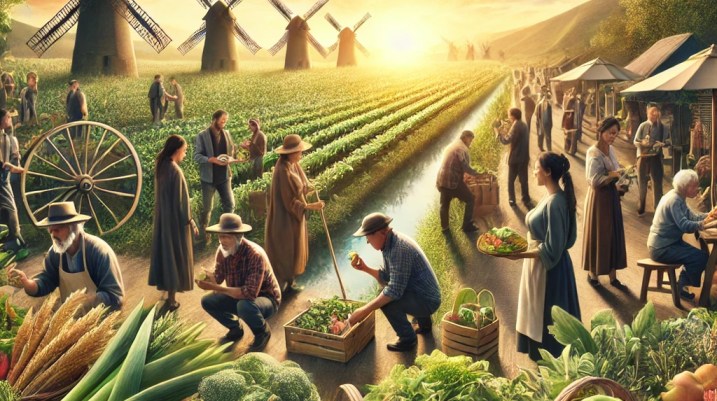
Lo studio indaga sul concetto poco esplorato di dignità alimentare, esaminando come esso si intersechi con il diritto a un’alimentazione adeguata e con la governance sostenibile, in particolare all’interno di contesti commerciali in cui le disuguaglianze e le sfide ambientali esacerbano i problemi di accesso al cibo. Concentrandosi sul ruolo dell’Organizzazione mondiale del commercio, esso esamina come le attuali politiche commerciali al contempo ostacolino e possano potenzialmente sostenere un accesso al cibo dignitoso e sostenibile ed identifica anche le principali lacune negli accordi dell’OMC relativi all’agricoltura, esplorando le opportunità per rimodellare le disposizioni commerciali al fine di sostenere l’accesso dignitoso al cibo, promuovendo al contempo pratiche agricole sostenibili. Nel fare ciò, lo studio passa in rassegna i recenti sforzi verso una governance alimentare sostenibile nel commercio, offrendo raccomandazioni per le future direttive politiche.
This article investigates the underexplored concept of food dignity, examining how it intersects with the right to adequate food and sustainable governance, particularly within trade contexts where inequalities and environmental challenges exacerbate food access issues. Focusing on the role of the World Trade Organization, it analyses how current trade policies both hinder and can potentially support dignified and sustainable food access and identifies key gaps in WTO Agreements related to agriculture, exploring opportunities to reshape trade provisions to support dignified access to food while advancing sustainable agricultural practices. In doing so, this article reviews recent efforts toward sustainable food governance in trade, offering recommendations for future policy directions.
1. Introduction
While the author is writing this article, in 71 countries 309 million people are facing acute hunger[1]. Many food crises involve multiple overlapping issues that are building year on year. Among others, greater poverty and supply chain disruptions in the wake of the COVID-19 pandemic, the war in Ukraine, rising inflation, and high commodity prices have increased food and nutrition insecurity[2]. As a result, international laws and policies tend to focus on the need to ensure that people have enough and safe food to eat[3]. Specifically, food security ensures people have access to sufficient food, while food safety guarantees that the food is safe to consume. The two are interrelated but distinct, with different legal frameworks addressing the broader socio-economic concerns (security) versus health and safety protocols (safety). In essence, food security laws, such as the “2013 India – National Food Security Act (NFSA)”[4] and the “2008 United States – Supplemental Nutrition Assistance Program (SNAP)”[5], aim to address structural issues ensuring food availability and access, while food safety laws, like the “2011 United States – Food Safety Modernization Act (FSMA)”[6] and the “2002 European Union – General Food Law”[7], regulate the health and quality of food at every stage of its journey to the consumer. These legal frameworks operate independently but are complementary, as safe food is a prerequisite for achieving true food security.
In addressing this compelling issue relating to “food quantity”, questions relating to the “quality of access”, such as “how” food is provided and whether access to food respects individual dignity and cultural identity, are widely overlooked[8]. And yet, there is an increasing number of studies pointing out that several people resist help from communities to access food, even when they are really struggling: «[They]’d rather be hungry»[9]. This is because many individuals experience shame when they have to rely on food assistance programs and such public perception creates a stigma around receiving help, making people feel “undignified” when they access food through these channels[10].
The present study explores the emerging concept of food dignity, which is neglected in the legal panorama focusing mainly on food equity and security[11], and highlights the main principles enhancing its realisation. It also identifies the main remaining challenges and barriers hindering the enjoyment of the right to adequate food, the realisation of food dignity, and the advancement of sustainable food governance in trade contexts. In doing so, it emphasises that economic disparities can often lead to unequal access to food while environmental changes can significantly disrupt food systems and access to food.
Against this background, this analysis casts light on the pivotal role that world trade law, particularly through the lens of the World Trade Organization (WTO), can play in addressing socio-economic barriers limiting equitable and dignified access to food and, simultaneously, promoting sustainable agricultural practices that adapt to the pace of rapid environmental change. Through a thorough analysis of pertinent WTO Agreements and initiatives in this regard, this study unveils shortfalls in trade policies on agriculture and offers insights on charting strategic and sustainable paths for the WTO.
Section 2 emphasises the intrinsic linkage between dignity, the right to adequate food, and sustainable food governance. Then Section 3 discusses how their realisation can either be prevented or, on the contrary, supported by the WTO, depending on the focus, design, and structure of trade provisions. Building on this, Section 4 discusses recent initiatives for sustainable food governance in trade contexts and offers suggestions for future directions. Final conclusions are drawn in Section 5.
2. The Right to Food and Sustainable Food Governance: Food Dignity as a Common Thread
Food dignity is a concept that extends beyond just the provision of food and food security, emphasising “how” people access food and the importance of maintaining respect and cultural relevance in the process. At its core, food dignity is about ensuring that individuals and communities can obtain food in ways that uphold their autonomy, self-respect, and social participation, rather than being dependent on charitable handouts or exploitative systems[12]. It focuses on addressing inequality in food systems, empowering local communities, and ensuring that everyone has access to nutritious, culturally appropriate, and sustainably produced food[13].
The examination of this concept across various fields suggests two primary interpretations of dignity: (1) dignity as a principle, an inherent, inalienable value intrinsic to being human, and (2) dignity as a context-dependent concern that can be diminished, harmed, or enhanced in specific social situations[14]. Either cases, having access to “adequate” food is widely acknowledged as a fundamental human right[15]. Specifically, the right to adequate food (hereafter ‘Right to Food’), a well-established concept in international human rights law, ensures everyone has access to adequate food necessary for a healthy life. Its three core elements are (i) “adequacy” as food must meet dietary needs considering health, age, living conditions, and work, (ii) “availability” as food should be accessible through natural resources or functioning markets, and (iii) “accessibility”, from both an economic and physical perspective, to ensure affordability and availability for all.
The importance of the Right to Food is widely recognised through numerous laws, policies, and declarations focusing on the implementation of this right at the international, national, and local levels. At the international level, Article 25(1) of the “1948 Universal Declaration of Human Rights (UDHR)” clarifies that everyone has the right to a standard of living adequate for health and well-being, including food[16], while Article 11 of the “1966 International Covenant on Economic, Social and Cultural Rights (ICESCR)” recognises the right of everyone to an adequate standard of living, including adequate food, and the fundamental right to be free from hunger[17]. Also, the “1999 UN Committee on ICESCR General Comment 12” offers a detailed interpretation of the right to adequate food and remarks its invaluable importance[18]. State parties to these treaties are required to respect, protect, and fulfil the Right to Food. This involves refraining from actions that harm food access, protecting individuals from third-party actions that infringe on this right, and taking positive steps to ensure food security for all[19].
Besides international treaties, legal databases and reports from international organisations, such as the “Food and Agriculture Organization (FAO)” and “Human Rights Watch”, provide additional comprehensive legal references on the Right to Food. Among others, the “FAO Voluntary Guidelines” help states to implement their obligations to the Right to Food[20]. Further, realising the Right to Food is also part of the Sustainable Development Agenda, which aims, through the Sustainable Development Goal (SDG) 2 “Zero Hunger”, to end hunger, achieve food security, and promote sustainable agriculture by 2030[21].
Numerous are also domestic initiatives to guarantee the Right to Food. Several countries have, for instance, various programs and policies aimed at ensuring food security and dignity. The “Supplemental Nutrition Assistance Program (SNAP)” in the U.S.A. is an example[22]. Moreover, there are countries that have laws ensuring food access. Among others, in India, the “National Food Security Act (2013)” aims to provide subsidised food grains to approximately two-thirds of India’s population[23] while in South Africa the “South African Constitution” includes the right to have access to sufficient food and water[24]. In line with this, cities and local governments often implement their own food security policies and initiatives to ensure food dignity by establishing food banks, community kitchens, and urban agriculture initiatives[25]. Undoubtedly, the concept of food dignity is intrinsically linked to the Right to Food as they both pursue the common goal of ensuring access to adequate food by emphasising different aspects, though. While the Right to Food focuses on legal entitlements, the concept of food dignity underlines the respectful and empowering manner of access. Moreover, food dignity is a cornerstone of human dignity, which is explicitly recognised in foundational human rights instruments. For instance, the Preamble of the UDHR 1948 emphasises that «[w]hereas recognition of the inherent dignity and of the equal and inalienable rights of all members of the human family is the foundation of freedom, justice, and peace in the world»[26]. Similarly, both the International Covenant on Civil and Political Rights (ICCPR) 1966[27] and the ICESCR 1966[28] reaffirm dignity as the foundation for rights. In a nutshell, food dignity emphasises the right of individuals to access food in a way that upholds their self-respect and autonomy, while human dignity represents the inherent worth of every individual. Accordingly, ensuring food dignity is an essential component of safeguarding human dignity, as access to adequate and nutritious food is foundational to a dignified life. And yet, the concept of food dignity is not explicitly enshrined in international treaties or national laws as a distinct legal term. For instance, Article 11 of the ICESCR (1966) does not use the term food dignity, even though its framing of adequate food includes elements that resonate with dignity, such as food being culturally acceptable, nutritionally sufficient, and accessible in ways that do not compromise people’s dignity. Similarly, Paragraph 4 of General Comment 12 implicitly underscores the connection between the human right to adequate food and «the inherent dignity of the human person», emphasising its essential role in the realisation of other human rights. Specifically, General Comment 12 warns against a narrow or restrictive interpretation of the right to adequate food, cautioning that it should not be reduced to merely providing a minimal package of calories, proteins, or nutrients. In other words, treating food delivery like feeding livestock, with pre-packaged meals, does not satisfy this right. This is because while such an approach may be suitable for short-term emergencies, it cannot serve as a long-term solution to realising the human right to adequate food[29]. General Comment 12 also highlights that this right is inseparable from social justice as it aligns with the Universal Declaration of Human Rights of 1948, whose first article states that «[a]ll human beings are born free and equal in dignity and rights»[30].
Furthermore, the concept of food dignity echoes sustainable food systems, promoting environmentally friendly and economically viable practices, such as supporting local farmers and reducing food waste[31]. Sustainable food governance aims to ensure that food production, distribution, and consumption meet current needs without compromising future generations’ ability to access nutritious, culturally appropriate food. This approach is inherently aligned with the concept of food dignity, which emphasises access to food that respects people’s rights, choices, and cultural identity. Nonetheless, while the importance of achieving a sustainable agriculture module is widely acknowledged globally[32], the importance of accessing food with dignity is often neglected. And yet, sustainable food systems create structural and environmental conditions necessary for food dignity by ensuring that access to food is both equitable and respectful of individual and cultural autonomy.
As a result, it is evident that the common thread between the Right to Food and sustainable food governance lies in the recognition that dignified access to adequate and nutritious food is a fundamental human right that underpins human dignity. These concepts interconnect through their shared emphasis on ensuring that all individuals can lead healthy and fulfilling lives, free from hunger and malnutrition. Nevertheless, the lack of definition and explicit acknowledgment of food dignity in international treaties invite the question of how it can be realised. Dignity does not come from being fed. As Ivan Illich put it in Tools for Conviviality, people need to provide for themselves because «people die when they are fed»[33]. Put it differently, food dignity comes from providing for oneself.
In this respect, adhering to five core principles that closely align with broader frameworks on the Right to Food and sustainable governance can help achieve food dignity. Implementing the (basic) principle of “Respect and Autonomy” ensures individuals can choose what they eat, reflecting their personal and cultural preferences rather than being limited to whatever is most readily available or provided by assistance programs. This approach to food dignity acknowledges that food is not merely a source of sustenance but is also deeply intertwined with a person’s sense of self, community, and heritage[34].
“Community Empowerment” is the second principle that must be taken into account to realise food dignity. It mirrors the central importance of initiatives involving community-driven efforts, such as community gardens, cooperative grocery stores, and local food programs, allowing people to contribute meaningfully[35]. Models of Community Empowerment demonstrate how communities can be empowered to take control of their food systems, promote social justice and, in turn, food dignity[36]. An example is provided by the “People’s Grocery”, which is a community-based organisation in West Oakland, California, that promotes food justice by establishing community gardens and urban farms to grow fresh produce locally, involving local youth in agricultural projects to educate them about healthy eating and sustainable farming practices, and operating a mobile market that brings fresh, affordable produce to underserved neighbourhoods[37]. Also in Canada, “Community Food Centres Canada (CFCC)” works with local communities to establish food centers providing access to healthy food, cooking classes, and community gardens[38].
“Reduction of Stigma” represents another central principle to respect to realise food dignity. Unlike traditional food assistance programs that may carry a stigma, the concept of food dignity seeks to normalise receiving food assistance within community life[39]. Reducing stigma is, as such, a crucial step in realising food dignity, as it helps to ensure that individuals feel respected and valued when accessing food assistance programs. Some strategies adopted to reduce stigma and promote food dignity include the use of a respectful language, meaning avoiding terms implying shame or inferiority (such as “needy” or “poor”) and instead uses empowering language like “community members or neighbours”, and the guarantee of confidentiality and privacy during the process of food distribution[40].
The fourth principle is “Nutritional Quality”. Integrating food dignity with nutritional quality ensures that individuals have access not just to enough food, but to food that is healthy, nourishing, and culturally appropriate[41]. In this regard, there are three valuable examples: (i) the “Stop Community Food Centre” in Toronto integrating food dignity and nutritional quality through a variety of programs[42]; (ii) the “Daily Table”, which is a nonprofit retail store offering healthy, affordable food to low-income communities[43]; and (iii) “Feeding America”, a nationwide network of food banks that focuses on increasing the nutritional quality of the food they distribute[44].
Last but not least, “Sustainable Practices” is another core principle that needs to be respected to ensure the fully enjoyment of the Right to Food and the advancement of food dignity. This is because the realisation of sustainable food systems and the concept of food dignity are deeply intertwined, as each supports the other in fostering equitable, resilient, and environmentally-friendly approaches to food access and production. As already mentioned above, by incorporating sustainable practices into food dignity initiatives, communities can address immediate food insecurity needs while promoting long-term environmental and social health. The “Growing Hope”, a US non-profit organisation focused on improving lives through sustainable gardening and equitable food access, represents a key example in this regard[45].
Respecting these five principles helps to address the systemic barriers that many communities face in accessing healthy, culturally appropriate food and to create empowering, community-led solutions that enhance food dignity and create resilient, sustainable, and equitable food systems. Nevertheless, full enjoyment of the Right to Food and realisation of food dignity is hindered by remaining challenges and barriers. Among others, economic disparities often lead to unequal access to food[46] while environmental changes significantly disrupt food systems and access to food[47].
Against this backdrop, the WTO can play a pivotal role in tackling the socio-economic issues that prevent equal and dignified access to food while simultaneously incentivising member states to favor the development of sustainable agricultural practices keeping pace with rapid environmental changes, as discussed in the next section.
3. Encouraging Sustainable Food Governance and Realising Food Dignity: Is the WTO Playing the Role of Bellerophon or Chimera?
World trade law, particularly under the framework of the WTO, affects food availability, affordability, and the ability of nations to provide for their populations in a way that respects the right to food and contributes to realise food dignity.
Whether these impacts are positive or negative depends on the capacity of the WTO judicial bodies (i.e., WTO Panels and Appellate Body) and the presence of WTO norms to encourage the adoption of sustainable agricultural practices, which is deeply connected to the realisation of food dignity. Put it differently, it must be understood whether the WTO is playing the role of the Greek hero “Bellerophon” by shaping international standards, incentivising eco-friendly practices, and facilitating access to green markets, or, on the contrary, the role of the monster “Chimera” hindering the achievement of sustainability and food dignity. A thorough analysis of pertinent WTO Agreements and initiatives in this regard can cast light on which of the two roles is played by the WTO.
Undoubtedly, any discussions on agriculture in trade contexts should start from the “Agreement on Agriculture (AoA)”, which is a landmark international agreement focused on reforming global agricultural trade[48]. Its main goal is to make agricultural trade fairer and to promote market access while reducing trade-distorting subsidies. Through its main three pillars (i.e., market access, domestic support, export competition) this multilateral agreement has significant implications for sustainable agricultural practices, especially through its impact on domestic policies and subsidies. Through the categorisation of subsidies into three main boxes based on their potential to distort trade, the AoA indirectly supports sustainability by encouraging countries to shift support away from trade-distorting subsidies (Amber Box) towards environmentally sustainable and minimally distorting ones (Green Box). Eliminating or reducing tariffs and subsidies that distort food prices can help ensure that food remains affordable and accessible to all populations. Lowering unnecessary trade barriers enables countries facing food insecurity to, in turn, import essential foodstuffs more easily, promoting food availability and affordability[49].
Nevertheless, the AoA does not mandate direct environmental or sustainability provisions. The reason might lie in the fact that this Agreement was negotiated at a time when sustainability was not as prominent on the global agenda, so it lacks explicit provisions on climate change, biodiversity, or sustainable land use. What is more, the AoA does not directly require sustainable practices but, rather, it shapes agricultural policy by encouraging less trade-distorting support and reducing overproduction.
As the global focus on sustainability grows, it comes as no surprise that calls within the WTO to revisit and reform the AoA to better address environmental challenges are increasing[50]. Reforming the AoA could involve introducing more explicit guidelines for sustainable practices within the Green Box or developing new standards that directly tie agricultural subsidies and trade policies to sustainability outcomes. In line with this, the ongoing Doha Development Round has highlighted the need to consider environmental and sustainability concerns even in relation to agriculture, though progress has been slow[51].
While the AoA is the only multilateral trade agreement on agriculture, there are a few notable examples of regional or bilateral agreements encouraging sustainable agricultural practices. Among others, the “North American Free Trade Agreement”[52], now updated as the “United States-Mexico-Canada Agreement (USMCA)”[53], facilitates agricultural trade between the three countries and promotes food security through tariff eliminations and regulatory harmonisation while the “EU-Canada Comprehensive Economic and Trade Agreement (CETA)”[54] eliminates tariffs on agricultural products, enhances market access, and supports high standards for food safety and quality. Also, “Comprehensive and Progressive Agreement for Trans-Pacific Partnership (CPTPP)”[55], which involves 11 Pacific Rim countries, includes a dedicated chapter on environmental protection, encouraging countries to adopt and enforce sustainable environmental policies. It includes commitments to conserve biodiversity, reduce illegal fishing, and enhance forest management practices, all of which indirectly support sustainable agriculture by protecting natural resources and ecosystems critical for farming.
Collectively, these trade agreements and multilateral initiatives support the development of a more resilient and sustainable global food system. They promote fair trade, enhance food security, and uphold high standards for food safety and quality, which in turn aid to realise food dignity. Nonetheless, this is mostly happening at regional or domestic, rather than at international, level.
In addition to them, there are several WTO agreements, such as the “Agreement on Technical Barriers to Trade (TBT Agreement)”[56] and the “Agreement on Sanitary and Phytosanitary Measures (SPS Agreement)”[57], which promote food safety and quality standards by encouraging the use and recognition of international standards and certifications in trade, especially when related to health, safety, and quality. Specifically, these agreements promote certifications that facilitate trade by ensuring products meet internationally recognised standards, which in turn helps protect human, animal, and plant health, as well as the environment. Ensuring that the food traded globally is safe and nutritious enhances the development of sustainable food governance and respects the dignity of individuals by not subjecting them to inferior or harmful food products simultaneously. Key examples are represented by programs like “Fair Trade”[58] and “Rainforest Alliance”[59], which promote sustainable agricultural practices among coffee producers. These certifications ensure that producers adhere to specific environmental and social standards, benefiting both the farmers and the environment. Other examples are embodied by “China’s Belt”[60] and “Road Initiative”[61], both including investments in sustainable agriculture in participating countries, promoting modern, efficient, and environmentally friendly agricultural practices. Nevertheless, the focus of all these certifications lies on the need to keep international trade as smooth as possible. In other words, these certifications are not designed to ensure high levels of protection in trade contexts. Also, as is often the case in international law, these international standards are mere recommendations, leaving states free to set their own safe levels. And yet, numerous are the studies recommending «a global strategy to transition towards a sustainable, global agricultural model»[62].
Under the WTO framework, there are also trade agreements including provisions for development assistance to poorer nations, helping to build agricultural capacity, infrastructure, and technology. Special and Differential Treatment (S&DT) Provisions represent a key example in this regard[63]. They give developing and least-developed countries more flexibility in implementing WTO agreements and allow for longer timelines and phased commitments, particularly in areas such as agriculture, subsidies, and trade-related aspects of intellectual property rights (TRIPS)[64]. These measures can then empower communities to achieve self-sufficiency and dignity in their food access. For instance, the WTO “Trade Facilitation Agreement (TFA)”, which came into effect in 2017, includes substantial provisions for development assistance specifically targeted at least-developed countries (LDCs) and developing countries[65]. The TFA aims to streamline customs procedures, reduce red tape, and lower trade costs, making it easier for developing nations to participate in global trade. It allows developing countries to set their implementation schedules and provides a Special and Differential Treatment mechanism, where LDCs can request technical and financial support from developed countries to implement various trade facilitation reforms. For instance, assistance may include training, technological upgrades, and infrastructure development.
All these WTO agreements, measures, and mechanisms demonstrate how incorporating food dignity into the global trade dialogue can help ensure that policies do not exacerbate inequalities or create undue dependence on external food aid, but instead respect the rights of individuals to adequate, culturally appropriate, and dignified food. This, in turn, aligns with a growing recognition within international trade discussions that economic growth and trade must be linked with social justice and human rights. Nonetheless, favouring this alignment and enhancing a sustainable global food system – which would, in turn, support the realisation of food dignity – are hindered by three significant challenges faced by the WTO.
The first key challenge for the WTO lies in striking a structured balance between trade liberalisation and sustainability[66]. While lowering trade barriers can stimulate economic growth and enhance food availability, it can also cause environmental harm and weaken local food systems. Crafting trade policies that simultaneously foster economic development and environmental sustainability demands meticulous negotiation and the implementation of rules that support sustainable practices without restricting trade[67].
In this regard, trade policies might integrate environmental sustainability into the core framework of international trade agreements[68]. This can be achieved through the inclusion of environmental provisions setting binding standards for sustainable practices in trade agreements. For example, agreements might require countries to adhere to certain environmental regulations or adopt practices that reduce the ecological footprint of agricultural production. These provisions can help mitigate the negative environmental impacts of increased trade and ensure that economic growth does not come at the expense of ecological health.
Trade policies might also be designed to incentivise sustainable agricultural practices[69]. This can include funding for research into eco-friendly technologies, subsidies for practices that enhance soil health and reduce emissions, and technical assistance for farmers transitioning to more sustainable methods[70]. Such support would help balance the economic benefits of trade with the need for environmental stewardship.
Nevertheless, it has been noted that the WTO is institutionally unready for balancing trade and non-trade values[71]. Arguably, this difficulty stems from the lack of an analytical structure under the WTO framework guiding decision-makers in achieving a reasoned balance between competing rights, interests, or values. This structure is embodied by the proportionality analysis, also known as proportionality balancing, the appeal of which lies in its accommodating character in the face of conflicting interests, such as in trade contexts where the competing nature of requests for enhancing free trade and ensuring sustainability makes for a difficult balancing exercise[72]. «Whenever there is a conflict of rights, values and interests this conflict will often need to be resolved through a judicial balancing act»[73]. In this regard, several studies demonstrated that performing proportionality analysis in trade contexts has compelling justifications in spite of the lack of explicit reference to proportionality in WTO agreements[74]. Given that, the use of the structure offered by proportionality can support WTO decision-makers to strike a reasoned balance between trade and non-trade interests and, as such, address the mentioned institutional issue.
A second key challenge for the WTO regards the design of trade policies that support global food security without undermining local food sovereignty[75]. While trade can offer significant benefits, including stabilising food supplies and reducing prices, increased reliance on imports can undermine food sovereignty by making countries vulnerable to foreign market forces and limiting their ability to control their food supply[76]. In this regard, trade agreements may pressure countries to adopt agricultural and food safety practices that prioritise trade competitiveness over local needs, eroding the autonomy to develop policies that support traditional, resilient, and sustainable practices.
What is more, trade agreements involving intellectual property rights on seeds can limit farmers’ access to affordable seeds, reducing biodiversity and farmers’ control over their resources. As a result, smallholder farmers may become dependent on patented seeds or agricultural inputs, which are often expensive, limiting their ability to cultivate food independently. To address the challenges posed by intellectual property rights (IPRs) on seeds in trade agreements, WTO countries can protect farmers’ rights to save, replant, exchange, and sell seeds, regardless of IPRs. This would ensure farmers retain control over seeds and reduce their dependency on costly patented seeds. Establishing and supporting community seed banks can further help farmers maintain access to a diversity of seeds. These banks preserve in fact indigenous and traditional varieties, promoting biodiversity and reducing reliance on commercial seeds[77].
Finally, another challenge in the WTO efforts to enhance a sustainable global food system and realise food dignity, is harmonising food safety, (labor) and environmental standards across countries[78]. Divergent standards often lead to trade barriers, creating obstacles for countries to engage in international trade and potentially distorting market access. Aligning these standards, however, involves navigating a landscape of varying levels of development, diverse national priorities, and different regulatory approaches[79]. To overcome these barriers, the WTO should start playing a proactive role in facilitating cooperation and dialogue among its member countries, developing harmonised standards that promote sustainability while balancing the needs of both developed and developing nations[80]. Specifically, the WTO might facilitate inclusive negotiations that involve all member countries, taking into account the perspectives and needs of both developed and developing nations. Ensuring that all voices are heard helps build trust and support for harmonised standards. After all, implementing harmonised standards gradually can help ease the transition for countries with less developed regulatory frameworks[81]. This is because phased approaches allow countries to gradually adjust their systems and capacities, reducing the immediate burden and providing time for adaptation. Moreover, as already mentioned above, the WTO might strengthen its technical assistance and capacity-building support to developing countries to help them meet harmonised standards[82]. This could include offering more training programs, funding for infrastructure improvements, and guidance on regulatory practices. Simultaneously, allowing for some flexibility in the implementation of standards can help accommodate the varying capacities of different countries. Tailoring standards to reflect national contexts while maintaining core principles of safety, sustainability, and fairness can then make harmonisation more feasible.
To conclude, world trade law, if designed and implemented with a focus on food dignity, sustainability, and human rights, can play the (positive) role of Bellerophon and ensure that global food systems are sustainable, just, inclusive, and respectful of food (and human) dignity in trade contexts. Even though the attainment of a sustainable agriculture model and the realisation of food dignity is unlikely to be imminent, the implementation of sustainable-oriented strategies, which are discussed in the following section, should be a lighthouse for future WTO negotiations.
4. From Present to Future: Charting Strategic and Sustainable Paths for the WTO
Since the establishment of the WTO, governments have sought to advance new multilateral trade rules that aim to rectify and prevent distortions and restrictions in global agricultural markets, as envisioned in the preamble of the AoA, while also accelerating progress on critical sustainability issues[83]. However, over the past two decades, aside from the 2015 Nairobi Ministerial Decision on Export Competition[84], negotiations concerning agriculture within the WTO have made minimal strides in addressing the trifecta of challenges faced by our food systems (i.e., ensuring food security and nutrition for a growing global population, providing livelihoods for those within the food supply chain, and promoting environmental sustainability). As the Global Report on Food Crises (GRFC) 2024 confirms, hunger remains a pressing issue in many regions, particularly in least developed countries (LDCs) and other vulnerable economies, with approximately 23% of total anthropogenic greenhouse gas emissions stemming from the agriculture, forestry, and other land use sectors[85].
Given its capacity to impact either positively or negatively on these crucial matters, the WTO is called to take a leading role. While significant outcomes were anticipated at the Thirteenth Ministerial Conference of the WTO (MC13), which took place in March 2024 in Abu Dhabi, it is disappointing that trade ministers could not even reach consensus on a roadmap or work program with clearly defined timelines for future agriculture negotiations following MC13[86]. This conference provided a platform for member states to discuss and negotiate critical trade topics, including agriculture and fisheries subsidies. Although these areas were prioritised, the conference concluded without a breakthrough in agriculture negotiations due to diverging member positions on issues such as public stockholding for food security and trade-distorting domestic support for agriculture. As such, the MC13 shows how Ministers once again failed to reach an agreement on the scope, balance, and timeline of agriculture negotiations. The Draft Text submitted by Türkiye’s Ambassador Alparslan Acarsoy, chair of the WTO Committee on Agriculture in Special Session (CoASS), a few weeks prior to MC13, represents the only positive development[87]. After all, it represents the first formal text in WTO agriculture negotiations in many years and marks a significant effort to navigate longstanding challenges and proposes pathways across main topics, including market access for agricultural products, domestic support, and export restrictions.
A lengthy path to achieving sustainability and food dignity in trade contexts lies ahead. Accordingly, adopting sustainability-oriented strategies is necessary to advance a more effective transition towards sustainable agriculture and to realise food dignity in trade contexts. The following trade policy shifts could serve as important first steps in that direction.
4.1. Incorporating food sovereignty principles in trade agreements and promoting access to affordable and nutritious foods
Trade agreements can threaten local food cultures by promoting standardised agricultural products over diverse, locally grown foods. Including provisions that protect agricultural biodiversity – such as indigenous crops and traditional farming methods – supports the resilience of local food systems. As widely acknowledged, food sovereignty, a concept focused on people’s right to define their own food systems, emphasises local control and community-based food production[88]. By prioritising food sovereignty in trade, agreements can support local farmers and producers, uphold indigenous food practices, and avoid importing products that threaten local agricultural markets. This can help nations preserve their cultural food heritage while strengthening self-sufficiency.
As this paper has highlighted above, trade policies can also reduce tariffs on nutritious foods, especially in countries where access is limited, helping to make healthy food more affordable. Supporting the trade of nutrient-rich crops can address issues of malnutrition and health, especially in low-income regions. Also, trade agreements that emphasise nutritional standards, such as the SPS Agreement, can limit the influx of ultra-processed foods, which are often more affordable but less healthy[89]. After all, small-scale farmers and marginalised groups are often left out of trade benefits due to limited resources or market access[90]. Trade agreements can include provisions to reduce barriers for small-scale producers to access global markets, ensuring fair prices and encouraging sustainable agricultural practices. By empowering producers financially through the reduction of export tariffs on smallholder-produced goods, food dignity can be upheld.
4.2. Establishing formal green trade agreements
Green trade agreements are crafted to align trade policies with sustainability goals, aiming to reduce the ecological footprint of agricultural production and promote environmentally responsible trade practices[91]. These agreements can drive global trade towards more sustainable practices by encouraging participating countries to adopt practices that reduce environmental impacts and promote long-term ecological health and setting high standards for environmental performance[92]. And yet, the WTO has not established formal green agreements in the sense of separate, legally binding treaties specific to environmental goals. Currently, there is a concerted effort among members, particularly from the EU, Canada, and others in the Ottawa Group, to advance these environmental discussions and lay the groundwork for potential binding frameworks in the future[93]. These countries are championing initiatives within the WTO that focus on establishing trade practices aligned with climate action and environmental sustainability. Among others, the European Union’s Green Deal represents an ambitious framework designed to guide the EU towards a more sustainable and low-carbon economy[94]. It includes specific policies to reduce greenhouse gas emissions, enhance biodiversity, and foster sustainable agricultural practices. Similarly, the U.S.-Mexico-Canada Agreement (USMCA) is a trade pact with provisions that address sustainable agricultural practices and seeks to reduce the carbon footprint of agriculture by setting standards for environmental stewardship and promoting practices that minimise ecological impacts[95].
Currently, there are plurilateral green trade initiatives actively pursued within the WTO that, nonetheless, remain largely informal and consensus-based, as full-scale formal agreements have yet to emerge. One prominent example is the “Trade and Environmental Sustainability Structured Discussions (TESSD)”, which brings together over 70 WTO members to discuss policies for sustainable trade practices[96]. As formalising agreements in these areas requires broad consensus, these initiatives are progressing through a more informal “soft law” approach. This is in spite of the fact that establishing formal green trade agreements can offer multiple benefits for the environment, economy, and international relations, helping countries achieve both sustainable development and climate goals. Formal green trade agreements can, for instance, set clear standards and commitments for sustainable trade practices, from carbon emission reductions to responsible resource management. This would lead to an improvement in environmental protection, as countries agree to adopt sustainable practices in sectors like agriculture, forestry, and manufacturing, which reduces the overall environmental footprint of trade.
4.3. Addressing power imbalances in trade policies by means of proportionality
To promote food dignity, trade policies must be inclusive and address existing power imbalances between large agribusinesses and small producers[97]. Supporting multilateral discussions and agreements that prioritise the voices of developing countries can help create fairer trade practices. This may involve building partnerships that allow developing nations to negotiate terms that protect their food systems from exploitative practices by larger economies.
Furthermore, crafting WTO agreements that promote the right to food would involve balancing trade liberalisation with commitments to food security, sustainability, and equitable access[98]. WTO agreements, particularly the AoA, might include explicit food security and food access with dignity clauses and involve expanded exemptions for developing countries to use support measures that stabilise local food production and safeguard food access during crises. This would, in turn, allow countries to prioritise food security and dignity goals, enabling measures that support domestic agriculture and small-scale farmers without risking WTO challenges.
Addressing power imbalances in trade policies through proportionality would favor the design and implementation of trade policies that are fair and just, especially for smaller or developing economies that may be disadvantaged in global trade relationships[99]. This is because, as discussed above, proportionality in this context means structuring trade agreements, tariffs, and regulations so that the obligations and benefits are aligned with each party’s capacities, resources, and economic standing.
4.4. Incorporating the Right to Food into the WTO’s dispute settlement mechanism
Current WTO dispute mechanisms often emphasise trade liberalisation over social and human rights[100]. Integrating the Right to Food within dispute settlement mechanism (DSM) considerations would require panels to evaluate disputes through a food security lens, balancing trade rules with human rights. This is particularly pertinent considering that without a modification to the Understanding on Rules and Procedures Governing the Settlement of Disputes[101], WTO panels cannot reject cases concerning the impact of trade on the Right to Food, «given the de facto automaticity of WTO dispute settlement»[102]. In this respect, a WTO working group focused on the Right to Food could coordinate efforts among member countries, gathering data and creating guidelines that align trade policies with food security needs. This body would provide a platform for discussions, research, and coordination, emphasising food access as a core value in trade.
The inclusion of the Right to Food into the DSM and, simultaneously, the creation of a WTO working group focused on the right to food would offer several potential advantages. Among others, it would certainly strengthen food security globally as WTO members could be held accountable if trade practices directly threaten food dignity or access to food in vulnerable regions. It would also improve WTO legitimacy and public perception by showing a commitment to addressing critical global challenges beyond trade. This is because by formally recognising food security and the right to food as priorities, the WTO would demonstrate that it values not only economic gains but also the well-being of populations worldwide. As such, integrating the Right to Food into the DSM and establishing a working group on the Right to Food would mark a significant advance in promoting equitable trade practices[103]. This approach would also align the WTO more closely with global human rights and development goals, helping ensure that trade serves as a vehicle for sustainable development and improved food security as well as dignity.
To conclude, these policy shifts would help ensure that trade rules support food systems that are dignified, fair, secure, and resilient, ultimately helping nations protect the fundamental right to food. Importantly, implementing these trade strategies requires strong international collaboration among WTO members in prioritising the right to food and sustainability alongside trade liberalisation. International collaboration is in fact essential for advancing sustainable food governance[104] and driving progress towards global sustainability objectives[105]. They help to align national policies with international goals and foster collective efforts to address global food system challenges. A key role is also played by national and regional structured approaches to develop frameworks to integrating sustainability into trade and agricultural policies[106]. These frameworks align national policies with global sustainability goals and address specific regional challenges. The Australia’s Reef 2050 Plan[107] and the EU Common Agricultural Policy (CAP)[108] represent two valid examples in this regard. While the former outlines strategies to protect the Great Barrier Reef, focusing on reducing agricultural runoff and improving land use practices, the latter integrates sustainability objectives into agricultural funding and policy by supporting environmentally friendly practices and rural development.
To conclude with the words of the UN Special Rapporteur on the Right to Food: «Since the early 1980s, many assumed that trade policy’s purpose was to continuously increase the flow of trade by removing barriers to trade – i.e., free trade. With principles of dignity, self-sufficiency, and solidarity in hand, and in the right institutional space, social movements and governments can transform trade policy in food so that trade can instead ensure that the right to food is fulfilled and everyone has access to a good, healthy meal»[109].
5. Conclusion
The landscape of human health, environmental protection, and trade is rapidly evolving, driven by the need to achieve sustainable food governance. Recent initiatives focus on ensuring people have enough to eat, but this study has unveiled the central importance of guaranteeing access to food that respects individual dignity and cultural identity. It has emphasised the need to consider “food dignity”, a concept linked to the Right to Food and sustainable food governance, which concerns not only the availability of food but also the way it is provided. These interconnected concepts emphasise that all individuals should lead healthy, fulfilling lives, free from hunger and malnutrition. However, the absence of a clear definition and explicit recognition of food dignity in international treaties makes it challenging to understand how this goal can be achieved.
This study identified five core principles essential to realising food dignity: (i) Respect and Autonomy, (ii) Community Empowerment, (iii) Reduction of Stigma, (iv) Nutritional Quality, and (v) Sustainable Practices. Specifically, it has highlighted that respecting these principles helps address systemic barriers that communities face in accessing healthy, culturally appropriate food, enabling community-led solutions that enhance food dignity and foster resilient, sustainable, and equitable food systems. Nevertheless, full enjoyment of the Right to Food and the realisation of food dignity is hindered by persistent challenges, particularly in trade contexts where inequalities and environmental challenges exacerbate food access issues.
The study has discussed the pivotal role the WTO can play in addressing socio-economic challenges while incentivising WTO members to promote sustainable agricultural practices and, consequently, support the realisation of food dignity. World trade law, particularly under the WTO framework, influences food availability, affordability, and nations’ capacities to provide for their populations in ways that respect the Right to Food and contribute to food dignity. These impacts – whether positive or negative – depend on how WTO provisions support sustainable agricultural practices, which are deeply connected to the realisation of food dignity.
This analysis has underscored numerous positive steps within the WTO that support sustainable agriculture, the Right to Food, and food dignity in trade contexts. Among others, it has identified some WTO agreements that promote food safety and quality standards, while others include provisions for development assistance to poorer nations. At the same time, the study has also revealed several remaining obstacles to fully advancing sustainable agriculture and food dignity in trade contexts, including the following:
- WTO Agreements do not mandate direct environmental or sustainability provisions;
- There are no comprehensive multilateral trade agreements on agriculture, except the AoA;
- Certifications that facilitate trade by ensuring products meet internationally recognised standards are not designed to ensure high levels of protection in trade contexts;
- A structured balance between trade liberalisation and agricultural sustainability is lacking;
- Trade policies fail to support global food security without undermining local food sovereignty; and
- There are no binding international standards harmonising food safety, (labor) and environmental protections.
It is clear that trade regulations governing agriculture must evolve to support more sustainable food systems. Given its potential to impact these crucial areas, the WTO is called to play a leading role. To facilitate a shift toward sustainable agriculture and the realisation of food dignity in trade contexts, this study has suggested incorporating food sovereignty principles into trade agreements, promoting access to affordable and nutritious food, establishing formal green trade agreements, addressing power imbalances in trade policies, and integrating the Right to Food into the WTO’s DSM.
The development of robust trade policy frameworks focusing on these shifts to address the complex challenges of food security, environmental sustainability, and economic viability, coupled with rigorous monitoring and evaluation, will be critical in realising these goals. By promoting sustainability and fostering transparent, ethical practices, these efforts can positively impact both people and the planet, ensuring a more sustainable future for global agriculture and dignified access to food.
- World Food Programme, A Global Food Crisis, accessed 4 November 2024 (A global food crisis | World Food Programme). ↑
- World Bank, Recognizing and Tackling a Global Food Crisis, accessed 9 November 2024 (World Bank: Recognizing and tackling a global food crisis); J. Huang and others, Distribution of Fresh Foods in Food Pantries: Challenges and Opportunities in Illinois during the COVID-19 Pandemic, in BMC Public Health, 23, 2023, p. 1307. ↑
- See the analysis of dignity in the anthropocene in E. Daly, D. Lupin, Dignity in the Anthropocene, in The Routledge Handbook of Law and the Anthropocene, Routledge, 2023. ↑
- National Food Security Act 2013 (India). ↑
- Food and Nutrition Act 2008 (US). ↑
- Food Safety Modernization Act 2011 (US). ↑
- Regulation (EC) No 178/2002 of the European Parliament and of the Council of 28 January 2002 “laying down the general principles and requirements of food law, establishing the European Food Safety Authority and laying down procedures in matters of food safety”, 2002, OJ L31/1. ↑
- L. Serventi, Sustainable Food Innovation, in Springer, Springer Nature Switzerland, AG, 2023. ↑
- P. England and K. Edin, Time, Love, and Cash in Couples With Children Study, TLC3, United States, 2000-2005, accessed 1 November 2024 (Time, Love, and Cash in Couples With Children Study (TLC3) [United States], 2000-2005). ↑
- B. Turner, Taste, Waste and the New Materiality of Food, in Routledge, 2018, accessed 1 November 2024 (Taste, Waste and the New Materiality of Food | Bethaney Turner | Taylo). ↑
- A. M. Weiler and others, Food Sovereignty, Food Security and Health Equity: A Meta-Narrative Mapping Exercise, in Health Policy and Planning, 30, 2015, p. 1078; S. O’Hara, E. C. Toussaint, Food Access in Crisis: Food Security and COVID-19, 2021, p. 180, in Ecological Economics, p. 106859; S. Noll, E. G. Murdock, Whose Justice Is It Anyway? Mitigating the Tensions Between Food Security and Food Sovereignty, in Journal of Agricultural and Environmental Ethics, 1, 2020, p. 33, C. Bigby and others, Diversity, Dignity, Equity and Best Practice: A Framework for Supported Decision-Making, in La Trobe, 2023, accessed 2 December 2024 (Diversity, dignity, equity and best practice: a framework for supported decision-making); P. Gilabert, Inclusive Dignity, in Politics, Philosophy & Economics, 23, 2024, p. 22. ↑
- F. Edwards, Overcoming the social stigma of consuming food waste by dining at the Open Table, in Agriculture and Human Values, 38/2, 2021, pp. 397-409. ↑
- J. Parot and others, Food Justice in Community Supported Agriculture – Differentiating Charitable and Emancipatory Social Support Actions, in Agriculture and Human Values, 41, 2024, p. 685. ↑
- T. Andriessen, L. A. Van Der Velde, How the social dignity of recipients is violated and protected across various forms of food aid in high‑income countries: a scoping review, in Agriculture and Human Values, 41, 2024, pp. 363-379 (https://link.springer.com/article/10.1007/s10460-023-10476-w); N. Jacobson, Dignity and health: A review, in Social Science & Medicine, 64/2, 2007, pp. 292-302; C. Leget, Analyzing dignity: A perspective from the ethics of care, in Medicine, Health Care and Philosophy, 16/4, 2013, pp. 945-952; S. Killmister, Dignity: Personal, social, human, in Philosophical Studies, 174/8, 2017, pp. 2063-2082; L. Pols, B. Pasveer, D. Willems, The particularity of dignity: Relational engagement in care at the end of life, in Medicine, Health Care and Philosophy, 21/1, 2018, pp. 89-100. ↑
- K. Zi Yuan Chua and others, A Systematic Scoping Review on Patients. Perceptions of Dignity, in BMC Palliative Care, 21, 2022, p. 118. ↑
- United Nations General Assembly, Universal Declaration of Human Rights Adopted by General Assembly Resolution 217 A (III) of 10 December 1948, 1948 (Universal Declaration of Human Rights). ↑
- International Covenant on Economic, Social and Cultural Rights (adopted 16 December 1966, entered into force 3 January 1976) 993 UNTS 3 (International Covenant on Economic, Social and Cultural Rights). ↑
- United Nations Committee on Economic, Social and Cultural Rights (ICESCR), 1999), General Comment No. 12: The Right to Adequate Food (Art. 11). Adopted at the Twentieth Session of the Committee on Economic, Social and Cultural Rights, on 12 May 1999 (contained in Document E/C.12/1999/5) (General Comment No 12). ↑
- J. F. Milian Gómez, Rethinking the Human Right to Food from a Single Perspective to a Four-Fold Legal Interpretation, Journal of human rights practice, 16, 2024, p. 589. ↑
- Food and Agriculture Organization of the United Nations (FAO), 2004. Voluntary Guidelines to support the progressive realization of the right to adequate food in the context of national food security. Adopted by the 127th Session of the FAO Council in November 2004 (FAO Voluntary Guidelines). ↑
- United Nations General Assembly, 2015. Transforming our world: the 2030 Agenda for Sustainable Development. A/RES/70/1, adopted on 25 September 2015 (Sustainable Development Goals). ↑
- SNAP (Supplemental Nutrition Assistance Program (SNAP) | Food and Nutrition Service (usda.gov)). ↑
- Government of India, 2013. National Food Security Act, 2013. Ministry of Law and Justice (Legislative Department). ↑
- Republic of South Africa, 1996. The Constitution of the Republic of South Africa, 1996. Act No. 108 of 1996. ↑
- See, among others, Toronto Public Health, Toronto Food Strategy (City of Toronto, 2024, Page not found – City of Toronto); GreenThumb Program (NYC Parks, 2024, GreenThumb Main Page : NYC Parks), accessed 9 November 2024. See also S. O’Connell and others, Mapping Food Security in Arkansas, in Applied Geography, 158, 2023, p. 103020. ↑
- UDHR Preamble and Article 1. ↑
- International Covenant on Civil and Political Rights (adopted 16 December 1966, entered into force 23 March 1976) 999 UNTS 171, Preamble and Article 10. ↑
- ICESCR 1966 Preamble and Article 13.1. ↑
- G. Kent, The Human Right to Food and Dignity, in 37 Hum. Rts. 2, 2010. ↑
- United Nations General Assembly, Universal Declaration of Human Rights (adopted 10 December 1948) UN Doc A/RES/3/217 A, art 1 (404 page | United Nations). ↑
- C. Leget, Analyzing dignity: A perspective from the ethics of care, in Medicine, Health Care and Philosophy, 16/4, 2013, pp. 945-952. ↑
- E. Van De Fliert, A. R. Braun, Conceptualizing Integrative, Farmer Participatory Research for Sustainable Agriculture: From Opportunities to Impact, in Agriculture and Human Values, 19, 2002, p. 25; M. Manjula, D. Sharma, Teaching Sustainability in Agriculture to Students of Development, in W. Leal Filho and others, The Contribution of Universities Towards Education for Sustainable Development, Springer Nature Switzerland, 2024 (Teaching Sustainability in Agriculture to Students of Development | SpringerLink), accessed 11 November 2024. ↑
- I. Illich, Tools for Conviviality, Harper & Row, 1973, p. 52. ↑
- A. M. Ziegler and others, An Ecological Perspective of Food Choice and Eating Autonomy Among Adolescents, in Frontiers in Psychology, 12, 2021, (<https://www.frontiersin.org/journals/psychology/articles/10.3389/fpsyg.2021.654139/full>), accessed 9 November 2024. ↑
- S. Wakefeld, J. Fleming, C. Klassen, A. Skinner, Sweet charity, revisited: Organizational responses to food insecurity in Hamilton and Toronto, in Critical Social Policy, 33/3, 2013, pp. 427-450; F. Galli, S. Arcuri, F. Bartolini, J. Vervoort, G. Brunori, Exploring scenario guided pathways for food assistance in Tuscany, in Bio-Based and Applied Economics, 5/3, 2016, pp. 237-266; Y. Vissing, J. Gu, A. Jones, S. Gabriel, Preserving dignity in the face of hunger: A study of food pantry utilization, in Humanity & Society, 41/4, 2017, pp. 461-481. ↑
- R. Willya Achmad, W. Siti Anah Kunyanti, Mujiono Mujiono, Community Empowerment-Based Corporate Social Responsibility Program in Panglima Raja Village, in International Journal on Social Science, Economics and Art, 11, 2021, p. 12. ↑
- The People’s Grocery – A Globaloneness Project Fil, 2 May 2008 (https://oneworld.org/2008/05/02/the-peoples-grocery-a-globaloneness-project-fil). ↑
- Community Food Centres Canada (CFCC), https://cfccanada.ca/en/Home. ↑
- T. Andriessen, L. A van der Velde, How the Social Dignity of Recipients Is Violated and Protected across Various Forms of Food Aid in High-Income Countries: A Scoping Review, in Agriculture and Human Values, 41, 2024, p. 363. ↑
- S. Booth, C. Pollard, J. Coveney, I. Goodwin-Smith, Sustainable’ Rather than ‘subsistence’ food assistance solutions to food insecurity: South Australian recipients’ perspectives on traditional and social enterprise models, in International Journal of Environmental Research and Public Health, 15/10, 2018, p. 2086. ↑
- H. Dagdeviren, M. Donoghue, A. Wearmouth, When rhetoric does not translate to reality: Hardship, empowerment and the third sector in austerity localism, in The Sociological Review, 67/1, 2019, pp. 143-160; L. Berardi, M.A. Rea, L. Mook, Third sector accounting reform and integrated social accounting for Italian social economy organizations, in Management Control, 2021 (https://doi.org/10.3280/ MACO2021-002-S1008). ↑
- The Stop, Home – TheStop.org. ↑
- Daily Table, Daily Table. ↑
- Feeding America, U.S. Hunger Relief Organization | Feeding America. ↑
- Growing Hope, https://growinghope.org.uk/. ↑
- H. Thang, Food reclamation as an approach to hunger and waste: A conceptual analysis of the charitable food sector in Toronto, in Journal of Hunger and Poverty, 1/1, Ontario. Esurio, 2008. ↑
- J. Pejic, The right to food in situations of armed conflict: The legal framework, in Revue Internationale de la Croix-Rouge/International Review of the Red Cross, 83/844, 2001, pp. 1097-1109 (doi:10.1017/S1560775500183543). ↑
- Agreement on Agriculture (adopted 15 April 1994, entered into force 1 January 1995) 1867 UNTS 410. ↑
- T. P. Ndhlovu, Food (in)Security, the Moral Economy, and Ubuntu in South Africa: A Southern Perspective, in Review of International Political Economy, 31, 2024, p. 199. ↑
- M. Schneider-Petsinger, Reforming the World Trade Organization: Prospect for Transatlantic Cooperation and the Global Trade System, in Research Paper US, and Americas Programme, Chantam House, London, 2020; J. A McMahon, Negotiations on Food Security at the WTO: A Never-Ending Story?, ahead-of-print Journal of International Trade Law and Policy, 2024 (Negotiations on food security at the WTO: a never-ending story? | Emerald Insight), accessed 4 November 2024. ↑
- Doha Ministerial Declaration (14 November 2001) WT/MIN(01)/DEC/1, 41 ILM 746, 2002. ↑
- North American Free Trade Agreement (adopted 17 December 1992, entered into force 1 January 1994) 32 ILM 289, 605 (1993). ↑
- United States-Mexico-Canada Agreement (adopted 30 November 2018, entered into force 1 July 2020). ↑
- Comprehensive Economic and Trade Agreement between Canada, of the one part, and the European Union and its Member States, of the other part, 2017, OJ L11/23. ↑
- Comprehensive and Progressive Agreement for Trans-Pacific Partnership (adopted 23 January 2018, entered into force 30 December 2018) 57 ILM 644, 2018. ↑
- Agreement on Technical Barriers to Trade (adopted 15 April 1994, entered into force 1 January 1995) 1868 UNTS 120. ↑
- Agreement on the Application of Sanitary and Phytosanitary Measures (adopted 15 April 1994, entered into force 1 January 1995) 1867 UNTS 493. ↑
- Fair Trade Standards (Fair Trade International, 2020, Fairtrade standards), accessed on 3 October 2024. ↑
- Rainforest Alliance Certification Program (Rainforest Alliance, 2020, https://www.rainforest-alliance.org/fr/certification/), accessed on 4 October 2024. ↑
- Belt and Road Initiative Action Plan (National Development and Reform Commission of China, 2015, http://www.ndrc.gov.cn/xxgk/zcfb/tz/201512/t20151230_804122.html), accessed on 3 September 2024. ↑
- Vision and Actions on Jointly Building Silk Road Economic Belt and 21st-Century Maritime Silk Road (National Development and Reform Commission, Ministry of Foreign Affairs and Ministry of Commerce of the People’s Republic of China, 2015, http://www.ndrc.gov.cn/xxgk/zcfb/tz/201503/t20150330_669258.html), accessed on 1 September 2024. ↑
- F. H. M. Tang et al, Risk of pesticide pollution at the global scale, in Nature Geoscience, 14, 2021, pp. 206-210. ↑
- World Trade Organization, Special and Differential Treatment Provisions, 2021 (WTO | The page cannot be found), accessed on 5 September 2024. ↑
- Agreement on Trade-Related Aspects of Intellectual Property Rights (adopted 15 April 1994, entered into force 1 January 1995) 1869 UNTS 299. ↑
- Trade Facilitation Agreement (adopted 27 November 2014, entered into force 22 February 2017) WT/L/931. ↑
- B. M Hoekman, MM. Kostecki, The Political Economy of the World Trading System: The WTO and Beyond, Oxford University Press, 2009; A. Guida, Biosafety Measures, Technology Risks and the World Trade Organization: Thriving and Surviving in the Age of Biotech, Routledge, 2022. ↑
- R. Leal-Arcas and others, Trade, Geopolitics, and Environment, in Journal of Infrastructure, Policy and Development, 8, 2024, p. 5114. ↑
- K. Sende, International Trade Law and Sustainability: Balancing Trade Liberalisation and Environmental Protection, 2023. ↑
- J. Pretty, Agricultural Sustainability: Concepts, Principles and Evidence, in Philosophical Transactions of the Royal Society B: Biological Sciences, 363, 2007, p. 447. ↑
- N. Chandra, Agricultural Development And Environmental Sustainability, 7, 2023, p. 1374. ↑
- M. Andenas, S. Zleptnig, Proportionality: WTO law: in comparative perspective, in Texas International Law Journal, 42, 2007, p. 371; J. Neumann, E. Turk, Necessity revisited: proportionality in World Trade Organization law after Korea–Beef, EC–Asbestos and EC–Sardines, in World Trade Journal, 199, 2003, p. 199. ↑
- A. Guida, The Reasoning Structure in Legal Disputes on the International Trade of Biotechnology: From a Judicial Balance by Chance to a Judicial Balance by Design, in European Journal of Risk Regulation, 2, 2021. ↑
- Andenas and Zleptnig, 385. ↑
- A. Guida (n. 55) ; AS. Sweet, J. Mathews, Global constitutionalism and transnational governance, in AS. Sweet, J. Mathews (eds), Proportionality Balancing and Constitutional Governance: A Comparative and Global Approach, Oxford University Press, Oxford, 2019; F. Ortino, Investment treaties, sustainable development and reasonableness review: a case against strict proportionality balancing, in Leiden Journal of International Law, 30, 2017, p. 71; A. S. Sweet, J. Mathews, Proportionality balancing and global constitutionalism, in Faculty Scholarship Series, 1, 2008; C. Bernal Pulido, The migration of proportionality across Europe, in New Zealand Journal of Public and International Law, 11, 2013, p. 483; AD. Mitchell, Proportionality and remedies in WTO disputes, in European Journal of International Law, 17, 2007, p. 985-987; V. Vadi, Proportionality, Reasonableness and Standards of Review in International Investment Law and Arbitration, Cheltenham, Edward Elgar, 2018. ↑
- R. Sharma, Food Sovereignty, Hunger And Global Trade Rules, 8, 2011. ↑
- K. Burnett, S. Murphy, What Place for International Trade in Food Sovereignty?, in Critical Perspectives on Food Sovereignty, Routledge, 2016. ↑
- S. K. Sell, Corporations, Seeds, and Intellectual Property Rights Governance, in J. Clapp, D. Fuchs (eds), Corporate Power in Global Agrifood Governance, The MIT Press, 2009 (Corporations, Seeds, and Intellectual Property Rights Governance | Corporate Power in Global Agrifood Governance | Books Gateway | MIT Press), accessed 1 November 2024; C. R. Parfitt, D. F. Robinson, Trade-Related Intellectual Property: Implications for the Global Seed Industry, Food Sovereignty and Farmers’ Rights, in Handbook on the Globalisation of Agriculture, Edward Elgar Publishing 2015 (Chapter 14: Trade-related intellectual property: implications for the global seed industry, food sovereignty and farmers’ rights in: Handbook on the Globalisation of Agriculture), accessed 1 November 2024. ↑
- M. Alurame Eruaga, Enhancing Global Food Safety Standards through International Collaboration and Policy Harmonization, in International Journal of Scholarly Research in Multidisciplinary Studies, 4, 2024, p. 20. ↑
- C. Hawkes, Enhancing Coherence between Trade Policy and Nutrition Action, United Nations Standing Committee on Nutrition, 2015. ↑
- T. J. Bollyky, P. C. Mavroidis, Trade, Social Preferences and Regulatory Cooperation The New WTO-Think, in Journal of International Economic Law, 20, 2017, p. 1. ↑
- D. Vogel, R. A. Kagan, Dynamics of Regulatory Change: How Globalization Affects National Regulatory Policies, University of California Press, 2004. ↑
- S. Prowse, Mechanisms for Trade-Related Capacity Building and Technical Assistance after Doha, in The World Economy, 25.9. 2002; C. Lesser, A Review of Technical Assistance and Capacity Building Initiatives for Trade Facilitation, in OECD Working Paper Series, 2006. ↑
- IISD, World Trade Organization Agriculture Negotiations at MC13: What does the lack of outcomes mean for least developed countries and other vulnerable economies?, 2024 (World Trade Organization Agriculture Negotiations at MC13: What does the lack of outcomes mean for least developed countries and other vulnerable economies? | International Institute for Sustainable Development), accessed 4 November 2024. ↑
- Nairobi Ministerial Decision on Export Competition, 19 December 2015, WT/MIN(15)/45, WT/L/980. ↑
- FSIN and Global Network Against Food Crises, GRFC 2024, Rome, (https://www.fsinplatform.org/report/global-report-food-crises-2024/) accessed on 1 November 2024. ↑
- Thirteenth WTO Ministerial Conference, 26–29 February 2024, Abu Dhabi. ↑
- World Trade Organization, Chair introduces draft text for agriculture negotiations in run-up to MC13, (https://www.wto.org/english/news_e/news24_e/agng_30jan24_e.htm), accessed 12 October 2024. ↑
- R. Patel Guest Editor, Food Sovereignty, in The Journal of Peasant Studies, 36, 2009, p. 663. ↑
- E. Verly-Jr and others, Reducing Ultra-Processed Foods and Increasing Diet Quality in Affordable and Culturally Acceptable Diets: A Study Case from Brazil Using Linear Programming, in British Journal of Nutrition, 126, 2021, p. 572. ↑
- M. Mathenge and others, Participation in Agricultural Markets among the Poor and Marginalized: Analysis of Factors Influencing Participation and Impacts on Income and Poverty in Kenya, Technical Report, Tegemeo Institute, 2010, (Participation in Agricultural Markets among the Poor and Marginalized: Analysis of Factors Influencing Participation and Impacts on Income and Poverty in Kenya), accessed 4 November 2024. ↑
- A. Berger and others, Towards “Greening” Trade? Tracking Environmental Provisions in the Preferential Trade Agreements of Emerging Markets, Discussion Paper, in Working Paper, 2, 2017, accessed 4 November 2024 (EconStor: Towards “greening” trade? Tracking environmental provisions in the preferential trade agreements of emerging markets); S. Kleve and others, Perspectives of Food Insecurity and Service Delivery amongst Emergency Food Relief Clients in a Regional City in Victoria, Australia, (Perspectives of Food Insecurity and Service Delivery amongst Emergency Food Relief Clients in a Regional City in Victoria, Australia – Kleve – 2023 – Health & Social Care in the Community – Wiley Online Library), accessed 2 December 2024. ↑
- U. Sarangi, Green Economy, Environment and International Trade for Global Sustainable Development, 10, 2019, p. 44; J. Ocampo, The Transition to a Green Economy: Benefits, Challenges and Risks from Sustainable Development Perspective, (UN-DESA, UNEP, UNCTAD 2011) Second Preparatory Committee Meeting for United Nations Conference on Sustainable Development. ↑
- EU and Canada Launch Health Policy Dialogue to Advance Health Priorities – European Commission (EU and Canada launch Health Policy Dialogue to advance Health Priorities – European Commission), accessed 4 November 2024. ↑
- European Commission, The European Green Deal (Communication) COM (2019) 640 final (https://ec.europa.eu/info/strategy/priorities-2019-2024/european-green-deal_en accessed 4 November 2024). In this regard, see C. James, Food, Dignity, and the European Court of Human Rights, 44, 2024, Legal Studies, p. 519. ↑
- United States-Mexico-Canada Agreement (adopted 30 November 2018, entered into force 1 July 2020, United States-Mexico-Canada Agreement | United States Trade Representative), accessed 4 November 2024. ↑
- World Trade Organization, Trade and Environmental Sustainability Structured Discussions (TESSD) (Initiative, launched 17 November 2020, WTO | Trade and environmental sustainability), accessed 4 November 2024. ↑
- P. S. Teng, J. AP. Oliveros (eds), The Enabling Environment for Inclusive Agribusiness in Southeast Asia, in Asian Journal of Agriculture and Development, 2016. ↑
- G. Gruni, The EU, World Trade Law and the Right to Food: Rethinking Free Trade Agreements with Developing Countries, Bloomsbury Publishing, 2018. ↑
- A. Guida (n 66). ↑
- J. Pauwelyn, Human Rights in WTO Dispute Settlement, in T. Cottier, J. Pauwelyn, E. Bürgi (eds), Human Rights and International Trade, Oxford University Press, 2005 (Human Rights in WTO Dispute Settlement | Human Rights and International Trade | Oxford Academic), accessed 4 November 2024. ↑
- Understanding on Rules and Procedures Governing the Settlement of Disputes (adopted 15 April 1994, entered into force 1 January 1995), DSU. ↑
- S. Ito, Re-Evaluating a Conflict between WTO Law and the Right to Food: The Case of Public Food Stockholding, in Manchester Journal of International Economic Law, 17, 2020, p. 403-422; C. Häberli, After Bali: WTO Rules Applying to Public Food Reserves, in Social Science Research Network, 8, 2014, (After Bali: WTO Rules Applying to Public Food Reserves by Christian Häberli :: SSRN), accessed 11 November 2024. ↑
- Governments and Companies Must Work Harder to Put Human Health and Nutrition at the Centre of Agriculture Decarbonization Strategies #SDIM, World Economic Forum, 21 September 2023, (The path to a sustainable food system is health and nutrition | World Economic Forum), accessed 4 November 2024. ↑
- M. Alurame Eruaga (n 78). ↑
- A. Florini, M. Pauli, Collaborative Governance for the Sustainable Development Goals, in Asia & the Pacific Policy Studies, 5, 2018, p. 583. ↑
- H. Renting and others, Exploring Multifunctional Agriculture. A Review of Conceptual Approaches and Prospects for an Integrative Transitional Framework, in Journal of Environmental Management, 90, 2009, p. 112; Institute for European Environmental Policy, The Nature of Rural Development: Towards a Sustainable Integrated Rural Policy in Europe; D. Baldock and others eds, a Ten-Nation Scoping Study for WWF and the GB Countryside Agencies (Countryside Agency, Countryside Council for Wales, English Nature and Scottish Natural Heritage), IEEP, 2001. ↑
- Australian Government and Queensland Government, Reef 2050 Long-Term Sustainability Plan, 2018, (Sorry the page cannot be found – DCCEEW), accessed 4 November 2024. ↑
- Regulation (EU) 2021/2115 establishing rules on support for strategic plans to be drawn up by Member States under the Common Agricultural Policy, 2021, OJ L435/1. ↑
- M. Fakhri, Human Rights Principles for Trade, in AJIL Unbound, 116, 2022, pp. 119-123. ↑
